Top 200kW Soft Starters for Industrial Motors
Electric motors drive pumps, compressors, conveyors, and fans across industrial sites. Their starts can stress couplings, belts, pipelines, and electrical networks. The International Energy Agency’s 2011 report, Energy-Efficiency Policy Opportunities for Electric Motor-Driven Systems, estimates that motor-driven systems use about 45% of global electricity. That figure describes the wider motor system, not savings a soft starter can deliver. The distinction matters. A soft starter mainly controls motor voltage during acceleration and stopping; it does not automatically reduce energy use during steady operation.
For a 200kw Soft Starter, the nameplate rating is only a starting point. Buyers should confirm supply voltage, motor full-load current, load type, starting time, and starts per hour. A centrifugal pump may need a different ramp profile from a loaded conveyor. Check whether the unit includes a bypass contactor, motor protection, and clear fault diagnostics. Also consider enclosure rating, ambient temperature, and available panel space. Small details count. A poorly sized starter can trip, overheat, or fail to control mechanical shock as expected. We should be candid: a soft starter is not a universal fix, and product specifications alone cannot predict field performance. The comparisons in this guide focus on practical selection criteria and documented ratings. Verify each model against the motor manufacturer’s data and the site’s operating conditions before purchase.
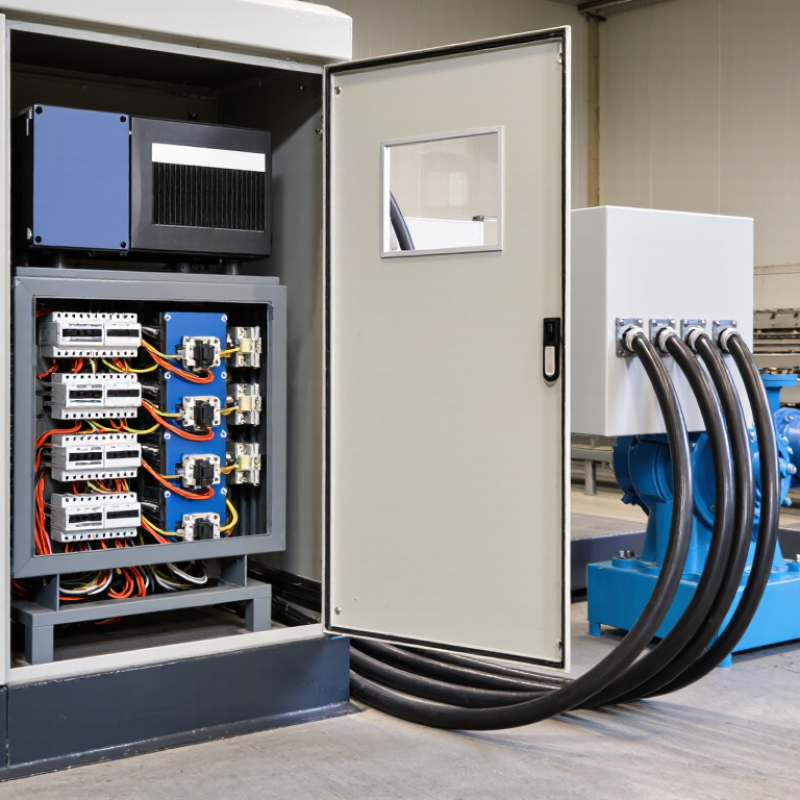
200 kW Soft Starters: Operating Principles and IEC 60947-4-2
Top 200kW Soft Starters for Industrial Motors
200 kW Soft Starters: Operating Principles and IEC 60947-4-2
A 200 kW soft starter limits motor stress during startup by controlling the voltage applied to the stator. In many designs, thyristors adjust each phase’s conduction angle, raising voltage gradually or holding current below a set limit. The motor accelerates smoothly. It does not provide continuous speed control; after startup, supply frequency determines running speed. Lower voltage also means lower starting torque, so confirm the load can accelerate under the selected settings.
IEC 60947-4-2 covers semiconductor motor controllers and starters, including relevant operating and performance requirements. Compliance is not a substitute for correct application. Check the starter’s rated current, motor duty, enclosure conditions, and permitted starts per hour against the actual installation. A 200 kW rating alone cannot confirm suitability. Heavy conveyor loads, high ambient temperatures, or frequent starts may call for different sizing or cooling. Coordination with upstream protection matters, too.
Tips: Review the motor nameplate and load torque before commissioning. Verify ramp time and current limits under real operating conditions. A bypass contactor can reduce heat during normal running, where the design supports it. Record the settings. Then revisit them after observing a cold start and a fully loaded start.
Rated Current at 400 V: Approximately 350–400 A for a 200 kW Motor
Top 200kW Soft Starters for Industrial Motors
Rated Current at 400 V: Approximately 350–400 A for a 200 kW Motor
A 200 kW motor operating on a 400 V, three-phase supply commonly draws about 350–400 A at full load. The exact current depends on power factor and efficiency, not output power alone. Using 200 kW, 400 V, 95% efficiency, and a 0.86 power factor gives roughly 352 A. This calculation follows the standard three-phase power relationship. The U.S. Department of Energy’s Improving Motor and Drive System Performance: A Sourcebook for Industry stresses evaluating motor and driven-load conditions when assessing motor systems.
That range is a useful starting point for soft-starter selection. Check the motor nameplate. IEC 60034-1 covers motor ratings and performance, while the actual nameplate current gives a more dependable sizing reference than a generic kW estimate. Also consider starts per hour, acceleration time, and load inertia. A loaded conveyor may need a longer ramp than an unloaded pump. That changes thermal demands.
Do not size by kW alone. A high-inertia fan, frequent starts, or a hot enclosure can require a different starter rating. Compare the starter’s continuous-current rating and starting-duty limits with the motor’s operating conditions. The estimate may still miss. Site voltage variation and actual loading deserve a final check before specifying equipment.
Top 200kW Soft Starters for Industrial Motors - Rated Current at 400 V: Approximately 350–400 A for a 200 kW Motor
| Selection Dimension | Typical Value or Guidance | Practical Notes |
| Motor output power | 200 kW | Confirm whether the stated power is the motor’s rated shaft output. |
| Supply voltage and phase | 400 V AC, three-phase | The actual supply voltage and frequency must match the motor and starter ratings. |
| Estimated motor full-load current | Approximately 350–400 A at 400 V | The nameplate current takes precedence; actual current depends on motor efficiency and power factor. |
| Illustrative current calculation | About 360 A, using 94% efficiency and 0.85 power factor | Three-phase estimate: I = P ÷ (√3 × V × efficiency × power factor). |
| Starter current rating | Select a starter rated for at least the motor nameplate current under the intended duty conditions | Check the manufacturer’s ratings for starting class, starts per hour, ambient temperature, enclosure, and any derating requirements. |
| Starting-current limit | Set during commissioning according to the motor and driven load | There is no single suitable setting for every installation; too low a limit may prevent acceleration. |
| Overload protection | Coordinate with motor nameplate current and applicable protection requirements | Verify whether overload protection is built into the starter or provided by a separate protective device. |
| Bypass operation | An integrated or external bypass may be used, depending on the starter design | Confirm the continuous-current rating and the installation’s switching and protection arrangement. |
| Final selection check | Compare the motor nameplate and load requirements against the starter’s application ratings | Consider load inertia, acceleration time, start frequency, supply conditions, cable sizing, and local electrical codes. |
Starting Current Limits: Soft Starters Commonly Use 2–5× Motor FLC
For a 200 kW industrial motor, starting current depends on voltage, nameplate full-load current (FLC), and the driven load. A soft starter commonly limits current to about 2–5 times FLC, rather than allowing the higher surge associated with direct-on-line starting. If a motor’s nameplate FLC is 360 A, that range corresponds to roughly 720–1,800 A during acceleration. The actual setting should come from the motor data and the starter’s rating, not from motor power alone.
The load matters. A lightly loaded fan may accelerate comfortably near the lower end, while a loaded conveyor may need more current to produce enough starting torque. Too low a limit can leave the motor stalled, heating its windings and prolonging the start. Too high a limit reduces the benefit. Watch the current trace and acceleration time during commissioning; a clamp meter and a realistic load test can reveal problems a calculation misses. There is no perfect preset. Even a careful estimate may need adjustment when process conditions change.
Comparing 200 kW Models by Bypass, Protection, and Control Features
For a 200 kW motor, compare more than the headline rating. Check the starter’s rated current, overload class, starting time, and permitted starts per hour against the motor’s nameplate and actual load. The International Energy Agency’s Energy Efficiency 2023 report estimates that motor systems consume about 53% of global electricity. That scale makes reliable starting and reduced mechanical stress worthwhile concerns, though a soft starter alone does not guarantee energy savings.
A built-in bypass contactor carries current after acceleration, limiting heat in the thyristors during steady operation. An external bypass can offer flexibility, but adds wiring and commissioning checks.
Look for overload, phase-loss, and motor-temperature protection; confirm whether stall detection and adjustable current limits are included.
IEC 60947-4-2 covers semiconductor motor controllers and starters, providing a useful reference when comparing declared ratings and functions. Control options matter, too. Pump users may need controlled stopping to reduce pressure surges, while conveyors often need repeatable ramp settings.
A feature list can still mislead: protection thresholds, ambient temperature, and enclosure cooling affect real performance. Test the chosen settings under the actual load. Small details count.
Installation Checks: Supply Voltage, Thermal Duty, and Motor Compatibility
Before choosing a 200 kW soft starter, confirm the incoming supply voltage and frequency match the starter’s ratings. Check the motor nameplate too; a 200 kW rating alone does not reveal its full-load current. Voltage at the motor can sag during starting, especially on long cable runs or a heavily loaded supply. Measure under realistic site conditions where possible. Small details matter.
Thermal duty determines whether the starter can handle repeated starts. Record starts per hour, acceleration time, load inertia, and ambient temperature, then compare them with the manufacturer’s duty tables. A conveyor starting under load may need a longer ramp than a lightly loaded pump. That extra time creates heat. An enclosure exposed to dust or poor ventilation can raise internal temperatures, so allow for the actual installation environment rather than an ideal test room.
Confirm that the starter supports the motor’s connection method and current range. Check whether the motor uses an in-line or inside-delta arrangement, and follow the wiring diagram exactly. Verify overload settings and short-circuit protection with the project’s coordination requirements. During commissioning, watch for slow acceleration, nuisance trips, and unexpected heating. A spreadsheet can miss real load changes; that is an imperfect part of planning, so leave room for measured adjustments without exceeding equipment limits.