WORLD electronics offers a complete line of electronic circuit board manufacturing and assembly services, as well as advanced manufacturing services. Our commitment to quality and service is second to no supplier.
Learn MoreOur team of engineers assists you in the development of new designs to optimize quality manufacturability (DFM) and testability, resulting in cost minimization and reduced product development time.
Learn MoreOur flexible manufacturing floor layout and highly trained staff allow for Quick Set-up and Tear Down of small volume prototype runs. This combination grants our customers the benefit of turning new designs quickly and accurately.
Learn MoreWORLD electronics is dedicated to quality. This quality is what underpins our commitment to thorough testing. Our engineers can develop a set of tests that ensure reliability and high performance in all products.
Learn MoreSupply chain management has crossed over from being a narrow management function to being a key operational function.
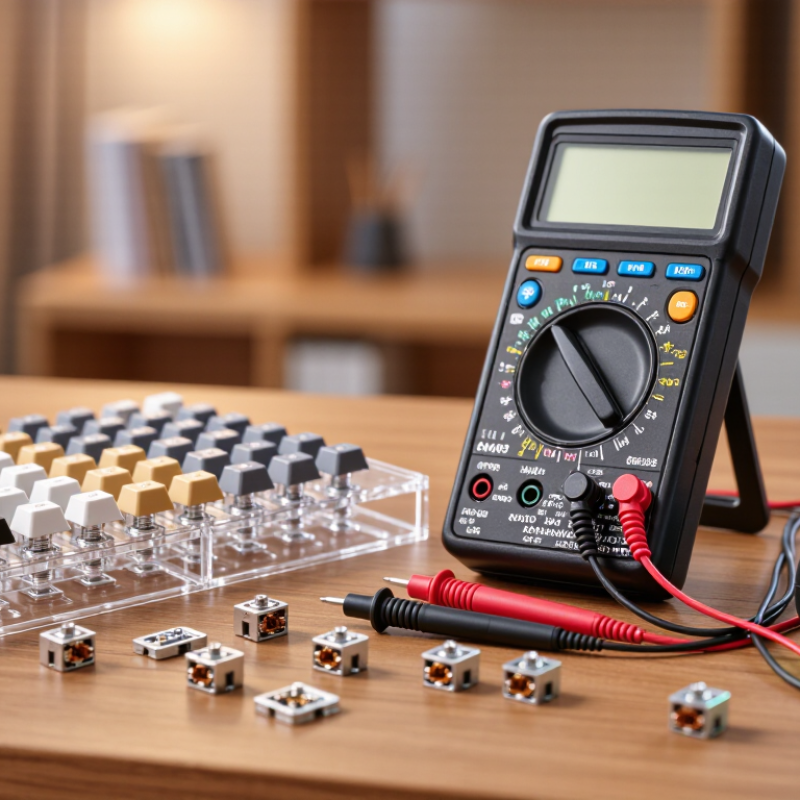
Learn MoreChoosing the right Switch Test tool starts with a clear question: what kind of switch are you checking? A keyboard switch tester helps buyers compare feel, sound, and resistance. For electrical switches, a multimeter or dedicated continuity tester can reveal whether contacts open and close as expected. These tools serve different purposes. A neat-looking product page does not make them interchangeable.
Before buying, check the tool’s measurement range, display clarity, probe quality, and compatibility with your switch type. For a keyboard tester, compare sample switches side by side and notice the force needed to press each one. For electrical testing, look for clear continuity indicators and reliable leads. A stable reading matters more than extra features. Small details count.
Good guidance should explain limits, not just list specifications. A basic tester may confirm a connection but cannot assess every real-world operating condition. Some product listings also use vague terms like “professional grade” without showing useful test data. That deserves a second look. If a test involves mains-powered equipment, follow the manufacturer’s instructions and use a qualified technician where needed. This guide will compare practical options for different buyers, including their strengths, trade-offs, and the details worth checking before purchase. No single tool fits every job. That is easy to forget.
2026 Best Switch Test Tools for Buyers?
Switch test tools turn a press into useful data. Depending on the setup, they measure actuation force, total travel, reset point, and electrical continuity. A force-displacement curve can show whether resistance rises smoothly or changes abruptly. Tiny differences matter. They may affect typing comfort, trigger response, or assembly consistency. Electrical tests can also reveal intermittent contact that a quick manual check might miss.
For buyers, measurements make comparisons more meaningful than feel alone. Check whether a tool reports units clearly, repeats readings consistently, and supports the switch type you plan to evaluate. A calibrated force gauge and a stable mounting fixture help reduce misleading results. Still, test results are not the whole story. A clean chart may overlook sound, housing fit, or variation across a larger batch. I’d treat small samples as clues, not proof.
Tips: Test several switches under the same conditions. Record force and travel, then compare the readings with your intended use. Keep notes on mounting, temperature, and test speed; these details can shift results. If one reading looks odd, repeat it before rejecting a product. You may find that the setup—not the switch—was inconsistent.
Switch test tools fall into several practical groups. Contact-resistance micro-ohm meters check whether closed contacts have developed excess resistance. Technicians use them to spot worn or contaminated contact surfaces. Circuit-breaker timing analyzers measure opening and closing times, pole differences, and operating-coil current. Their traces can reveal slow mechanisms that a simple pass/fail reading may miss.
Insulation-resistance testers assess insulation between conductors and ground. Secondary-injection relay test sets check whether protective relays respond at specified current or voltage levels. For high-voltage switchgear, test procedures should match the equipment rating and applicable standards. IEC 62271-100 covers alternating-current circuit breakers above 1,000 volts. Calibration matters. So does recording temperature and test conditions; readings can shift with both. No single reading settles it.
Tool choice should follow the suspected failure, not a generic checklist. The U.S. Energy Information Administration’s 2022 reliability reporting put average customer interruption duration at roughly 5.6 hours, though results vary with event definitions. That figure is not proof that switchgear caused outages, but it shows why dependable switching equipment matters. Compare test range, accuracy, data export, and calibration records before buying. A neat waveform is not a maintenance plan.
Testing energized equipment carries serious risk and requires qualified personnel using approved procedures.
When comparing switch test tools in 2026, match the tool to the network gear and tasks you actually need to assess. Check supported port speeds, copper and fiber connections, VLAN handling, and Power over Ethernet testing. A tool that reports throughput but cannot test packet loss or latency may leave important gaps. Confirm its stated limits before buying.
Look for repeatable tests, clear results, and exportable reports. You should be able to set traffic levels, run a test for a defined period, and compare results across ports. Try a realistic setup: connect several ports, apply steady traffic, and watch for dropped packets or rising latency. Repeat the run. Results can shift with cables, device load, or test settings, so record those details rather than trusting one impressive number.
Ease of use matters, but so does troubleshooting depth. Check whether the tool identifies a failing port or only flags a general error. For field work, consider portability, battery life, cable diagnostics, and a readable display. For a lab, automation and detailed logs may be more valuable. Small details matter. No test tool perfectly mirrors daily network conditions, and feature lists can sound better than actual results. Ask for a practical demonstration using equipment similar to yours, then verify the findings independently.
Evaluating leading switch test tools in 2026 starts with the network you actually need to test. Write down port speeds, interface types, expected traffic, and the protocols used in your environment. A tool that reports impressive throughput may still miss brief packet loss or unstable latency. Those gaps matter during a busy workday.
Check how each tool creates and measures traffic. Can it run tests across several ports at once? Does it record latency, jitter, packet loss, and throughput in exportable reports? Ask for a repeatable demonstration using your own test plan, not only a polished preset. Small details count. Clear setup instructions and timestamped results help teams compare runs without relying on memory.
Consider usability and growth, too. A complex interface can slow routine checks, while limited port capacity may force an early replacement. Review documentation, support response expectations, and compatibility with your existing lab equipment. Then test the tool under realistic conditions, including sustained traffic and mixed packet sizes. Results can vary with cables, configuration, and test design, so record those conditions. I would not treat one clean run as proof; even careful teams can overlook a setting. A short pilot often reveals friction that a feature list cannot.
2026 Best Switch Test Tools for Buyers?
The right switch test tool depends on what you need to prove, not how impressive its feature list looks. For a small office, start with a cable verifier and the switch’s built-in status and diagnostic tools. Check link speed, VLAN assignment, PoE delivery, and port errors. Keep it practical.
For larger networks, a traffic generator or packet analyzer can measure throughput, latency, packet loss, and behavior under load. Prioritize the tests you will actually run: a tool with advanced automation may be poor value if your team only checks new installations. Uptime Institute’s 2024 Global Data Center Survey found that 54% of respondents said their most significant recent outage cost more than $100,000. That figure is not specific to switch failures, but it shows why verifying failover and port stability is worth the effort.
Before buying, list your test cases and compare the total cost, including training, licenses, and calibration. A short rental or trial can reveal whether the interface fits your workflow. A clean dashboard can still miss intermittent faults, so repeat tests with realistic traffic and different cable lengths. I would not overspend on lab-grade features without a clear need; yet the cheapest tester may leave important questions unanswered.
| Tool type | Typical planning budget (USD) | Primary tests | Best suited to | Key selection points | Main limitation |
|---|---|---|---|---|---|
| Digital multimeter | $20–$500+ | Basic voltage, continuity, and resistance checks | Initial troubleshooting and low-voltage control circuits | Check measurement category and voltage rating for the intended environment; use suitable leads and probes. | Not a substitute for insulation, contact-resistance, or high-current testing. |
| Insulation resistance tester | $100–$2,000+ | Insulation resistance at a selected DC test voltage | Maintenance checks on isolated switchgear, cables, and equipment insulation | Choose appropriate test voltages, timed measurements, discharge functions, and data recording. | Equipment must be safely isolated; results depend on temperature, condition, and test procedure. |
| Low-resistance ohmmeter (micro-ohmmeter) | $500–$5,000+ | Contact resistance across closed switch contacts and joints | Condition assessment and comparison of conductive paths | Consider test current, measurement range, lead compensation, repeatability, and report features. | Requires a closed, isolated circuit and clean, secure connections for useful comparisons. |
| Primary injection test set | $5,000–$30,000+ | High-current injection for testing trip paths, current sensors, and protection circuits | Commissioning and maintenance of low-voltage breakers and associated protection systems | Match output current, duty cycle, control options, portability, and supply requirements to the equipment under test. | High-current tests can be heavy, time-consuming, and disruptive; trained operators are essential. |
| Circuit-breaker timing and motion analyzer | $3,000–$20,000+ | Opening and closing times, pole synchronism, and—when equipped—travel or motion | Detailed assessment of breaker operating mechanisms and switching performance | Check channel count, sensor compatibility, test-lead configuration, and analysis software. | Setup and interpretation require breaker-specific procedures and suitable sensor installation. |
| Protective relay test set | $5,000–$40,000+ | Secondary injection of current and voltage; relay pickup, timing, and logic checks | Testing protection relays and control schemes without injecting primary current into the main circuit | Select output channels, current and voltage ranges, binary inputs/outputs, and automated test support. | Secondary injection alone does not verify the complete primary-current path or all field wiring. |
| AC dielectric withstand tester | $500–$10,000+ | Insulation withstand testing at specified AC test voltages | Controlled dielectric tests where required by an applicable standard or maintenance procedure | Verify voltage range, leakage-current measurement, interlocks, ramp control, and safety enclosure needs. | Can stress insulation; use only when the equipment procedure and applicable standard call for it. |
Budget figures are broad USD planning ranges, not quotations. Actual prices vary with output capacity, accessories, calibration, software, and regional requirements. Select test voltages and procedures according to the equipment documentation and applicable safety standards.