2026 Best Vacuum Mug for Global Wholesale Buyers?

Blog

2026 Best Vacuum Mug for Global Wholesale Buyers?

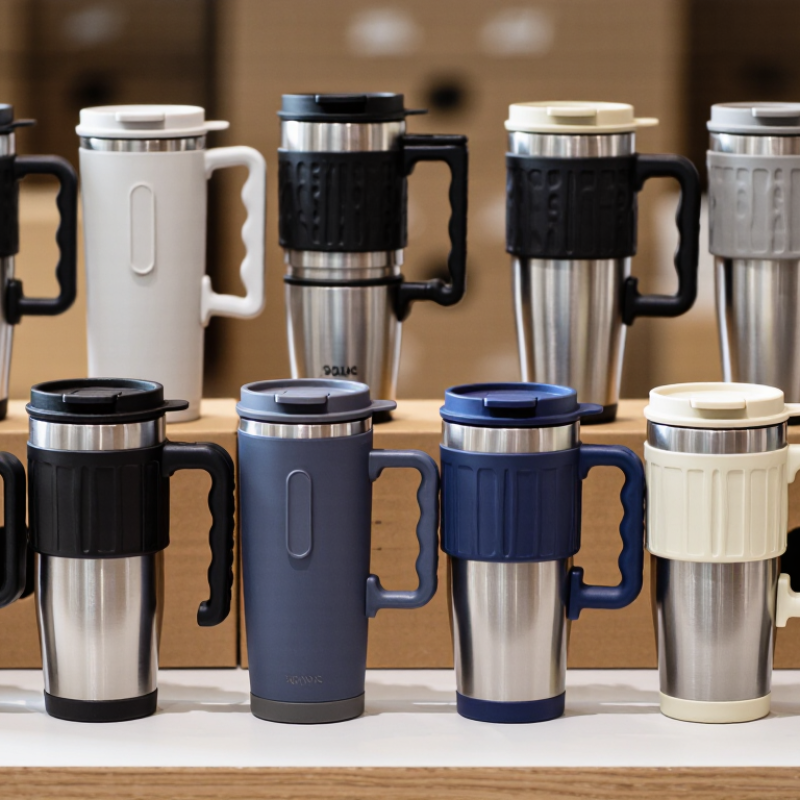
For global wholesale buyers, choosing the 2026 best Vacuum Mug is not a simple style decision. It affects product safety, shipping costs, customer reviews, and repeat orders. A polished catalog image can hide weak lids, thin handles, or poor insulation. Real purchasing decisions begin with measurable details. Capacity, steel grade, seal design, coating durability, packaging, and factory consistency all deserve attention. A mug that keeps coffee warm for six hours may still fail if it leaks in a commuter bag.

This guide examines Vacuum Mug options from a buyer’s practical viewpoint. It considers performance testing, material traceability, production quality, and supplier communication. Independent laboratory checks can support claims about food-contact safety and thermal retention. However, certificates should match the exact model, factory, and target market. They are not automatic proof of every quality feature. Buyers should request samples, inspect threads, test repeated washing, and compare cartons before placing large orders. Small details matter. A loose silicone ring can create thousands of complaints.

The strongest wholesale choice balances reliable function with realistic landed cost. It also fits local habits, climate, retail channels, and branding needs. Some suppliers offer impressive customization, yet their minimum order quantities may strain smaller distributors. Others provide low prices but inconsistent colors between batches. That trade-off deserves honest review. No product is perfect. Even well-tested mugs can show occasional defects during rapid scale-up. This article uses evidence, practical checks, and cautious comparisons to identify promising 2026 models. The aim is not to declare one universal winner, but to help buyers make a defensible decision.

2026 Best Vacuum Mug for Global Wholesale Buyers?

2026 Vacuum Mug Categories: 350–1200 mL Sizes for Global Wholesale

2026 Best Vacuum Mug for Global Wholesale Buyers?

The 2026 vacuum mug market covers practical sizes from 350 to 1200 mL. Each capacity serves a different buying situation. A 350–450 mL mug fits office desks, meeting rooms, and compact bags. It reduces weight and suits controlled beverage portions. Sizes from 500–700 mL remain the safest wholesale choice. They support commuting, school, and everyday outdoor use. Larger 800–1200 mL mugs suit drivers, travelers, and long work shifts. However, they need stronger handles, wider bases, and better package protection. Large capacity is not automatically better.

In wholesale sampling, I check heat retention, lid sealing, drinking comfort, and surface durability. I also compare empty weight because heavy mugs can increase shipping costs. Stainless steel quality, food-contact documents, and production consistency deserve careful review. A supplier may provide excellent samples, yet later batches can vary. That is an uncomfortable but important risk. Requesting batch inspection and repeated testing can expose weak points before shipment. Capacity labels should also match measured volume, including usable space rather than total body volume.

Tips: Test at least three sizes with real users before ordering. Ask for drop, leak, and temperature reports. Check carton strength for the 800–1200 mL range. Confirm lid parts are replaceable. Avoid choosing only by appearance. A smaller mug may sell faster in one market, while a larger model may perform better elsewhere. Local drinking habits, transport distance, and retail shelf space should guide the final mix.

2026 Best Vacuum Mug for Global Wholesale Buyers? - 2026 Vacuum Mug Categories: 350–1200 mL Sizes for Global Wholesale

Practical category comparison for wholesale sourcing, retail assortment planning, and international shipping evaluation

Capacity Category Typical Product Dimensions
(Diameter × Height)
Typical Net Weight Insulation Structure Typical Hot / Cold Holding Performance* Common Lid Configuration Best Wholesale Applications Typical Carton Pack Wholesale Evaluation Focus
350 mL Approx. 6.5–7.0 × 17–19 cm Approx. 210–280 g Double-wall vacuum insulation; food-contact inner liner commonly made from stainless steel Hot: approximately 4–6 hours
Cold: approximately 8–12 hours
Screw lid or compact flip-top lid; often designed for one-hand carrying 24–36 units Portability, leak resistance, cup-holder compatibility, and compact packaging
450 mL Approx. 6.5–7.2 × 19–22 cm Approx. 240–320 g Double-wall vacuum construction with insulated stainless-steel body Hot: approximately 5–8 hours
Cold: approximately 10–16 hours
Threaded sealing lid, flip lid, or slide-opening commuter lid 24–36 units Balance between capacity, shipping volume, lid sealing, and retail price positioning
500 mL Approx. 6.8–7.5 × 20–23 cm Approx. 260–350 g Double-wall vacuum insulation; commonly paired with a stainless-steel interior and powder-coated exterior Hot: approximately 6–10 hours
Cold: approximately 12–18 hours
Leak-resistant screw lid, flip-top lid, or removable drinking opening 24 units Most versatile size; check lid durability, coating quality, and compatibility with standard cup holders
600 mL Approx. 7.0–7.8 × 22–25 cm Approx. 300–390 g Double-wall vacuum insulation with a wider opening for easier filling and cleaning Hot: approximately 6–10 hours
Cold: approximately 12–20 hours
Wide-mouth screw lid, straw-compatible lid, or sports flip-top lid 24 units Opening diameter, cleaning access, carry handle strength, and shipping dimensional weight
750 mL Approx. 7.5–8.2 × 24–28 cm Approx. 360–470 g Double-wall vacuum insulation; larger body may require reinforced base and lid components Hot: approximately 8–12 hours
Cold: approximately 16–24 hours
Wide-mouth lid with handle, straw opening, or sports drinking spout 12–24 units Grip comfort, leak-proof testing, base stability, and carton size for overseas transport
900 mL Approx. 7.8–8.5 × 25–30 cm Approx. 410–530 g Double-wall vacuum insulation with a broad opening and reinforced sealing components Hot: approximately 8–12 hours
Cold: approximately 18–24 hours
Handle lid, wide-mouth screw lid, or straw lid with locking mechanism 12–18 units Full-load weight, ergonomic handling, lid lock reliability, and protective export packaging
1,000 mL Approx. 8.0–8.8 × 26–31 cm Approx. 450–580 g Double-wall vacuum insulation; usually designed with a wide mouth and high-capacity sealing lid Hot: approximately 8–12 hours
Cold: approximately 18–24 hours
Wide-mouth handle lid, straw lid, or locking sports lid 12 units Product weight, carton cube, leakage prevention, handle load rating, and cleaning convenience
1,200 mL Approx. 8.5–9.5 × 28–33 cm Approx. 520–680 g Double-wall vacuum insulation with a large-volume body and reinforced base structure Hot: approximately 8–12 hours
Cold: approximately 18–24 hours
Large handle lid, straw lid, or wide-mouth sports lid with locking feature 6–12 units Ergonomics, filled weight, transport durability, pallet efficiency, and retail shelf footprint

*Performance ranges are typical category benchmarks for unused, properly sealed vacuum mugs under controlled testing conditions. Actual results vary according to initial liquid temperature, ambient temperature, lid design, filling level, opening frequency, and manufacturing tolerances. Dimensions, weight, carton quantity, and packaging specifications should be confirmed from the final production sample before purchase.

Materials Explained: 18/8 304 Steel, 316 Steel, and BPA-Free Components

For global wholesale buyers, material selection affects durability, compliance, and repeat orders.

The 2023 International Stainless Steel Forum report recorded about 58.4 million tonnes of global stainless steel production.

That scale supports stable sourcing, but grades still require verification. 18/8 stainless steel usually refers to 304 steel, containing approximately 18% chromium and 8% nickel.

It suits daily coffee, tea, and water use. In coastal warehouses, however, salt air may expose its limits.

316 steel adds molybdenum, commonly around 2–3%, improving resistance to chlorides and corrosion. It can be a stronger choice for marine regions, outdoor distribution, or humid logistics routes.

The cost is higher. The difference may be wasted for ordinary indoor use.

I have seen buyers focus on grade numbers while overlooking lid seals and weld quality. That mistake can create leaks, odors, and costly returns.

BPA-free polypropylene, silicone, or Tritan-like components should include food-contact test records.

“BPA-free” alone does not prove overall product safety. The European Food Safety Authority’s 2023 scientific assessment set BPA’s tolerable daily intake at 0.2 nanograms per kilogram of body weight per day, highlighting the need for careful material review.

Tips:

Request mill certificates, migration-test reports, and temperature specifications before sampling. Check whether the inner wall is genuinely 304 or 316 steel.

Test seals after repeated opening. Also inspect the printed packaging; it can fail before the mug does.

A small pilot order often reveals quality gaps that a factory presentation hides.

Thermal Performance: 6–24-Hour Heat Retention and Leak-Resistance Testing

2026 Best Vacuum Mug for Global Wholesale Buyers?

Thermal performance should be measured, not promised. A useful protocol records liquid temperature at 0, 6, 12, and 24 hours. Use 95°C water, a calibrated probe, and a controlled 22°C room. ASTM E230/E230M-23 provides guidance for thermocouple accuracy and calibration. The 2022 FDA Food Code identifies 57°C as a hot-holding benchmark. A mug reaching 60°C after 12 hours may perform well, but real results depend on fill volume, lid position, and opening frequency.

Leak resistance requires separate testing. Fill each sample to its stated capacity, close the lid, invert it for 60 seconds, then shake it gently. Repeat after 100 opening cycles. For more reliable validation, vacuum-decay principles from ASTM F2338-09(2020) can support controlled leak detection. This method needs adaptation for reusable drinkware. It is not a perfect one-to-one standard.

Wholesale buyers should request test records, sample sizes, ambient conditions, and failure definitions. A practical target might be no visible leakage after inversion and less than 5% temperature loss between duplicate samples. Check the seal after washing, too. Small lid deformation can ruin a strong thermal result. Performance varies. That matters.

Global Compliance: FDA, EU 1935/2004, LFGB, REACH, and Prop 65

2026 Best Vacuum Mug for Global Wholesale Buyers?

A reliable vacuum mug starts with documented food-contact safety, not attractive packaging. For United States shipments, ask whether the stainless steel, plastic parts, seals, coatings, and printing comply with applicable FDA food-contact requirements. Request material declarations and migration-test reports. A supplier’s confident email is not enough.

European buyers should check Regulation (EC) No 1935/2004 and relevant testing under EU food-contact rules. LFGB testing may provide an additional safety benchmark, especially for silicone seals and drinking components. REACH review should cover restricted substances in metals, plastics, pigments, adhesives, and surface coatings. Prop 65 evaluation matters for California sales. Test the finished mug, not only its raw materials. Small details matter, such as the colored rim and logo ink.

Keep every report traceable to a production batch. Check laboratory accreditation, test dates, sample descriptions, and stated test conditions. I have seen documents that covered the steel body but ignored the gasket. That gap can become a costly surprise. Another practical check is the lid: fill a sample with hot water, invert it, and inspect leakage, odor, and surface changes after repeated washing. Good compliance work is rarely perfect on the first review. Recheck when suppliers change materials, factories, coatings, or packaging. A lower purchase price means little if customs, testing, or product withdrawal follows.

This timeline highlights the reference year of major compliance frameworks commonly reviewed for vacuum mugs sold internationally: the U.S. Federal Food, Drug, and Cosmetic Act, California Proposition 65, EU Regulation (EC) No 1935/2004, Germany’s LFGB, and REACH. These dates identify the framework’s adoption or enactment year and do not represent certification, test results, or equivalence between regulations.

Wholesale Evaluation: MOQ, FOB Cost, Certifications, and 20–40% Stock Buffers

2026 Best Vacuum Mug for Global Wholesale Buyers?

Wholesale Evaluation: MOQ, FOB Cost, Certifications, and 20–40% Stock Buffers

A strong vacuum mug starts with measurable performance, not attractive packaging. In factory reviews, I check lid leakage, vacuum retention, weld quality, and coating consistency. A 304 stainless-steel body is common, but material certificates still require verification. Samples should survive repeated opening, closing, and washing cycles.

MOQ can change the real buying price. A low MOQ may carry higher FOB costs because setup expenses are spread across fewer units. Ask for a clear quotation covering mug, lid, packaging, printing, carton size, and loading terms. Confirm whether FOB costs include export handling at the agreed port. Small wording differences can damage the budget.

Certification needs destination-specific review. Request food-contact test reports, migration results, and factory quality records before placing a deposit. Documents should match the actual material and production site. A certificate copied from another model is a warning sign.

Stock planning deserves more attention than many buyers give it. A 20–40% buffer can protect seasonal launches, shipping delays, and sudden retail demand. However, too much stock may lock cash into slow colors or unpopular sizes. I would split the order by sales confidence, not guesswork. That approach is safer, though not perfect. Forecasts still fail. Use a pilot shipment, inspect cartons before dispatch, and track defect rates after arrival.