WORLD electronics offers a complete line of electronic circuit board manufacturing and assembly services, as well as advanced manufacturing services. Our commitment to quality and service is second to no supplier.
Learn MoreOur team of engineers assists you in the development of new designs to optimize quality manufacturability (DFM) and testability, resulting in cost minimization and reduced product development time.
Learn MoreOur flexible manufacturing floor layout and highly trained staff allow for Quick Set-up and Tear Down of small volume prototype runs. This combination grants our customers the benefit of turning new designs quickly and accurately.
Learn MoreWORLD electronics is dedicated to quality. This quality is what underpins our commitment to thorough testing. Our engineers can develop a set of tests that ensure reliability and high performance in all products.
Learn MoreSupply chain management has crossed over from being a narrow management function to being a key operational function.
Learn MoreA Wiper Combination Switch looks small beside a steering wheel, yet it coordinates functions drivers use in rain, fog, and low visibility. Its design can involve wiper speeds, washer activation, turn signals, and other steering-column controls. For buyers, the details matter: connector layout, electrical ratings, tactile feel, durability, and vehicle-specific fitment can separate a dependable part from a costly mismatch.
The scale of the vehicle market helps explain why supplier research matters. OICA reported approximately 93.5 million motor vehicles produced worldwide in 2023, a 10% increase over 2022. S&P Global Mobility reported that the average age of U.S. light vehicles reached 12.6 years in 2024. These figures describe production and vehicle age, not switch demand. Still, they point to a large global vehicle base and a continuing need to assess replacement parts and original-equipment supply.
This guide examines suppliers through practical criteria: manufacturing capability, quality systems, product coverage, engineering support, and traceability. It also distinguishes established component manufacturers from distributors and private-label sellers, whose offerings may differ considerably. A catalog listing alone proves little. Ask for specifications, validation details, and clear application data. Small checks help.
Public industry reports do not provide a definitive ranking of Wiper Combination Switch suppliers. That limitation deserves attention. The following comparison is therefore a research-based starting point, not an endorsement; buyers should verify each supplier’s current capabilities and product fit before making a sourcing decision.
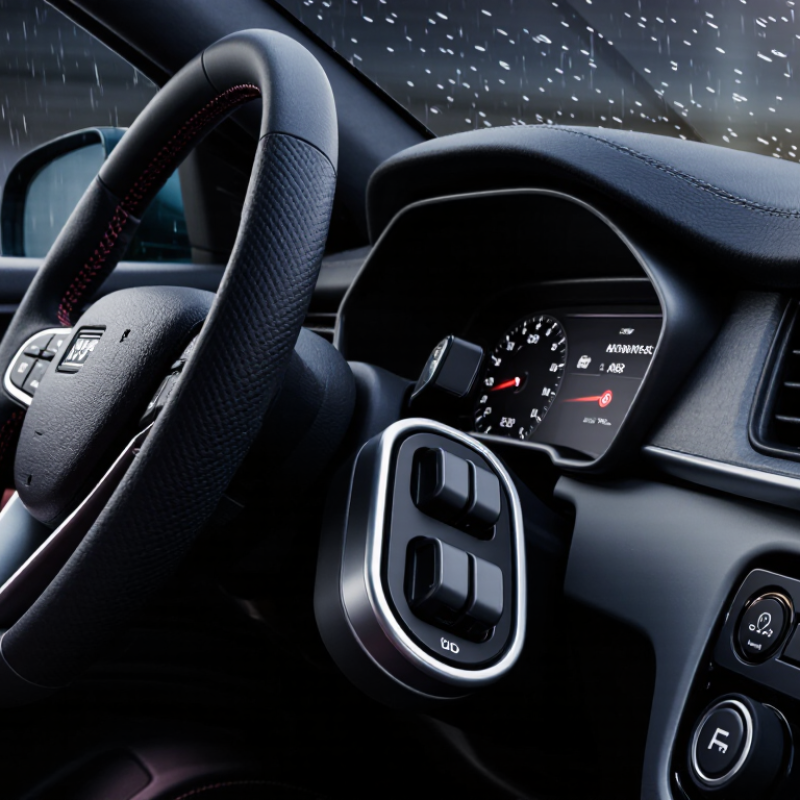
A wiper combination switch lets the driver control the windshield wipers and washer from a stalk near the steering wheel. Depending on the vehicle, it may also operate turn signals or headlamps. The layout varies, so the markings and positions should match the vehicle’s design. Simple, but important.
Moving the stalk selects functions such as intermittent, low-speed, or high-speed wiping. In many vehicles, the switch sends an electrical signal to a relay or body control module, which then activates the motor. A washer setting may also trigger a brief wipe cycle. On a rainy drive, a clear click between settings can help the driver adjust without looking away from the road. Not every system behaves identically.
If wipers respond inconsistently, the switch is one possible cause, but not the only one. A worn connector, fuse, relay, or motor can produce similar symptoms. Careful diagnosis matters. For suppliers, useful checks include stable electrical contact, clear position feedback, secure terminals, and testing across repeated operating cycles. A switch may feel solid on a workbench yet behave differently after long use or vibration. That detail is easy to overlook.
Wiper combination switches vary by vehicle design. Common types include a steering-column stalk, a rotary control, or a multifunction assembly. They may operate intermittent timing, wiper speed, washer spray, and sometimes rear-window wiping. Inside, the switch uses a lever or knob, electrical contacts, return springs, and a connector. Contact wear can cause intermittent operation, so suppliers should provide clear inspection and durability-test information.
Tips: Check the pinout. Match the connector.
Compatibility depends on more than appearance. Confirm the vehicle’s year, model, trim, steering-column mounting, connector shape, and pin arrangement. Some switches communicate with an electronic body module, so signal type and supported functions matter too. Compare the original part number and wiring diagram, then verify fitment with a sample before ordering volume. Ask suppliers for material specifications, production traceability, and test results. A catalog listing alone may miss a trim-level difference; that detail is easy to overlook. When specifications are incomplete, request written confirmation rather than relying on a visual match.
| Switch Type or Configuration | Typical Functions | Common Components | Key Compatibility Factors | What to Verify Before Sourcing |
|---|---|---|---|---|
| Basic intermittent wiper switch | Off, intermittent, low-speed, and high-speed wiping; some designs include washer control. | Lever or knob, contact elements, return mechanism, housing, and electrical terminals. | Mounting arrangement, connector and pinout, number of positions, circuit type, and vehicle-specific control strategy. | Confirm the exact vehicle application, wiring diagram, switch-position logic, and connector keying. |
| Variable intermittent switch | Intermittent wiping with an adjustable delay, in addition to common continuous-speed settings. | Interval selector, contact assembly or signal-generating element, lever, housing, and connector. | Delay-control method, supported input signal, body-control or wiper-module interface, and position encoding. | Check that the vehicle’s wiper control unit supports the switch’s interval-setting signals. |
| Washer-integrated switch | Wiper speed and interval selection plus washer-pump activation, commonly by pushing or pulling the lever. | Wiper contacts, washer-actuation contact or signal circuit, lever mechanism, terminals, and housing. | Washer command type, pump-control circuit, connector layout, and whether the vehicle provides wipe-after-wash logic. | Match the washer-control function and electrical interface; do not assume similar-looking levers share the same pinout. |
| Multifunction column switch assembly | May combine wiper and washer controls with turn-signal, lighting, or other steering-column functions, depending on vehicle design. | One or more levers, switch contacts or sensors, shared housing, connectors, and mounting or clock-spring interfaces where applicable. | Column geometry, neighboring switch functions, steering-column trim, connector count, and vehicle electronics configuration. | Check whether the required part is a standalone stalk or a complete assembly, and verify all included functions. |
| Electronic or networked switch | Sends switch-state signals to a control module, which operates the wiper system; available functions vary by vehicle. | Position sensors or electronic contacts, circuit board where fitted, connector, housing, and control-module interface. | Signal protocol, module configuration, software or coding requirements, connector specification, and diagnostic compatibility. | Confirm the vehicle’s wiring and service information, and determine whether installation requires configuration or diagnostic checks. |
| Sensor-assisted automatic-wiper configuration | Provides an automatic-wipe mode when supported by a rain-sensing system; manual modes may also be present. | Mode selector, switch signal circuit, rain-sensor system, control module, and related vehicle wiring. | Sensor availability, module support, automatic-mode signal, vehicle configuration, and calibration requirements for the sensor system. | Verify that the vehicle is equipped for automatic wiping; a compatible-looking switch alone does not add the required sensor system. |
| Supplier evaluation checklist: Request application coverage, dimensional drawings, connector and pinout details, electrical specifications, material and environmental test information, quality-system documentation, traceability, warranty terms, and sample-validation support. Confirm fitment against the vehicle’s exact model year, trim, market, and equipment. | ||||
Assess suppliers by evidence, not polished presentations. OICA’s 2023 production statistics recorded about 93.5 million motor vehicles worldwide. That scale makes production capacity and stable delivery worth checking, but it does not prove a supplier can meet your specific program’s needs. Ask for documented capacity, lead times, component traceability, and a clear plan for handling demand changes. Request recent delivery and defect data, then verify how those figures are calculated.
For technical fit, test the actual switch against your vehicle’s steering-column layout and electrical architecture. Check turn-signal, headlamp, washer, and wiper functions, including intermittent settings and return-to-park behavior. Ask for validation records across temperature, vibration, moisture, and repeated operation. Small details matter. A switch can pass a basic function check yet feel stiff or inconsistent after extended use. Confirm that the supplier follows a documented automotive quality process, such as IATF 16949, and can provide relevant APQP and PPAP records.
Audit the people and processes behind the documents. Observe assembly controls, end-of-line testing, and how nonconforming parts are contained. Ask who approves design changes and how quickly your team receives notice. Compare sample units from different production lots, not just hand-selected prototypes. I would not rank suppliers on price alone; a low quote is difficult to trust without transparent tooling, warranty, and continuity plans. Also, no audit removes every risk, so record unresolved gaps before nomination.
For a 2026 wiper combination switch program, supplier capability means more than a broad catalog. Look for engineering support that can review drawings, connector layouts, pin assignments, and vehicle-specific fitment. Small details matter. A connector that looks correct may still have a different pinout. Ask whether the supplier can provide prototypes, dimensional reports, and test records before production approval.
Useful validation includes switch-cycle testing, vibration checks, and contact-resistance measurements under defined conditions. Certifications can help assess process control, but verify the certificate’s scope, issuing body, and covered manufacturing site. ISO 9001 indicates a quality management system; IATF 16949 is specific to automotive quality management. Neither replaces product-level evidence.
Request traceability details and clear handling procedures for design changes or defects. Product range may include wiper-speed and intermittent controls, washer activation, turn-signal and headlamp functions, or integrated column-switch assemblies. Compare options by function, electrical ratings, connector type, and vehicle application—not catalog breadth alone.
One gap remains: supplier documents can look complete while leaving test conditions unclear. Ask for the actual limits and results.
A wiper combination switch quote should be compared line by line, not by unit price alone. Check the exact part number, connector pinout, stalk functions, materials, and drawing revision. Ask whether the quoted price includes tooling, sample builds, packaging, and freight. Small details matter. A low quote can look convincing, but it does not prove the switch fits your vehicle or production process.
OICA’s 2023 production statistics recorded about 93.5 million motor vehicles produced worldwide. That scale makes repeatability and clear traceability important when selecting a supplier. Request sample inspection records, functional test results, and a documented process for handling design changes. Confirm the supplier’s IATF 16949 certificate through its issuing body, and check that the certificate covers the relevant manufacturing site and product scope. Ask for evidence, not just a logo on a presentation.
Compare lead times using the same assumptions: order quantity, forecast changes, and shipping terms. Clarify minimum order quantities, warranty coverage, defect handling, and replacement timelines in writing. For samples, test wipe-speed settings, intermittent control, washer activation, and stalk feel under realistic conditions. A spreadsheet helps, but it can miss awkward fit or unclear test limits. I would leave room for that uncertainty. Request a signed drawing and a written sample-approval record before placing a production order.
Suggested scorecard weights for comparing quotes and verifying suppliers before ordering. These are evaluation recommendations, not measured supplier or market data. Score each supplier from 0–5 per criterion, then apply the weights.
Check technical fit, test evidence, traceability, production capability, quote completeness, and delivery terms. Verify documents and samples independently before placing an order.