WORLD electronics offers a complete line of electronic circuit board manufacturing and assembly services, as well as advanced manufacturing services. Our commitment to quality and service is second to no supplier.
Learn MoreOur team of engineers assists you in the development of new designs to optimize quality manufacturability (DFM) and testability, resulting in cost minimization and reduced product development time.
Learn MoreOur flexible manufacturing floor layout and highly trained staff allow for Quick Set-up and Tear Down of small volume prototype runs. This combination grants our customers the benefit of turning new designs quickly and accurately.
Learn MoreWORLD electronics is dedicated to quality. This quality is what underpins our commitment to thorough testing. Our engineers can develop a set of tests that ensure reliability and high performance in all products.
Learn MoreSupply chain management has crossed over from being a narrow management function to being a key operational function.
Learn MoreGlobal buyers entering the 2026 drone market need more than impressive payload numbers. They need a frame that survives real work. A Heavy Lift Drone Frame must carry batteries, motors, cameras, and cargo without becoming unnecessarily heavy. That balance often decides whether a drone flies for 18 minutes or struggles after eight.
Dr. Raffaello D’Andrea, a robotics researcher and autonomous-flight specialist, has stated, “A flying machine should be designed around the task.” This principle remains highly relevant. A coaxial X8 frame may offer compact packaging and motor redundancy. An octocopter frame can provide smoother lifting performance. A reinforced hexacopter may reduce cost while preserving useful stability. Carbon-fiber arms, vibration-isolated payload plates, and adjustable landing gear also matter. Small details become expensive problems at altitude.
This guide examines the top Heavy Lift Drone Frame types for global buyers in 2026. It considers payload capacity, structural stiffness, battery placement, transport size, maintenance access, and flight-control compatibility. It also looks at practical factory experience, not only brochure specifications. Some published payload figures seem optimistic. Weather changes everything. So does battery aging. Buyers should question attractive numbers and request test conditions, motor data, and complete takeoff weights. A frame that looks perfect on a product page may feel awkward beside a truck, a charging station, or a muddy field. That is where selection becomes less certain—and more honest.
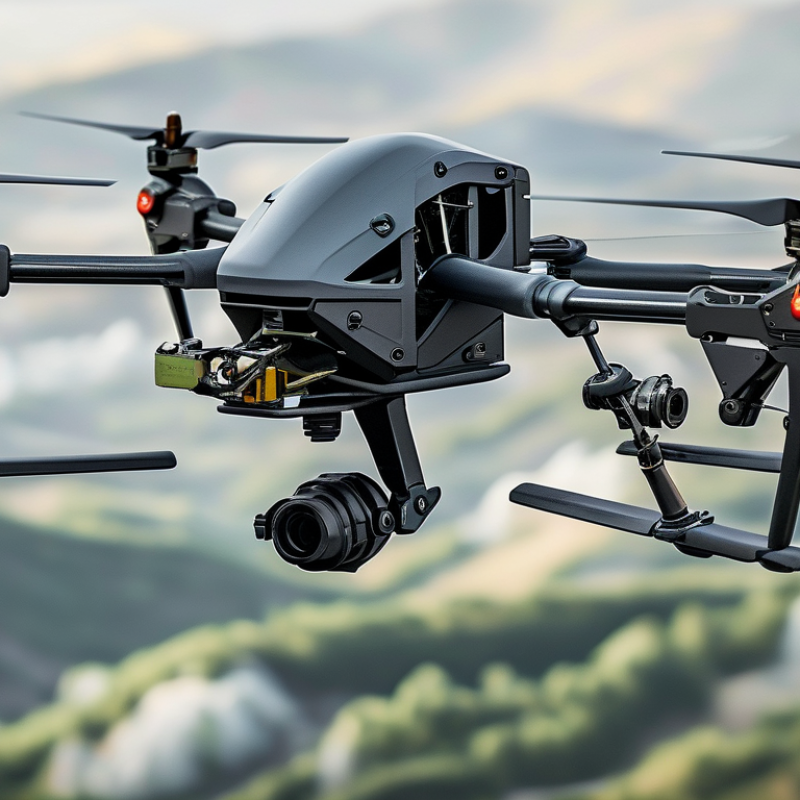
2026 Top Heavy Lift Drone Frame Types for Global Buyers
What Is a Heavy Lift Drone Frame?
A heavy lift drone frame is the structural skeleton that supports motors, batteries, flight electronics, landing gear, and payloads. It is not merely a set of arms. The frame controls stiffness, vibration behavior, weight distribution, and available installation space.
Common designs include quad, hexacopter, octocopter, coaxial, and modular frames. Quad frames can be efficient, but they offer limited redundancy. Hexacopter and octocopter frames usually provide better stability when one motor or propeller system requires attention. Coaxial layouts save space, although stacked propellers may reduce efficiency and increase airflow interaction.
A reliable frame uses strong, lightweight materials such as carbon fiber tubes, reinforced plates, or carefully engineered aluminum joints. During inspection, buyers should check arm flex, fastener access, cable protection, landing clearance, and payload mounting points. A camera, sensor, or delivery container should sit close to the center of gravity. Poor placement can make a stable aircraft feel unpredictable.
Size alone does not prove lifting ability. Payload mass, battery weight, motor thrust, propeller diameter, and local operating rules must be evaluated together. Some frames look oversized but leave little room for wiring and cooling. That is easy to miss. Buyers should also request load testing, vibration data, spare-part information, and documented compliance support before selecting a frame for international deployment.
Main Heavy Lift Drone Frame Types in 2026
Heavy-lift drone frames are becoming more specialized for global buyers. The main options include quadcopters, hexacopters, octocopters, coaxial X8 frames, and hybrid VTOL platforms. Quadcopters are simple and cost-efficient, but one motor failure can end a mission. Hexacopters offer better redundancy and a wider center frame. Octocopters provide stronger lift and smoother control, although they require more batteries and maintenance. Coaxial X8 designs save space, but overlapping propellers can reduce efficiency. Hybrid VTOL frames support longer routes, yet their transition systems add testing complexity.
Market data supports this shift. MarketsandMarkets reported that the global drone market could grow from about USD 30.6 billion in 2024 to USD 47.4 billion by 2029. Drone Industry Insights also identifies delivery, inspection, mapping, and public-safety operations as major commercial growth areas. These tasks do not need the same frame. A 12-kilogram inspection payload may suit an octocopter. A long-distance medical delivery mission may favor a hybrid VTOL design. Payload figures can look impressive on paper. Real wind, cold batteries, and landing space reduce them.
Tips: Check usable payload, not advertised maximum lift. Measure the aircraft with batteries, sensors, guards, and reserve power included. Ask for motor-out testing and vibration data. A frame that looks oversized may be safer. That assumption can still fail. Field trials remain essential, especially near mountains, cranes, or coastal wind. Reference standards from ASTM International and local aviation authorities before purchase.
2026 Top Heavy Lift Drone Frame Types for Global Buyers
Key Frame Materials, Structures, and Load Ratings
Heavy lift drone frames usually use carbon fiber, aluminum alloy, or a hybrid structure. Carbon fiber keeps weight low and resists repeated bending. Aluminum offers easier machining, lower replacement costs, and predictable deformation after impact. Hybrid frames combine carbon plates with aluminum arms or reinforced joints. This can reduce vibration, but poorly matched materials may create stress at fasteners.
Frame geometry directly affects payload stability. Box frames distribute forces across several members and suit large battery packs. X frames are lighter and easier to transport. Octagonal structures provide wider motor spacing and better balance for oversized payloads. Reinforced center plates matter. Thin plates can twist during acceleration, even when the arms appear strong.
Load ratings need careful reading. A 30-kilogram rating may describe maximum static payload, not safe flight capacity. Buyers should check whether the figure includes batteries, landing gear, electronics, and fuel-free reserve requirements. A practical design normally applies a safety factor of at least 1.5, then confirms performance through controlled testing. Temperature, wind, vibration, and repeated landings can reduce real capacity. Ratings are not universal.
In field evaluation, I inspect arm deflection, joint play, fastener locking, and motor alignment. Small gaps often become serious fatigue points. A frame may pass a short hover test and still fail after hundreds of cycles. That is the uncomfortable part. Published specifications help, but measured data deserves greater trust.
| Frame Type | Typical Configuration | Primary Frame Materials | Structural Characteristics | Typical Maximum Take-Off Weight | Typical Payload Rating | Recommended Heavy-Lift Applications | Key Buyer Considerations |
|---|---|---|---|---|---|---|---|
| Flat-Plate Hexacopter | Six motors arranged on one main plate or two stacked plates | Carbon-fiber laminate plates, aluminum motor mounts, stainless-steel fasteners | Compact and relatively simple; six lift points provide partial redundancy after a single motor or propeller failure, depending on flight-controller design | 25–45 kg | 8–15 kg | Inspection equipment, mapping payloads, compact delivery modules, agricultural tanks | Good balance of cost, transportability, and lifting capacity; plate stiffness and vibration isolation are critical |
| Coaxial X8 Frame | Four arms with two vertically stacked motors on each arm | Carbon-fiber tubes, carbon-fiber center plates, machined aluminum joints | High motor density in a compact footprint; lower propeller clearance and aerodynamic interference than separated-motor layouts | 30–60 kg | 10–20 kg | Surveying, emergency response, winch systems, logistics in confined launch areas | Efficient packaging for road and air transport; heat management, coaxial airflow, and motor synchronization require careful design |
| Separated X8 Frame | Eight motors on four arms with vertically separated propellers or extended motor mounts | Carbon-fiber sandwich panels, carbon-fiber tubes, aluminum or titanium fittings | Combines an eight-motor propulsion system with a relatively compact X footprint; greater propeller separation improves airflow compared with closely stacked coaxial motors | 40–75 kg | 15–30 kg | Heavy inspection sensors, medical transport, utility-line work, industrial material handling | More capable than a basic X8 layout but usually heavier and more expensive; arm-joint fatigue life should be verified |
| Flat-Plate Octocopter | Eight motors distributed around a single-level octagonal or radial frame | Carbon-fiber sandwich plates, carbon-fiber arms, aluminum landing-gear brackets | Wide motor spacing supports stable lifting and effective cooling; the broad frame increases transport and storage dimensions | 45–90 kg | 20–40 kg | Large camera systems, spraying, cargo release, firefighting support, construction-site lifting | Offers strong control authority and redundancy; verify folded dimensions, center-of-gravity limits, and propeller clearance |
| Heavy-Lift Quadrotor | Four large motors on reinforced arms, generally in an X or plus arrangement | Carbon-fiber tubes or box beams, aluminum bulkheads, steel or titanium load interfaces | Mechanically simple with fewer propulsion components; no motor redundancy, so propulsion reliability and controlled landing functions are especially important | 35–80 kg | 15–35 kg | Short-duration lifting, tethered tools, industrial trials, agricultural and construction payloads | Lower component count can simplify maintenance; buyers should require conservative power margins and independent emergency-landing provisions |
| Modular Cargo Multirotor | Central load bay with detachable arms, landing gear, and payload interfaces | Carbon-fiber composite panels, aluminum alloy modular rails, reinforced polymer fairings | Designed around rapid payload and arm replacement; structural load paths are concentrated around the central cargo bay and attachment joints | 50–120 kg | 25–60 kg | Parcel transport, food and medical supply delivery, remote-site logistics, disaster relief | Prioritize standardized payload mounting, weather sealing, battery access, and repeatable locking mechanisms for field service |
| Coaxial Octocopter | Four arms with two pairs of vertically stacked motors per arm | Carbon-fiber center frame, carbon-fiber arms, CNC-machined aluminum motor carriers | Eight-motor redundancy with a smaller footprint than a flat octocopter; stacked propellers create additional aerodynamic and thermal loading | 55–110 kg | 25–50 kg | High-value sensor transport, firefighting payloads, heavy spraying, offshore and utility operations | Suitable where compact storage matters; inspect upper and lower motor temperature margins and vibration behavior under maximum load |
| Hybrid Lift-and-Cruise Frame | Vertical-lift motors combined with a fixed wing and forward cruise propeller | Carbon-fiber composite wing spars, foam-core composite skins, aluminum or titanium propulsion mounts | Uses multirotor propulsion for takeoff and landing and wing-borne lift for efficient forward flight; frame experiences both hover and aerodynamic flight loads | 40–150 kg | 10–50 kg | Long-range cargo, pipeline and power-line inspection, maritime surveillance, remote-area delivery | Provides greater range than a pure multirotor but requires transition control, wing structural analysis, and careful payload placement |
| Heavy-Lift Tilt-Rotor Frame | Multiple propulsion units rotate between vertical-lift and forward-flight positions | Carbon-fiber composite nacelles, aluminum or titanium tilt mechanisms, composite wing spars | Combines vertical takeoff with efficient forward flight; rotating nacelles and transition loads make the structure and control system comparatively complex | 80–250 kg | 25–100 kg | Long-distance logistics, offshore operations, large-area inspection, time-critical cargo transport | Best suited to high-endurance missions; buyers should evaluate actuator redundancy, transition envelopes, fatigue life, and maintenance access |
| Hybrid Heavy-Lift Airframe | Electric or hybrid-electric multirotor system with a dedicated energy module and reinforced central fuselage | Carbon-fiber composite primary structure, aluminum bulkheads, fire-resistant battery or generator enclosure | Designed for extended hover or mixed-flight endurance; additional energy-system mass increases landing-gear, fuselage, and thermal-management requirements | 100–300 kg | 40–120 kg | Extended agricultural missions, remote construction support, heavy cargo routes, utility maintenance | Load rating depends strongly on fuel or battery configuration; review thermal protection, noise, service intervals, and regulatory requirements |
Note: The weights and payload ratings shown are representative engineering ranges for heavy-lift unmanned aircraft frames, not guaranteed capacities. Actual ratings depend on propulsion power, battery or fuel mass, flight duration, structural safety factors, center of gravity, environmental conditions, and applicable aviation regulations.
2026 Top Heavy Lift Drone Frame Types for Global Buyers
How to Choose a Frame for Different Industrial Uses
Choosing a heavy lift drone frame starts with the job, not the advertised payload. Coaxial frames suit compact lifting tasks in tight work zones. Their stacked motors reduce width, but heat management needs careful testing. For orchard spraying, a wide quad frame can improve stability near tree rows. An X8 frame offers useful redundancy for inspection and delivery work. It may also consume more power during long flights.
Tips: Measure the real payload, including batteries, tanks, cables, and mounting hardware. Check the frame’s center of gravity with a full load. Review local aviation permits, operating limits, and transport rules before purchase. Ask suppliers for load-test records, material details, and replacement-part access. Do not rely on a single laboratory figure.
For construction surveys, rigid carbon-fiber frames reduce vibration around cameras and sensors. Aluminum frames can simplify field repairs, especially where workshops are limited. Waterproof protection matters near coastal sites, farms, and wastewater facilities. A sealed frame may still fail if connectors remain exposed. That detail is easy to miss. One practical mistake is selecting the largest frame available. Oversized structures increase storage demands, battery weight, and transport costs. Buyers should compare folded dimensions, arm replacement time, and maintenance access. A frame that looks powerful on paper may be awkward on a muddy worksite. Small prototypes and controlled load tests can reveal problems before commercial deployment.
How to Choose a Frame for Different Industrial Uses
The chart shows representative payload ranges commonly targeted by industrial multirotor frame configurations. Quad frames are suitable for inspection and light delivery, hexacopters provide a balance of payload and redundancy, while octocopter and coaxial octocopter frames are better suited to mapping equipment, agricultural tanks, cargo delivery, and other heavy-lift missions. Actual performance depends on battery capacity, motor efficiency, propeller selection, altitude, weather, and required flight time.
Global buyers should evaluate heavy lift drone frames by mission, payload, and operating environment. A carbon-fiber quadcopter frame may suit compact lifting tasks and simple maintenance. Hexacopter and octocopter frames offer more motor redundancy, but they require stronger batteries and wider landing areas. Check motor mounts, arm spacing, flight-controller support, and payload-center limits before ordering. Small mismatches can create vibration, unstable hovering, or premature structural fatigue.
Compatibility is only one part of the purchase decision. Ask for load-test records, material specifications, and clear assembly instructions. Safety testing should cover propeller clearance, emergency landing behavior, battery protection, and frame resistance to rain or dust. Field experience shows that advertised payload figures often assume ideal conditions. Wind, altitude, temperature, and battery age can reduce real capacity. Treat the number as a guide, not a promise. Regulations also differ by country and region. Confirm aircraft registration, pilot qualifications, remote-identification requirements, operating zones, insurance, and permitted flight heights with the relevant aviation authority. Import rules may also affect batteries and radio equipment. A perfect checklist does not exist. Buyers should document every approval and review requirements again before deployment.