What Are the Best CNC Devices in China?

Blog

What Are the Best CNC Devices in China?

Choosing the best Cnc Devices in China starts with the workpiece, not the brochure. A shop cutting aluminum housings needs different spindle power and cooling from a factory machining hardened steel. Small workshops may prioritize footprint, setup time, and service access. Large production lines often need automation and consistent cycle times. There is no universal winner. That distinction matters.

Industry figures show why China deserves close attention. The International Federation of Robotics’ World Robotics 2024 report recorded 276,288 industrial robot installations in China during 2023, about 51% of global installations. Robots are not CNC machines, so this figure does not rank CNC suppliers. It does, however, indicate the scale of China’s automation ecosystem. Grand View Research estimated the global CNC machine market at US$83.99 billion in 2023 and projected growth through 2030. Market estimates vary by scope, so they should be treated as context, not a buying guarantee.

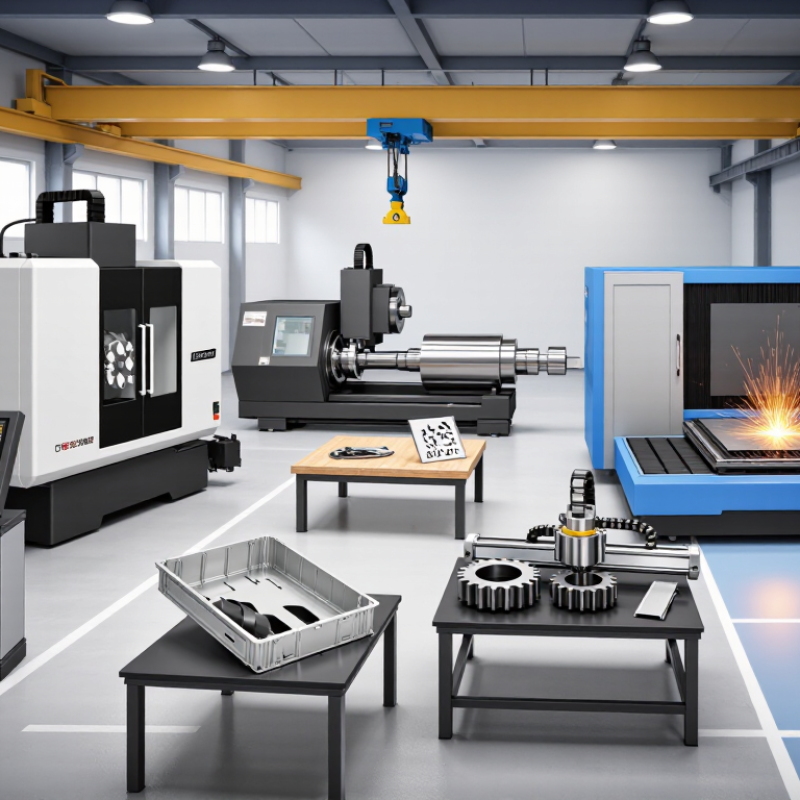
This guide compares Chinese CNC devices across machining centers, lathes, routers, and laser systems. It focuses on practical checks: positioning accuracy, repeatability, controller compatibility, spindle specifications, tooling, and local maintenance support. Buyers should also request sample-cut results and written service terms. A polished demo can hide setup limits. Even a sound specification sheet cannot replace a trial using your material and tolerances. The best choice depends on the job, budget, operator skill, and the supplier’s ability to support the machine after delivery.
What Are the Best CNC Devices in China?

Defining CNC Devices and Their Main Categories

What Are the Best CNC Devices in China?

Defining CNC Devices and Their Main Categories

A CNC device uses programmed instructions to control a machine’s movements and tools. The controller guides axes, feed rates, and cutting paths, helping operators repeat a design with consistent dimensions. The machine still needs careful setup. A poorly secured workpiece or worn tool can spoil an otherwise accurate job.

Main categories differ by how they shape material. CNC mills use rotating cutters and suit many metal parts, such as brackets with drilled holes. CNC lathes rotate the workpiece while a tool shapes it, often producing shafts or round components. Routers commonly cut wood, plastics, and some composites across larger flat surfaces. Laser and plasma cutters separate sheet materials using focused energy. Each type has different material limits, tooling needs, and operating costs. Labels alone do not tell the whole story.

Tips: Match the machine to your material, part size, and required tolerance. Ask for a sample cut and inspect its edges and dimensions. A specification sheet can look reassuring, but real results may vary with setup and operator skill. That detail is easy to overlook.

Key Criteria for Evaluating CNC Devices in China

What Are the Best CNC Devices in China?

Key Criteria for Evaluating CNC Devices in China

Choosing a CNC device starts with the workpiece, not the brochure. Match axis travel, spindle torque, and tool capacity to your actual materials and part sizes. A machine cutting aluminum may perform differently on stainless steel. Check positioning accuracy and repeatability against ISO 230-2, then request test results under stated conditions. Numbers without test conditions are hard to compare.

Reliability also depends on thermal stability, rigidity, and control-system compatibility. Ask for a sample cut using your own drawing, material, and tolerances. Inspect the surface finish and measure critical features after the machine warms up. A single showroom cut is a weak test; it may not reveal drift during a long production run. No shortcut here.

Service matters in China’s manufacturing market. Confirm spare-part availability, technician response times, installation support, and operator training near your factory. The International Federation of Robotics reported that China installed 276,288 industrial robots in 2023, representing 51% of global installations in its World Robotics 2024 report. This signals substantial automation activity, but it does not rank CNC machines. Compare total operating costs, too: tooling, energy, maintenance, and downtime can outweigh a lower purchase price. One point is easy to miss: the best specification may still be the wrong fit for your shop.

What Are the Best CNC Devices in China? — Key Criteria for Evaluating CNC Devices in China
CNC Device Type Typical Configuration and Work Range Common Materials and Applications Key Evaluation Criteria Best Fit Main Trade-Off
Vertical machining center (3-axis) Three linear axes; commonly around 500–1,500 mm of X-axis travel. Spindle speeds vary by design, with general-purpose models often in the 8,000–15,000 rpm range. Aluminum, steel, and other machinable metals; drilling, milling, tapping, and production of prismatic parts. Axis travel and table size; spindle power and taper; tool capacity; rigidity; positioning and repeatability specifications; control usability; service and spare-parts support. General-purpose machining and a broad mix of metal parts. Complex multi-sided parts may need extra setups or a rotary axis.
5-axis machining center Three linear axes plus two rotary axes; work envelopes are often smaller than those of comparable 3-axis machines. Spindle speed and table or head configuration depend on the intended work. Aluminum, steel, titanium, and complex components for aerospace, medical, mold, and precision industries. Rotary-axis range and accuracy; collision avoidance; simultaneous-control capability; machine rigidity; accessible work envelope; CAM compatibility; calibration requirements. Complex shapes, contoured surfaces, and parts that benefit from fewer setups. Higher purchase, programming, and operator-training requirements.
CNC lathe or turning center Two-axis turning is common, with optional live tooling or additional axes. Turning capacity varies widely; many general-purpose machines handle roughly 150–600 mm maximum turning diameter. Steel, stainless steel, aluminum, and other machinable metals; shafts, bushings, pins, and other rotational parts. Maximum turning diameter and length; spindle bore and speed; chuck size; turret capacity; bar-feeding options; chip management; live-tooling needs. High-volume or repeat production of round components. Less suitable for parts dominated by non-rotational features unless equipped with additional tooling and axes.
CNC router Usually three-axis, with optional rotary or additional axes. Large-format beds around 1.2 × 2.4 m are common; spindle speeds are often in the 12,000–24,000 rpm range. Wood, plastics, composites, foam, and some non-ferrous metals; panels, signage, cabinets, and lightweight components. Bed size and flatness; gantry rigidity; spindle and collet options; dust extraction; workholding; tool-change capability; material-specific cutting performance. Large sheets and lighter materials where cutting area and throughput matter. Typically less rigid than a metal-cutting machining center for heavy cuts in steel.
CNC grinding machine Available as surface, cylindrical, or tool grinders; work capacity and axis configuration are specific to the grinding process. Hardened steel, carbide, and other materials requiring fine finishes or close dimensional control; finishing and tool reconditioning. Grinding type and capacity; wheel and dressing systems; thermal control; filtration; workholding; measurement and compensation features; achievable finish specifications. Precision finishing after turning, milling, heat treatment, or toolmaking. Usually complements rather than replaces milling or turning for material removal and part shaping.

Evaluation note: The ranges above are general reference points, not specifications for every machine. Compare published capacity, accuracy, and performance under the same test conditions, and confirm that the machine is suitable for the intended material, part geometry, production volume, and local support requirements.

Leading Chinese CNC Device Makers and Their Product Ranges

Chinese CNC manufacturers cover a broad range of equipment, from compact workshop machines to production-scale systems. Their product lines often include vertical machining centers, CNC lathes, gantry machines, routers, and cutting equipment. The right choice depends on the material, part size, and required tolerance, not just the machine’s advertised power.

A machining center may suit metal parts that need milling, drilling, and tool changes in one setup. CNC lathes focus on cylindrical components, while routers commonly handle wood, plastics, and composite sheets. Larger gantry systems provide more working space, but they also need a solid floor and careful installation. Small details matter. Ask for spindle specifications, axis travel, controller options, and service arrangements. These figures help compare models more reliably than broad claims about speed or precision.

Product ranges can look similar on paper. They are not always equivalent. Buyers should review sample-part results, operating manuals, and the availability of replacement components before choosing a supplier. A machine’s stated accuracy may not reflect performance under every load or temperature. That part is easy to overlook. Clear technical documentation and responsive support are useful signs of a capable manufacturer, though neither replaces an independent test.

Comparing CNC Devices for Different Industrial Applications

For small workshops cutting aluminum panels or acrylic signs, a compact CNC router may be more practical than a heavy machining center. Its open bed makes sheet loading easier, while dust extraction and spindle power affect edge quality.

It depends.

A three-axis machining center suits steel brackets, pump housings, and repeatable parts requiring tighter tolerances. Check low-speed spindle torque, tool-change time, enclosure strength, and access for maintenance. These details matter more than a headline accuracy figure.

CNC lathes are a better fit for shafts, bushings, and other round components; compare chuck capacity and bar-feeding options against the actual workpiece sizes. For sheet metal, laser systems can produce clean, narrow cuts, while plasma equipment is often chosen for thicker plate where edge finish may be less critical.

Not interchangeable.

Across China’s industrial suppliers, configurations and support arrangements vary, so compare machines by material, daily production volume, and available floor space. I would not rely on brochure specifications alone. A sample cut or trial run can reveal vibration, setup difficulty, and real cycle time. Even then, the trial may not reflect months of continuous production, so service response and spare-part availability deserve careful checking.

Choosing a CNC Device Based on Production Requirements

Choosing a CNC device in China should start with the part, not the machine’s headline speed. A workshop cutting aluminum brackets may need a compact milling center with a rigid frame and reliable chip removal. A shop making long shafts has different needs, including suitable turning capacity and bar-feed space. Start with material, part dimensions, tolerance, and expected monthly volume.

Then check whether the machine can hold the required accuracy through a full shift. Ask for test cuts using material similar to yours, and inspect the finished parts with appropriate measuring tools. A tolerance of 0.02 millimeters means little if temperature changes or tool wear push later parts out of range. Pay attention to spindle power, tool capacity, control usability, and service response. Small details matter. A poorly placed coolant nozzle can leave chips packed around a workpiece.

Production targets also shape the choice. High-volume work may justify automatic loading, while short runs often benefit more from quick setup and flexible tooling. Request a cycle-time estimate that includes tool changes and part handling, not just cutting time. Check spare-part availability and operator training before committing. The cheapest machine can become expensive if downtime is frequent. Still, specifications do not tell the whole story; a sample trial may reveal awkward setup steps that the sales sheet overlooks.

What Are the Best CNC Devices in China? Choosing by Production Requirements

Controlled-axis count is one practical way to compare CNC machine configurations: basic turning commonly uses two axes, while milling machines are available in three-, four-, and five-axis configurations. Choose based on part geometry, setup needs, and production volume. These are typical configurations; specific machines may differ.

Article Source: