WORLD electronics offers a complete line of electronic circuit board manufacturing and assembly services, as well as advanced manufacturing services. Our commitment to quality and service is second to no supplier.
Learn MoreOur team of engineers assists you in the development of new designs to optimize quality manufacturability (DFM) and testability, resulting in cost minimization and reduced product development time.
Learn MoreOur flexible manufacturing floor layout and highly trained staff allow for Quick Set-up and Tear Down of small volume prototype runs. This combination grants our customers the benefit of turning new designs quickly and accurately.
Learn MoreWORLD electronics is dedicated to quality. This quality is what underpins our commitment to thorough testing. Our engineers can develop a set of tests that ensure reliability and high performance in all products.
Learn MoreSupply chain management has crossed over from being a narrow management function to being a key operational function.
Learn MoreChina has a broad supplier base for wire harness components, but choosing a dependable partner takes more than comparing prices. A Harness Connector must fit the application, hold terminals securely, and perform consistently through vibration, heat, and repeated assembly. Small details matter. A loose crimp, unclear drawing revision, or delayed sample can disrupt a production schedule.
This guide looks at how to assess leading Chinese harness connector manufacturers, rather than treating one company as best for every project. It considers product range, engineering support, tooling capability, quality controls, customization, and communication. Ask for current specifications, material details, sample evaluation, and evidence of inspection practices. Check whether the supplier can explain tolerances and respond clearly when a drawing changes. Those conversations often reveal more than a polished catalog. Still, supplier claims need verification, and no checklist replaces testing parts in the real application. This is worth remembering. Cost matters, but a low quote may exclude tooling, testing, or packaging requirements. Buyers should also confirm connector labeling, terminal compatibility, and sample lead times before placing an order. The sections ahead offer a practical starting point for comparing factories, trading companies, and specialized connector makers in China. The best fit is the one that meets documented needs reliably, not the one with the loudest promise. Maybe that sounds obvious. Yet it is easy to overlook when timelines are tight.
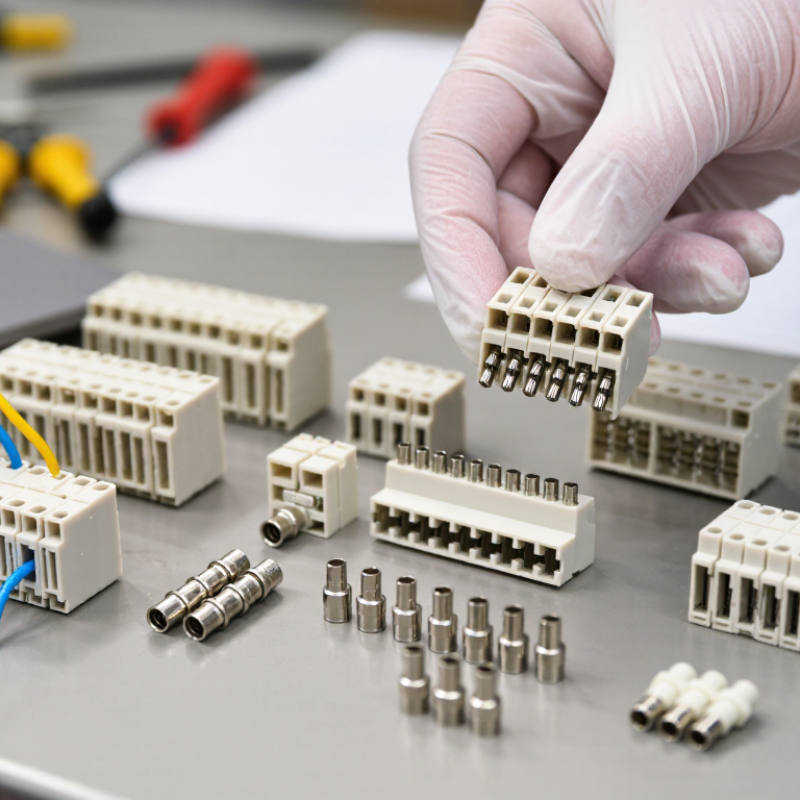
A harness connector joins electrical circuits within a wiring harness, allowing grouped wires to connect to equipment or another harness. Its terminals carry current or signals; its insulated housing helps protect them from contact, vibration, moisture, and dust. A locking tab keeps the connection seated, though poor fit can still cause intermittent faults. In a car, connectors link sensors, lamps, control units, and dashboard systems. They also appear in industrial machines, appliances, and communication equipment.
Small part. Big responsibility.
Industry reports show the scale of these applications. Grand View Research estimated the global automotive wiring harness market at USD 46.4 billion in 2023, with projected growth through 2030. Fortune Business Insights valued the broader connector market at USD 82.31 billion in 2023 and forecast further expansion. These figures cover larger markets, not harness connectors alone. That distinction matters.
For buyers, useful checks include terminal plating, wire size, sealing performance, temperature range, and locking strength. A connector that looks sturdy may still fail under heat or repeated vibration. Specs help, but real-use testing can reveal gaps.
In China, harness connector manufacturers are best classified by application and production capability, not by factory size alone. Automotive suppliers serve high-volume vehicle programs, while industrial and appliance suppliers handle smaller runs and varied operating conditions. The China Association of Automobile Manufacturers reported 30.16 million vehicles produced in 2023, including 9.59 million new-energy vehicles. That scale helps explain the demand for suppliers able to manage repeatable assembly and changing connector specifications.
A second group focuses on engineering-led or custom production. These manufacturers may develop terminal-and-housing combinations, sealed connectors, or overmolded cable assemblies. The International Energy Agency reported that electric-car sales in China exceeded 8.1 million in 2023, adding demand for connectors designed around vibration, heat, and high-voltage systems. Details matter. Buyers can compare crimp-height controls, material traceability, continuity-test records, and sample inspection reports. These are more useful than broad claims about quality. This classification is practical, but imperfect: one factory may serve automotive and industrial customers alike. A site audit can reveal whether its testing equipment and process controls match the specific harness being sourced.
A practical way to classify manufacturers is by the environmental protection levels of the connector products they make. The chart shows the two digits in selected IEC 60529 IP codes: the first digit indicates protection against solid objects, and the second indicates protection against water.
These are protection-code digits, not performance scores or a ranking of manufacturers. IP67 and IP68 both indicate dust-tight protection; the water-immersion conditions for IP68 are specified for the product. Manufacturers may serve more than one product class.
Leading Chinese harness connector manufacturers distinguish themselves through process control, not just competitive pricing. The IEA’s Global EV Outlook 2024 reports nearly 14 million electric cars were sold in 2023, about 18% of global car sales. This shift increases demand for dependable high-voltage insulation, secure terminal retention, and consistent crimping. Look for suppliers with in-house tooling, documented material controls, and the ability to adjust connector designs for real assembly conditions. Ask to inspect crimp-height records and cross-sections, not only a polished sample.
Strong manufacturers validate products through measurable tests, including temperature cycling, vibration, contact resistance, and water-ingress checks when applicable. Their procedures should align with relevant connector workmanship requirements, such as IPC/WHMA-A-620. Small details matter. Lot-level traceability should connect incoming terminals and wire to finished harnesses, so failures can be investigated quickly. Clear engineering-change records also help prevent mixed revisions on the production line. A site audit can reveal whether test equipment is calibrated and operators follow written work instructions. Still, a tidy audit does not prove every batch is consistent. Review recent inspection data, corrective-action records, and sample results before committing to production.
| Capability | What Leading Manufacturers Demonstrate | Evidence to Request | Why It Matters |
|---|---|---|---|
| Engineering and customization | Ability to work from drawings, samples, or electrical requirements; support for connector selection, harness layout, and design revisions. | Design review records, controlled drawings, bills of materials, and documented approval of changes. | Reduces fit, routing, and specification errors before production begins. |
| Connector and material sourcing | Documented control of connector terminals, housings, seals, wire, and other components, with a process for approving substitutions. | Approved-vendor records, material specifications, incoming inspection results, and traceable component lot information. | Component compatibility and consistent material quality affect electrical performance and service life. |
| Production process control | Controlled cutting, stripping, crimping, insertion, sealing, and assembly processes, supported by documented work instructions. | Process flow, operator training records, equipment maintenance logs, and in-process inspection plans. | Repeatable processes help limit assembly variation and prevent defects from reaching final inspection. |
| Crimp and assembly quality | Crimp tooling and settings matched to the specified wire and terminal, with checks appropriate to the product and customer requirements. | Crimp-height or pull-test records where specified, tooling verification, and workmanship criteria such as IPC/WHMA-A-620 when contractually applicable. | Poor crimps or terminal insertion can cause intermittent connections, overheating, or circuit failure. |
| Electrical testing | A defined test plan covering applicable checks such as continuity, short circuits, miswiring, and insulation resistance. | Test specifications, equipment calibration records, sample test reports, and product-level acceptance criteria. | Verifies that each harness meets its electrical requirements before shipment. |
| Environmental and durability validation | Testing selected according to the intended application, which may include temperature, vibration, moisture, or chemical exposure. | A test plan linked to customer specifications and applicable standards, plus reports identifying samples, methods, and results. | Confirms suitability for the actual operating environment; test requirements vary by product and industry. |
| Quality management system | A documented quality system appropriate to the target market; automotive programs may require IATF 16949, while other applications may specify ISO 9001. | Current certificates, certification scope, issuing-body details, and audit or corrective-action records where available. | A certificate is useful only when its scope and controls match the product and production site being evaluated. |
| Traceability and change control | Ability to link production lots to relevant materials, inspections, and test records, and to notify customers of approved changes. | Example lot records, revision-controlled documents, nonconformance reports, and a documented change-notification process. | Supports root-cause investigation and helps prevent unapproved materials or revisions from entering production. |
| Capacity and delivery planning | Production planning aligned with order forecasts, realistic lead times, and the ability to manage sample, pilot, and repeat orders. | Capacity plan, sample and production schedules, delivery-performance data, and escalation procedures for supply disruptions. | Helps assess whether a supplier can support both initial qualification and ongoing demand. |
| Compliance and documentation | Readiness to provide product and material documentation required by the application and destination market, without treating all requirements as universal. | Applicable declarations, material information, technical data sheets, and customer-specific compliance records. | Clear documentation supports customer approval and market access; requirements depend on the product and its use. |
Evaluation note: Capabilities and certifications should be verified for the specific production site, product, and order. Applicable standards and testing depend on the customer specification and end use.
When comparing harness connector manufacturers in China, ask which standards govern the actual product and process. ISO 9001 is a useful baseline for documented quality management, corrective action, and traceability. The ISO Survey of Certifications 2022 recorded 1,265,216 valid ISO 9001 certificates across 189 countries. That figure shows the standard’s wide adoption, not that every certified factory makes reliable connectors. Paperwork is not proof.
For automotive programs, check whether the supplier’s quality system aligns with IATF 16949, then review production controls and change-management records. For cable and wire harness workmanship, IPC/WHMA-A-620 provides criteria for assembly quality and acceptance.
Ask for recent inspection records: crimp-height measurements, pull-test results, terminal retention checks, and continuity data from the same product family. Small details matter. A neat sample can still hide inconsistent crimping. Request test reports from competent laboratories, and confirm the tested material matches the quoted design.
I would not treat a certificate or audit score as a guarantee; that shortcut is tempting, but weak. Compare evidence from routine production, not just a polished presentation.
Choosing a Chinese harness connector manufacturer should begin with your project’s operating conditions, not a catalogue price. Specify current, voltage, temperature range, vibration, ingress protection, mating cycles, and expected volume. Ask for drawings, material specifications, plating details, and test records linked to each part number. Small details matter: a weak crimp or an unsealed rear cavity can stop an assembly line.
MarketsandMarkets’ Wire Harness Market report estimated a market value of USD 81.3 billion in 2023 and projected USD 103.9 billion by 2028. That forecast signals demand, not supplier quality. Qualify capacity with evidence: crimp-height records, pull-test results, continuity checks, and lot-level traceability. Ask whether production follows IPC/WHMA-A-620 requirements where applicable, and request a factory audit or live process review. Samples first. The supplier should explain failures clearly, not just send certificates.
Compare quotations line by line, including tooling costs, minimum order quantities, tolerances, and lead times. Approve a pilot batch before scaling, and agree on defect criteria in writing. A low quote may still be right, but it deserves scrutiny if the supplier cannot explain its test method or change-control process. I would also check response quality; a quick, specific answer can reveal more than a polished sales presentation.