Best Printed PCB Board Manufacturer in China?
Choosing the best printed pcb board manufacturer in China requires more than comparing unit prices. It requires evidence, process visibility, and consistent engineering support. China remains a major center for global PCB production, supported by dense supply chains for laminates, copper foil, drilling, plating, and electronic assembly.
Market data shows why supplier selection matters. Fortune Business Insights estimated the global PCB market at approximately USD 76.9 billion in 2023, with continued growth driven by electric vehicles, telecommunications, industrial controls, and consumer electronics. Prismark’s industry analyses also identify China as the largest national PCB production base. However, published estimates differ because some reports include rigid boards, flexible circuits, substrates, or assembly services. That difference deserves attention.
The strongest manufacturers demonstrate capability through measurable controls. Look for ISO 9001 and IATF 16949 certification where applicable. Review UL recognition, IPC-6012 compliance, impedance-control records, and finished-copper measurements. Ask for sample cross-sections. A reliable factory should explain its layer registration, drill compensation, solder-mask clearance, and surface-finish controls clearly.
Details reveal experience.
A professional supplier can provide AOI images, electrical-test records, material certificates, and lot-level traceability. It should also discuss DFM risks before production, such as narrow annular rings, insufficient solder-mask dams, or excessive aspect ratios. IPC standards provide useful technical benchmarks, but certification alone does not guarantee every delivery will be flawless. I have seen supplier comparisons focus too heavily on equipment photographs and too little on corrective-action history. That assumption needs testing. The best choice is usually the manufacturer that combines stable quality, transparent communication, realistic lead times, and documented improvement.
China’s PCB Industry Scale: About 50% of Global Output and Its Significance
Best Printed PCB Board Manufacturer in China?
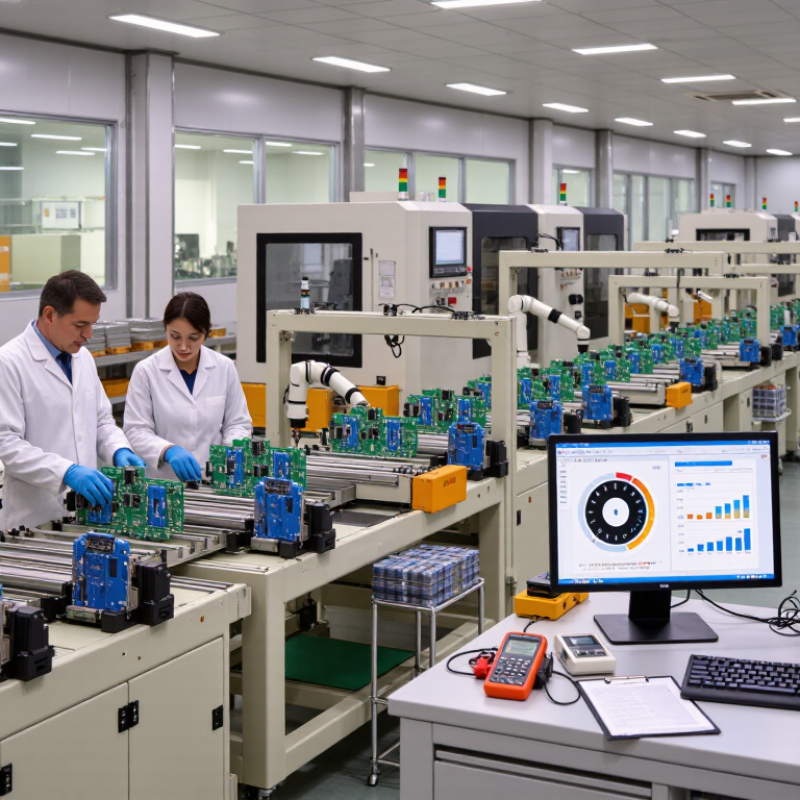
China’s PCB industry produces about 50% of the world’s printed circuit boards. This scale reflects mature supply chains, skilled engineering teams, and extensive material access. It also supports efficient production for rigid, flexible, and high-density boards. However, the figure can vary by year and measurement method. Public industry reports may count production value, volume, or factory capacity differently. That detail matters when comparing suppliers.
For buyers, a large national industry does not automatically identify the best manufacturer. I have found that process control often matters more than impressive capacity figures. Check layer alignment, impedance testing, copper thickness, and solder-mask consistency. Ask for recent inspection records and sample boards. A reliable supplier should explain tolerances clearly, not hide behind general claims. One weakness remains: some evaluations focus too heavily on price and overlook long-term failure risks.
Tips: Request a small prototype batch first. Confirm material specifications in writing. Review test methods, delivery history, and corrective-action records. Visit the production site when practical. Also, compare the supplier’s experience with your board’s actual application, especially for fine-pitch components or heat-sensitive designs. “High capacity” is not enough. Supplier audits should include documentation, traceability, and communication during engineering changes. An honest review may reveal gaps, but those gaps are useful before mass production.
Best Printed PCB Board Manufacturer in China? China’s PCB Industry Scale: About 50% of Global Output and Its Significance
China is the largest PCB manufacturing region worldwide, accounting for approximately half of global PCB production value. This scale reflects a mature supply chain, broad manufacturing capacity, strong electronics demand, and efficient access to materials and components. The figures shown are rounded 2023 industry estimates and exclude individual company or brand data.
Source: Rounded regional estimates based on publicly reported global PCB industry analyses, including Prismark market data.
Quality Verification: ISO 9001, IATF 16949, RoHS, AOI, and Electrical Testing
Selecting the best printed PCB board manufacturer in China requires evidence beyond a polished website. ISO 9001 certification shows that documented quality processes exist, but it does not guarantee every board is defect-free. The ISO Survey 2022 recorded 1,265,216 valid ISO 9001 certificates worldwide, making certificate verification essential. Ask for the certificate number, scope, expiry date, and issuing body.
IATF 16949 is important for automotive and safety-critical programs because it emphasizes risk control, traceability, corrective action, and process capability. RoHS compliance should be supported by current material declarations and laboratory test reports, not a copied statement. Check solder finish, laminate, copper thickness, and restricted substances against your actual specification. Small gaps matter.
AOI should inspect every suitable assembly surface, while electrical testing should confirm continuity, isolation, and programmed net performance. IPC industry studies consistently identify process control and test coverage as major drivers of PCB reliability. Ask how false calls are reviewed, how test fixtures are maintained, and whether failed boards remain traceable. The answer may be imperfect. That is useful. A credible factory admits limits, records nonconformities, and shows corrective actions. Request sample inspection records, cross-section images, and a pilot run before volume production. A certificate opens the conversation. Process evidence earns trust.
Engineering Metrics: 35 μm Copper, ±10% Impedance Control, and Layer Count
Best Printed PCB Board Manufacturer in China? Engineering Metrics Matter
When comparing a printed PCB board manufacturer in China, I inspect engineering data before production photos. A claimed 35 μm copper base provides a useful starting point for current capacity. However, finished copper may become thicker after plating. That difference affects trace width, etching, and thermal performance. Ask for cross-section reports from actual production lots. Small details matter.
Impedance control deserves similar attention. A ±10% target sounds reasonable, but it only works with a controlled stackup. The manufacturer should document dielectric thickness, resin content, copper roughness, and trace geometry. Test coupons should match the production panel. Time-domain reflectometry can then verify controlled traces, such as 50-ohm single-ended lines or 100-ohm differential pairs. Measure it properly.
Layer count should support routing, power distribution, and signal integrity, not inflate the quotation. A four-layer board may suit a compact controller. An eight-layer design can provide better reference planes and shorter return paths. I have seen dense boards fail because the layer plan was chosen too late. More layers do not automatically mean better engineering. A practical review should connect copper thickness, impedance results, and layer construction to the actual operating environment. Some documentation may still be incomplete. That is where careful questions protect the design.
Manufacturer Ranking: Cost, Yield, Lead Time, Certifications, and Technical Support
Best Printed PCB Board Manufacturer in China?
A practical ranking should compare more than the lowest quotation. Request identical Gerber files, stack-up details, surface finish, and order quantities from every manufacturer. Then compare the full cost, including tooling, testing, shipping, and possible rework. A cheap board can become expensive after assembly delays. Ask for recent yield data by product type. Confirm whether yield means first-pass production or final inspected boards. Small wording differences matter.
Lead time should be measured from file approval to shipment, not from the first email. Reliable factories provide a dated production schedule and explain capacity limits during peak periods. Check process certifications, quality-system records, material traceability, and electrical safety documentation. Certificates alone are not enough. Review their expiration dates and audit scope. A clear corrective-action report often reveals more than a polished certificate.
Technical support deserves a separate score. Strong engineers review impedance requirements, drill sizes, copper balance, and manufacturability before production. They should answer with marked drawings, measured data, and realistic alternatives. Ask how quickly they handle a failed test coupon or dimensional issue. Response time matters. During supplier checks, inspect sample boards under magnification and compare solder mask alignment, plating coverage, and edge quality. This ranking method is useful, but not perfect; factory data can be selective, and a single successful sample may hide unstable volume production.
Best Printed PCB Board Manufacturer in China? - Manufacturer Ranking: Cost, Yield, Lead Time, Certifications, and Technical Support
| Rank |
Anonymous Manufacturer Profile |
Best-Fit Production Focus |
Cost Index
(100 = Lowest) |
Typical First-Pass Yield |
Prototype Lead Time |
Mass-Production Lead Time |
Typical Certifications and Standards |
Technical Support Capability |
Overall Score |
| 1 |
Profile A
High-reliability integrated manufacturer |
Automotive, industrial control, medical electronics, HDI, rigid-flex, and complex multilayer boards |
82–92 |
98.5%–99.5% |
5–8 working days |
15–25 working days |
ISO 9001; ISO 14001; IATF 16949 where applicable; UL recognition; RoHS; REACH; IPC-A-600 and IPC-6012 process alignment |
Dedicated engineering review, stack-up optimization, impedance planning, DFM/DFT feedback, material substitution guidance, and corrective-action reporting |
91/100
★★★★★ |
| 2 |
Profile B
Advanced quick-turn specialist |
Prototype-to-medium-volume rigid, multilayer, HDI, and high-density interconnect applications |
88–96 |
98.0%–99.2% |
3–6 working days |
12–20 working days |
ISO 9001; UL recognition; RoHS; REACH; IPC-A-600 process controls; controlled impedance capability |
Fast pre-production review, online engineering communication, stack-up proposals, impedance calculations, and prototype issue analysis |
89/100
★★★★★ |
| 3 |
Profile C
High-volume cost-efficiency manufacturer |
Consumer electronics, networking equipment, LED products, appliances, and standard multilayer production |
94–100 |
97.8%–99.0% |
6–10 working days |
15–22 working days |
ISO 9001; ISO 14001; UL recognition; RoHS; REACH; IPC-A-600 process alignment |
Standard DFM review, production-readiness checks, material confirmation, engineering change support, and batch quality reporting |
86/100
★★★★☆ |
| 4 |
Profile D
Flexible and rigid-flex specialist |
Wearable devices, compact electronics, cameras, sensors, medical instruments, and space-constrained assemblies |
78–90 |
97.5%–98.8% |
8–12 working days |
18–30 working days |
ISO 9001; UL recognition; RoHS; REACH; IPC-6013 process alignment; material traceability controls |
Flexible-material selection, bend-radius guidance, coverlay design review, stiffener design, stack-up analysis, and assembly-risk evaluation |
84/100
★★★★☆ |
| 5 |
Profile E
Standard board and prototype supplier |
Simple two-layer and four-layer boards, low-risk prototypes, educational products, and small-volume electronics |
100–108 |
96.5%–98.2% |
4–8 working days |
12–18 working days |
ISO 9001; RoHS; REACH; basic UL-compliant material options; IPC-A-600 visual acceptance practices |
Gerber-file review, basic DFM feedback, manufacturability confirmation, order clarification, and standard quality documentation |
80/100
★★★★☆ |
| 6 |
Profile F
Low-cost high-volume supplier |
Price-sensitive consumer products, simple single-sided boards, two-layer boards, and mature designs |
100–115 |
96.0%–98.0% |
7–12 working days |
18–35 working days |
ISO 9001; RoHS; REACH; selected product-line certifications subject to scope and material specification |
Basic engineering communication, production drawing review, standard material confirmation, and routine quality feedback |
75/100
★★★☆☆ |
|
Evaluation basis: The ranking uses an indicative industry benchmark for anonymous manufacturer profiles in China. The composite score weights technical capability (25%), first-pass yield (20%), lead time (20%), certifications and process controls (15%), technical support (10%), and cost competitiveness (10%). Lead times and yields vary by layer count, material, surface finish, order quantity, testing requirements, and production capacity.
|
Important: Certification scope, UL recognition, automotive qualification, medical-device suitability, and IPC compliance should be verified against the specific factory, production site, product category, and current certificate validity before placing an order.