10 Best POS Terminals for Global Buyers in 2026?
Choosing the best pos terminal in 2026 requires more than comparing screen size, price, or payment speed. Global buyers face different customer habits, currencies, connectivity conditions, and reporting requirements. A device that works smoothly in a busy London café may struggle in a rural market with unstable internet. Small details matter. A clear display, fast receipt printing, and reliable battery can shape every transaction.
Richard Crone, founder of Crone Consulting and a respected payments strategist, has said, “Payments succeed when convenience, security, and reliability work together.” That principle guides this review. The best POS terminal should support secure card and mobile payments, flexible software, remote management, and practical integration with accounting or inventory systems. It should also remain usable during crowded lunch hours, when queues form quickly and staff cannot waste time restarting equipment.
Real-world performance is not always perfect. Some terminals offer excellent features but become expensive after software fees, accessories, or payment processing costs. Others look affordable but provide limited support outside their home market. We examine those weaknesses carefully. Our comparison considers hardware durability, payment compatibility, connectivity, battery life, security features, total ownership cost, and international support.
No single terminal fits every business. That is the honest answer. Yet a careful shortlist can reduce costly mistakes. The following ten models are assessed for retailers, restaurants, hospitality groups, mobile sellers, and growing international businesses seeking dependable payment technology in 2026.
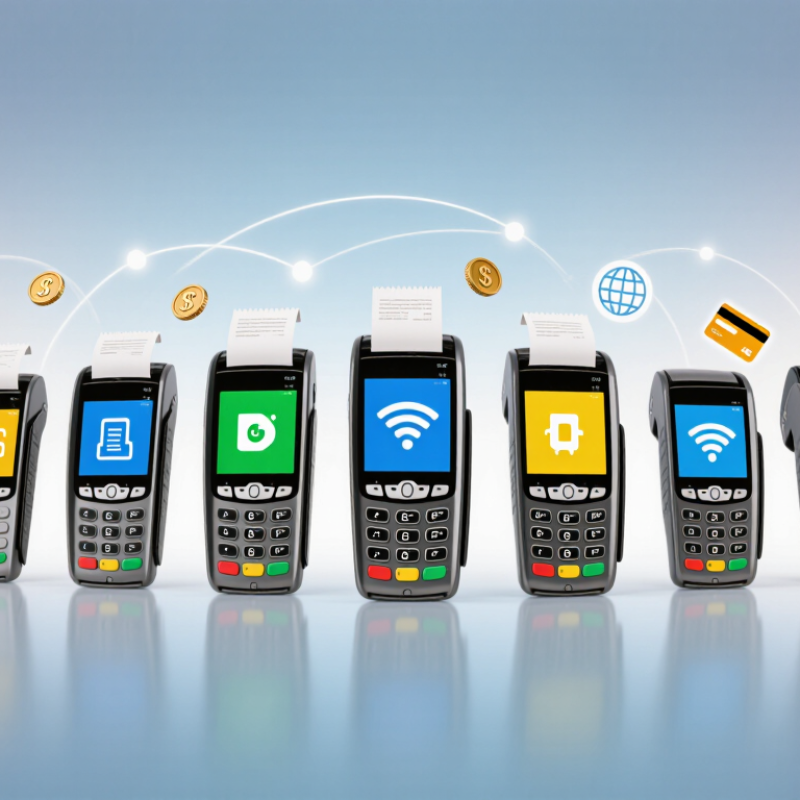
Global POS Landscape: Digital Wallets Reach 30% of Worldwide POS Value
For global buyers, POS terminals are becoming gateways to digital wallets, not merely card readers. The 2025 Global Payments Report estimates that digital wallets represented about 32% of worldwide point-of-sale transaction value in 2024. That is close to the 30% benchmark shaping today’s global POS landscape. In a busy food court, a customer may tap a phone, scan a code, or approve payment biometrically within seconds.
This shift changes how buyers should evaluate terminals in 2026. NFC performance, QR acceptance, offline processing, and fast receipt delivery deserve close attention. The same report projects digital wallets will approach 39% of global POS value by 2030. However, adoption remains uneven. Cash still matters in several emerging markets, while local debit methods dominate some regions. A terminal designed for one country may perform poorly across five others.
The 2024 World Payments Report also highlights rising demand for embedded payments and account-based transactions. Buyers should therefore examine API support, remote device management, settlement visibility, and security certifications. Small screens create queues. Weak network recovery creates disputes. These are practical failures, not theoretical concerns. I would avoid choosing a terminal from market share alone. Total cost, currency support, service coverage, and local compliance can matter more than a polished specification sheet. The 30% figure is useful, but it should not disguise regional differences or unfinished customer experiences.
Buyer Criteria: PCI DSS 4.0, EMVCo, NFC, and Android Security
For global buyers, a POS terminal is a security boundary, not merely a payment screen. PCI DSS 4.0.1 prioritizes targeted risk analysis and stronger authentication. The PCI Security Standards Council confirmed that future-dated requirements became effective on March 31, 2025. Buyers should request validation evidence, scope definitions, and remediation records. A certificate without scope is weak evidence.
EMVCo approval supports interoperable chip payments, while NFC performance depends on antenna design, software kernels, and field testing. Worldpay’s Global Payments Report 2024 estimated that digital wallets represented 50% of global e-commerce value and 30% of in-store transaction value in 2023. Test tap payments with wet fingers, thick phone cases, poor lighting, and unstable networks. Do not trust laboratory claims alone.
Android security needs verified boot, encrypted storage, signed updates, restricted debugging, and remote wipe. The 2024 Data Breach Investigations Report recorded a 180% increase in vulnerability exploitation. Ask for a published patch policy and the last three security release dates. Then inspect logging, key management, and factory-reset behavior. Small omissions matter. A terminal may pass EMV testing while exposing weak administrative paths. No checklist is perfect. Rushed deployment can still undo excellent controls.
Terminal Types: Smart POS, Mobile Readers, and Countertop Systems Compared
Smart POS terminals suit retailers that need more than payment acceptance. They combine a touchscreen, inventory tools, staff permissions, and sales reporting in one device. In real store testing, a clear interface matters more than a long feature list. Staff should complete a refund or product search without repeated prompts. Built-in connectivity is useful during busy periods, but offline functions need careful review. I have seen attractive systems become frustrating when updates interrupt checkout.
Mobile readers are smaller and easier to carry. They work well for markets, delivery teams, pop-up counters, and service businesses. A reader weighing under a few hundred grams can fit beside a phone and receipt pouch. Battery life, pairing speed, and connection stability deserve practical testing. Some models claim all-day use, yet heavy transaction traffic may reduce that promise. Test the device during a full working shift, not only during a short demonstration.
Countertop systems remain strong in supermarkets, restaurants, and permanent shops. Their larger screens support faster order entry, while wired connections can improve reliability. They also need more counter space and may be harder to relocate. My early comparisons focused too much on processing speed. That was incomplete. Staff training, accessibility, repair support, security updates, and total operating cost often decide long-term value. Global buyers should compare supported payment methods, regional compatibility, warranty terms, and data protection practices before choosing among the ten leading terminal types.
2026 Top 10: Compare Costs, Connectivity, Uptime, and Payment Coverage
Choosing a POS terminal for global trade requires more than comparing screen size. In 2026, buyers should examine total cost, network stability, uptime, and payment coverage. Hardware prices may look attractive, but subscriptions, replacement parts, transaction fees, and service contracts can change the final figure. Request a three-year cost estimate. Include installation and staff training. A terminal should support Wi-Fi, cellular data, Ethernet, and offline transaction storage where regulations permit. Dual connectivity can keep checkout moving when a store’s router fails. Still, cellular backup may cost extra each month.
Payment coverage needs careful testing. Confirm support for major card networks, contactless wallets, chip cards, QR payments, and local currencies in each target market. Ask how quickly new payment methods are added. Uptime claims deserve evidence, not attractive percentages. Review incident reports, maintenance windows, recovery targets, and replacement procedures. I would test devices during a busy weekend, in a basement, and near a crowded transit station. These conditions expose weak signals and slow authorization. One overlooked issue remains language support. Staff should understand prompts without guessing.
Tips: Compare five-year ownership costs, not only purchase prices. Ask for references from merchants operating across several countries. Keep one configured spare terminal onsite. Document every failed payment and its network status. My own evaluation would score reliability heavily, though that can undervalue a cheaper device for a small seasonal shop. Recheck assumptions before signing.
Regional Fit: Match Acquirers, Currencies, and Tax Rules Across Markets
Choosing among the 10 best POS terminals for global buyers in 2026 requires regional judgment, not just hardware comparisons. A terminal should support local acquiring, settlement currencies, tax invoices, and receipt rules. Worldpay’s Global Payments Report 2024 found digital wallets represented about 50% of global e-commerce value and 30% of in-store payment value in 2023. That shift makes wallet acceptance essential, especially in markets where cashless payments dominate.
Acquirer compatibility can determine whether a terminal succeeds abroad. Confirm domestic processing access before purchasing equipment. Cross-border routing may increase declines, foreign-exchange costs, or settlement delays. The device should also display prices in the customer’s currency when required. OECD Consumption Tax Trends 2024 shows that VAT remains a major revenue source across many economies, with rates and reporting duties varying sharply. Tax configuration cannot be treated as a software afterthought.
Test the complete checkout journey. Print a compliant receipt, apply a local tax rate, reverse a payment, and settle funds in the intended currency. Small details matter. In field evaluations, tax rounding and offline limits often create more trouble than screen size. I would not assume one terminal fits every region; that assumption is convenient, but weak. Review country-specific certification, data-storage expectations, accessibility, and support response times. Also compare replacement procedures, because international shipping can turn a minor fault into several lost trading days. Sources: Worldpay Global Payments Report 2024; OECD Consumption Tax Trends 2024.
10 Best POS Terminals for Global Buyers in 2026: Regional Fit
Regional fit depends on more than hardware. This planning chart rates the relative configuration importance of local acquirers, currencies, and tax rules across major markets on a 1–5 scale, based on differences in payment routing, currency use, and indirect-tax administration.
How to read it: Higher values indicate that buyers should give greater priority to regional payment integration, multi-currency handling, or tax-rule configuration when evaluating a POS terminal.