What Is the Best Tactical Watch to Buy in 2026?
Choosing the best Tactical Watch to buy in 2026 is not about finding the toughest-looking case. It is about choosing a watch you can read quickly, wear comfortably, and rely on when conditions become tiring or unpredictable. A bright display helps in a dark tent. Raised controls are easier to use with gloves. A secure strap matters when sleeves, rain, or movement get in the way.
Kikuo Ibe, the watch engineer who created G-Shock, is often associated with a simple design principle: “Never give up.” That persistence helped shape a watch built to withstand hard knocks. It also offers a useful lens for this guide: durability matters, but so does practical design. A bulky watch may feel reassuring in a store and annoying after a full day outdoors. That trade-off is easy to overlook.
This comparison looks at useful features rather than dramatic claims: legibility, battery life, water resistance, shock protection, navigation tools, and comfort. It considers digital, analog, and hybrid options, since no single style suits every user. Price and maintenance matter, too. Some features sound essential until you realize you rarely use them. Others, like a clear backlight or dependable controls, earn their place every day.
There is no perfect pick. The right Tactical Watch depends on your routine, budget, and tolerance for weight. The recommendations ahead aim to make those trade-offs clearer, not pretend they disappear.
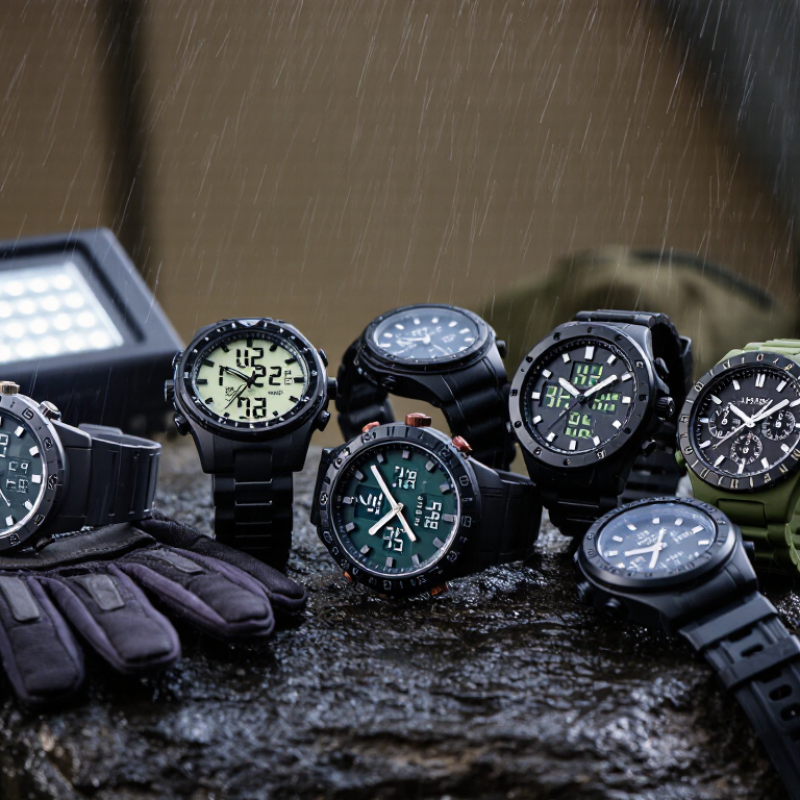
What Defines a Tactical Watch in 2026?
In 2026, a tactical watch is defined less by a rugged-looking case than by dependable function. Clear numerals should remain readable in dim rooms and bright sunlight. Strong lume helps, but it cannot replace an easy-to-read dial. A simple elapsed-time bezel or countdown feature can be useful when timing practical tasks.
Durability matters, too. Look for a stated water-resistance rating, a shock-resistant construction, and a strap that stays comfortable through a long day. Digital models may offer alarms, timers, and reliable backlighting; analog models can be simpler to operate. Neither type is automatically better. Check the manufacturer’s specifications, since “tactical” is not a uniform technical standard. A bulky case may seem reassuring, yet become irritating under a jacket cuff. That trade-off is easy to overlook.
Tips: Try reading the display at arm’s length in low light. Check whether the buttons are easy to use with gloves. Choose features you will actually use, and verify battery or charging details before buying.
The best choice depends on your routine, not a dramatic scenario. For daily wear, prioritize legibility, comfort, and a power source you can manage. If you work outdoors, a secure strap and clear timer may matter more than extra modes. Keep expectations realistic: even a well-built watch needs sensible care, and water resistance can decline as seals age. A watch can be capable without being complicated.
How to Identify Your Needs and Intended Use
Choosing a tactical watch starts with your actual week, not a feature list. Will you use it on wet job sites, long hikes, or overnight shifts? Each setting changes what matters. For outdoor users, the Outdoor Industry Association’s 2024 Outdoor Participation Trends Report counted 175.8 million U.S. participants in 2023. The National Park Service recorded 325.5 million recreation visits that year. These figures do not prove which watch is best; they show why varied outdoor conditions deserve attention.
Write down your needs before comparing models: readable digits in dim light, glove-friendly controls, water resistance, dependable timing, and battery life that suits your longest trip. Check the operating temperature and charging method, too. A bright display can drain power faster than expected. Start there. For daily wear, a bulky case may snag on sleeves or feel tiring by evening. For trail use, test the strap fit and controls with cold or damp hands, if possible. That matters. It is easy to overvalue a long feature list and overlook comfort. Choose the few functions you will use consistently, then verify specifications in the manufacturer’s documentation and independent testing. A watch that fits your routine beats one that looks prepared for every scenario.
Choosing a Tactical Watch: Water-Resistance Markings
Water-resistance markings correspond to static test pressure: 1 bar is approximately equivalent to 10 meters of water-column pressure. These figures are laboratory ratings, not guaranteed usable diving depths. For field use, match the rating to your expected water exposure and also consider readability, usable controls, and battery life.
Which Features Matter Most for Tactical Performance?
For tactical performance, prioritize dependable timekeeping, clear legibility, glove-friendly controls, and useful navigation. A dim, high-contrast display should remain readable beneath a sleeve or in rain. Buttons matter when a touchscreen becomes awkward. GPS.gov states that GPS-enabled devices typically locate users within 4.9 meters under open sky. That is useful, not magic. Trees, buildings, and terrain can reduce accuracy, so check for waypoint storage and reliable compass functions. A feature list can look impressive; I would still test the controls with gloves before trusting them.
Battery life should match the longest outing, with reserve for cold weather and frequent navigation. Solar charging can help, but it should not replace a realistic battery estimate. The U.S. Department of Defense’s MIL-STD-810H describes environmental test methods for conditions such as temperature, shock, and vibration. It is not a blanket guarantee that every watch survives field use. Check which tests were actually performed, and confirm water resistance suits your activities. Barometric weather readings are useful, but they can be wrong; compare them with forecasts. Small details matter. A raised bezel, secure strap, and readable night display may outperform extra functions you rarely use.
How to Compare Watch Types, Materials, and Power Sources
The best tactical watch depends on the work, not a dramatic feature list. Digital models usually make alarms, timers, and elapsed time easy to read at a glance. Analog hands can be simpler to scan, especially when the display is uncluttered. Hybrid designs offer both, but extra functions may mean more settings to manage. That trade-off matters.
Compare materials by how you will wear the watch. Stainless steel handles knocks well, but it can feel heavy during long shifts. Reinforced polymer is lighter and often more comfortable, though its surface may show scratches. Sapphire resists scratches; mineral glass can cost less to replace. Check the stated water resistance and test the controls with gloves if you expect to wear them. A rating alone does not guarantee suitability for every activity.
Power sources also change the routine. Quartz watches use replaceable batteries, while solar models need regular light exposure. Mechanical watches avoid batteries but require winding or movement, and may need periodic servicing. No option is perfect. Tips: Choose a display you can read in dim light. Check whether the battery or charging routine fits your schedule, and try the strap for comfort before buying. I would not choose a watch by specifications alone; small buttons can be frustrating when your hands are cold.
How to Choose the Best Tactical Watch for Your Budget
The best tactical watch for your budget is the one you can read quickly and maintain easily. Start with the conditions you actually face: rain, dusty trails, night shifts, or daily desk work. A clear display, grippy controls, and a secure strap matter more than a long list of features. Keep it simple.
At a lower price, prioritize dependable timekeeping, a legible dial, and a case that feels solid without being cumbersome. Check the water-resistance rating carefully; it does not mean every watch is suitable for swimming or diving. A replaceable battery can also be practical if you do not want to manage frequent charging. Try the watch on, if possible. A bulky case may catch on a jacket cuff.
With a larger budget, consider stronger materials, brighter illumination, longer battery life, or navigation functions you will genuinely use. Compare replacement straps, service options, and charging needs before paying extra. These ongoing costs are easy to overlook. It is tempting to buy the most feature-packed model, but unused tools add weight and complexity. I would not treat “tactical” styling as proof of toughness; inspect the specifications and warranty instead. A small compromise is normal: the lightest watch may not have the longest battery life. Choose the trade-off that fits your routine.
What Is the Best Tactical Watch to Buy in 2026? — How to Choose the Best Tactical Watch for Your Budget
Compare common tactical-watch options by budget, essential features, and intended use. Prices are approximate US-dollar ranges and vary by model and retailer. | Budget Range | Watch Type | Typical Features | Best For | Main Trade-Off | What to Check Before Buying |
| Under $100 | Basic digital quartz | Time, date, stopwatch, countdown timer, alarm, backlight, and usually a resin or polymer case. | Everyday wear, training, and buyers who want simple, inexpensive utility. | Materials, display contrast, and long-term durability may be more basic; advanced navigation features are uncommon. | Check water-resistance wording, button protection, battery-replacement options, and whether the display is readable in low light. |
| $100–$300 | Rugged digital or field-style quartz | Often adds stronger case protection, clearer illumination, multiple alarms, and improved strap or bezel construction. | Hiking, field work, regular outdoor use, and buyers seeking a practical balance of cost and durability. | Feature sets vary widely, and a rugged appearance alone does not establish a specific level of shock or water protection. | Look for clearly stated water resistance, a legible screen or dial, secure strap attachment, and accessible operating controls. |
| $300–$700 | Advanced digital or solar quartz | May include solar charging, multiple time zones, sensor functions, or more robust case materials; features depend on the design. | Frequent outdoor users who value reduced battery changes or additional timing and environmental tools. | More functions can mean a steeper learning curve; sensors should not be treated as substitutes for dedicated navigation or safety equipment. | Confirm which sensors are included, how they are calibrated, the stated operating limits, and whether the watch can be serviced locally. |
| $700–$1,500+ | Premium instrument-style watch | May offer higher-grade materials, specialized timing or navigation functions, enhanced service support, or a mechanical movement. | Experienced users who need a particular capability, long-term serviceability, or a specific construction choice. | Higher price does not automatically mean better field performance; mechanical watches also require winding or regular wear and periodic servicing. | Match the exact functions to your use, review repair and battery or charging needs, and verify the stated water-resistance rating and warranty terms. |
Quick buying rule: Prioritize readable timekeeping, reliable controls, suitable water resistance, a secure strap, and power that fits your routine. Choose added sensors or navigation features only when you will use them. Water resistance is a rating for specified test conditions, not a guarantee for every activity or the life of the watch.