Who Makes the Best Vibration Measuring Devices in China?

Blog

Who Makes the Best Vibration Measuring Devices in China?

Choosing the best Vibration Measuring Device in China is not simply a contest between familiar brand names. The right choice depends on the machine, the measurement task, and the conditions on the factory floor. A handheld meter used beside a pump may need different features from a multi-channel analyzer monitoring a production line. Small differences matter: sensor compatibility, frequency range, data export, battery life, and support for calibration can all affect daily use.

Physicist Lord Kelvin is often quoted as saying, “When you can measure what you are speaking about, and express it in numbers, you know something about it.” His point remains useful here. A vibration reading is only valuable when users understand how it was collected and what it can—and cannot—show. Look beyond advertised accuracy. Ask how the device performs with the accelerometer you plan to use, whether its software preserves measurement settings, and how quickly a local technician can help when readings look inconsistent.

This article compares Chinese manufacturers through practical criteria, including measurement capability, documentation, service, and suitability for real applications. No single model fits every workshop. A neat specification sheet cannot reveal everything. Field trials, clear calibration records, and responsive technical support offer stronger evidence. Even this comparison has a blind spot: factory conditions vary, and published specifications cannot capture every operator’s routine. That is why the best choice should be tested against your own machines, not selected by price or a headline claim alone.
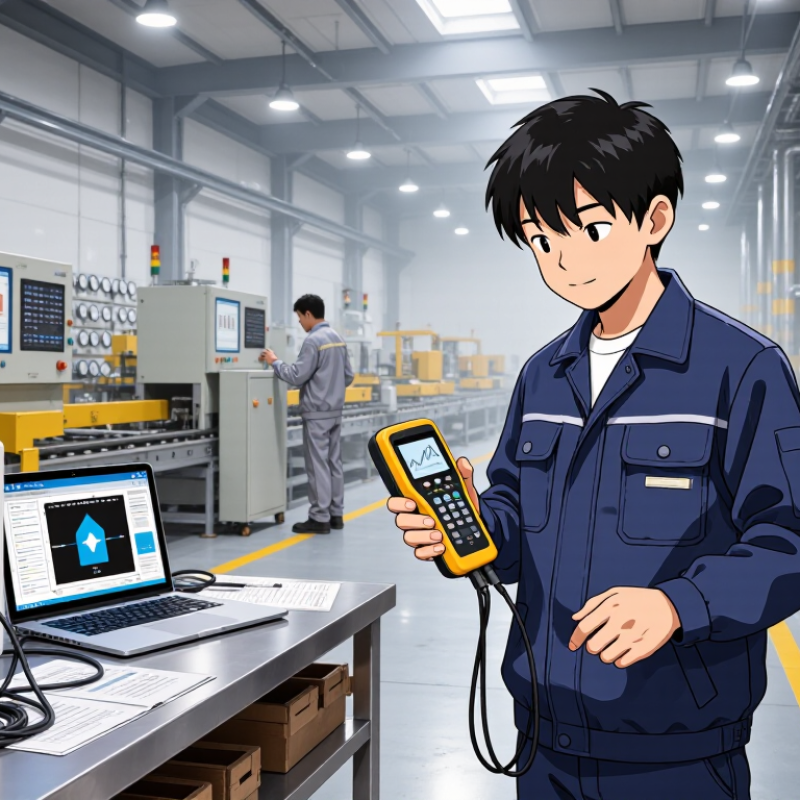
Who Makes the Best Vibration Measuring Devices in China?

What Vibration Measuring Devices Measure and How They Work

Vibration measuring devices turn machine movement into numbers that maintenance teams can interpret. They measure displacement, velocity, and acceleration, usually across a range of frequencies. A contact accelerometer converts motion into an electrical signal. The instrument then displays vibration levels or analyzes the signal’s frequency spectrum, where peaks can point to imbalance, looseness, or bearing wear. Small changes matter. A sensor mounted near a bearing may reveal a sharp, repeating peak that a handheld reading elsewhere misses.

Measurements depend on sensor placement, machine speed, mounting, and calibration. ISO 20816-1:2016 provides general guidance for evaluating machine vibration, while ISO 2954:2012 specifies requirements for instruments measuring vibration severity. These standards help make results comparable, but they do not diagnose every fault by themselves. The U.S. Department of Energy’s 2002 Industrial Electric Motor Systems Market Opportunities Assessment estimated that motor-driven systems accounted for about 68% of industrial electricity use. That scale makes useful condition data valuable. Still, a clean graph can mislead if the sensor is loose or the operating load changes. Not magic, though. Good measurements need context, repeatable sensor positions, and a technician willing to question an unexpected reading.

Types of Vibration Measurement Devices Made in China

Types of Vibration Measurement Devices Made in China

Chinese manufacturers produce several kinds of vibration instruments for factory maintenance, product testing, and machine development. Piezoelectric accelerometers measure rapid changes in vibration, often on pumps, motors, and bearing housings. Their readings depend on secure mounting. A loose magnetic base can distort high-frequency results.

Portable vibration meters are useful for quick checks. A technician can press a probe against a gearbox and compare velocity or acceleration readings. Compact data collectors go further, storing measurements for trend analysis and route-based inspections. Small details matter. Sensor direction and measurement location should stay consistent between visits.

For continuous monitoring, wired or wireless sensors track vibration over time and can flag changes for investigation. Displacement probes measure shaft movement in certain rotating machinery, while laser vibrometers collect readings without physical contact. Each type has limits. A handheld meter may miss brief changes between inspections, and wireless sensors still need thoughtful placement. I would not treat a single clean reading as proof that a machine is healthy; operating speed, load, calibration, and mounting can all affect the result. The best device depends on the machine, the frequency range, and how often measurements are needed.

Key Criteria for Evaluating Chinese Manufacturers

Choosing a vibration measuring device manufacturer in China requires more than comparing prices or advertised frequency ranges. Check whether the sensor’s range, resolution, and frequency response match your machinery and measurement plan. A device for a slow-running pump may not suit a high-speed spindle. Ask for calibration records and a sample measurement report. Numbers matter.

Evaluate how clearly the manufacturer explains testing and quality control. Request technical documents, including uncertainty specifications, operating temperature limits, and details about data output. If possible, test a sample device on equipment with known vibration levels. Compare readings across repeated tests. Consistency is a useful sign, though one successful trial cannot prove long-term reliability. A polished catalog can still leave practical questions unanswered.

Tips: Ask who handles calibration and repairs, and how quickly replacement parts are available. Confirm software compatibility before ordering. Check whether staff can answer technical questions in clear English. Small details count: a loose connector or confusing setup guide can delay fieldwork. I would also verify support arrangements in writing; that step is easy to overlook.

Notable Chinese Manufacturers and Their Product Capabilities

Who Makes the Best Vibration Measuring Devices in China?

Chinese manufacturers offer several kinds of vibration equipment, from handheld meters to multi-channel analyzers and continuous monitoring systems. Their capabilities vary. Some focus on portable tools for quick checks on pumps, fans, and motors. Others build systems that collect data from multiple sensors and display changes over time. A technician might compare readings beside a warm motor, with cables running across a concrete floor. Small details matter. Sensor compatibility, frequency range, and software clarity can affect daily use more than a long feature list.

Manufacturing strength is not easy to judge from product pages alone. Buyers can review measurement ranges, stated accuracy, calibration options, and the availability of technical support. Ask how the device handles a loose sensor mount or noisy readings; real conditions are rarely tidy. Some suppliers may offer custom configurations, but the extra flexibility can make product comparisons harder. Not always. Requesting a sample report or testing a unit on familiar machinery can reveal whether its controls and data exports suit the job. Published specifications are useful, but they do not replace hands-on checks.

Who Makes the Best Vibration Measuring Devices in China? - Notable Chinese Manufacturers and Their Product Capabilities

This overview compares common vibration-measurement product categories available from Chinese suppliers. It does not rank or identify individual manufacturers. Features and specifications vary by model; confirm them against the product datasheet.

Product category Typical measurements Common capabilities Typical applications Points to verify
Handheld vibration meter Overall vibration velocity, acceleration, or displacement, depending on the model Portable spot checks; some models include frequency analysis, data storage, or temperature measurement Routine checks on motors, pumps, fans, and other rotating machinery Measurement range, frequency response, sensor type, units, and applicable standards
Portable vibration analyzer Vibration signals used for time waveform, spectrum, and condition analysis May support FFT analysis, route-based data collection, trend review, and balancing or diagnostic functions Maintenance troubleshooting and machinery condition assessment Channel count, sampling rate, analysis functions, software compatibility, and export formats
Online vibration monitoring system Continuous or scheduled vibration signals from installed sensors Can include multi-channel acquisition, alarm thresholds, trend displays, and communication with plant systems Long-term monitoring of critical or hard-to-access equipment Sensor and input compatibility, sampling strategy, alarm configuration, interfaces, and environmental protection
Vibration sensors and signal conditioners Mechanical motion converted into electrical signals; sensor output depends on sensor technology Options may include accelerometers, velocity sensors, proximity probes, and signal-conditioning components Use with portable analyzers, data-acquisition equipment, or monitoring systems Sensitivity, frequency response, mounting method, connector, output type, and operating conditions
Vibration calibration and test equipment Controlled vibration used to check or calibrate compatible sensors and measurement instruments May provide a reference vibration signal at specified operating conditions Instrument verification, laboratory work, and maintenance support Reference accuracy, supported frequency and amplitude, calibration traceability, and supported sensor types

How to Choose a Device for a Specific Application

Choosing a vibration measuring device starts with the machine and the question you need answered. A pump bearing check may call for high-frequency acceleration, while slow building movement may be better captured through displacement or velocity. Match the instrument’s frequency range to the motion or fault you expect, not merely the machine’s rated speed. Check the expected amplitude too; an overloaded sensor can clip peaks and hide useful detail. Small details matter.

Sensor mounting changes results. A stud-mounted accelerometer usually provides firmer high-frequency contact than a handheld probe, but it takes setup time. Magnetic bases are convenient on flat steel; paint, curved housings, and loose contact can weaken readings. In dusty, hot, or wet locations, verify that the sensor and cable suit the actual conditions. Consider access as well: a compact unit may fit beside a guard, while a larger analyzer may show live spectra more clearly. No single setup wins.

For routine inspections, prioritize repeatable routes, clear alarms, data storage, and export options. For troubleshooting, look for waveform capture, useful spectrum resolution, and a sampling rate suited to the highest frequency of interest. Check calibration status and compare readings at the same point, direction, and machine load. A reading without context can mislead. I would still question any threshold that ignores operating speed or recent maintenance. Trial measurements on the actual machine can reveal assumptions that a product description cannot.

Who Makes the Best Vibration Measuring Devices in China?

How to Choose a Device for a Specific Application

Compare the typical frequency ranges you may need to measure. These are practical examples, not universal limits; confirm the required bandwidth, sensor type, and applicable standard for your equipment.

For general machinery checks, a device covering roughly 10–1,000 Hz may be suitable. Bearing and gear diagnostics can require higher-frequency measurement, while structural testing often needs good low-frequency response.