Why Choose an Electronic Board for Your Business Needs?
In today’s fast-paced business environment, an electronic board can revolutionize collaboration and communication. Utilizing an electronic board can significantly enhance productivity. It provides a digital platform for brainstorming and sharing ideas seamlessly. This technology is not merely a tool, but an essential asset for modern businesses.
Consider the flexibility an electronic board offers. Teams can work together from different locations in real time. In a world where remote work is common, this feature is invaluable. However, the transition to this technology requires a mindset shift. Teams must be willing to adapt and embrace new habits.
Security is also a concern worth noting. While electronic boards streamline processes, they also require robust cybersecurity measures. Businesses should invest in protecting sensitive data. This necessity emphasizes the importance of reliable electronic boards. Making informed choices is crucial for safeguarding your company's information and ensuring smooth operations.

Benefits of Using Electronic Boards in Business Operations
Electronic boards have become vital tools for many businesses. They facilitate seamless communication and enhance collaboration among team members. Using electronic boards, teams can brainstorm ideas, share updates, and track projects efficiently. This fosters a more connected work environment.
One key advantage is the real-time feedback they provide. Employees can instantly share comments or suggestions during meetings. This spurs discussions and enables faster decision-making. Moreover, electronic boards can accommodate various formats, such as charts, visuals, or plain text. This flexibility ensures that everyone can contribute in a way that resonates with them.
However, incorporating electronic boards is not without challenges. Staff may struggle with the technology at first. Training sessions may be necessary. Another aspect to consider is how to keep content organized. Too much information cluttering a board can lead to confusion. It’s important to establish clear guidelines for usage. This can enhance the effectiveness of the boards while minimizing potential pitfalls.
Comparative Analysis: Electronic Boards vs. Traditional Boards
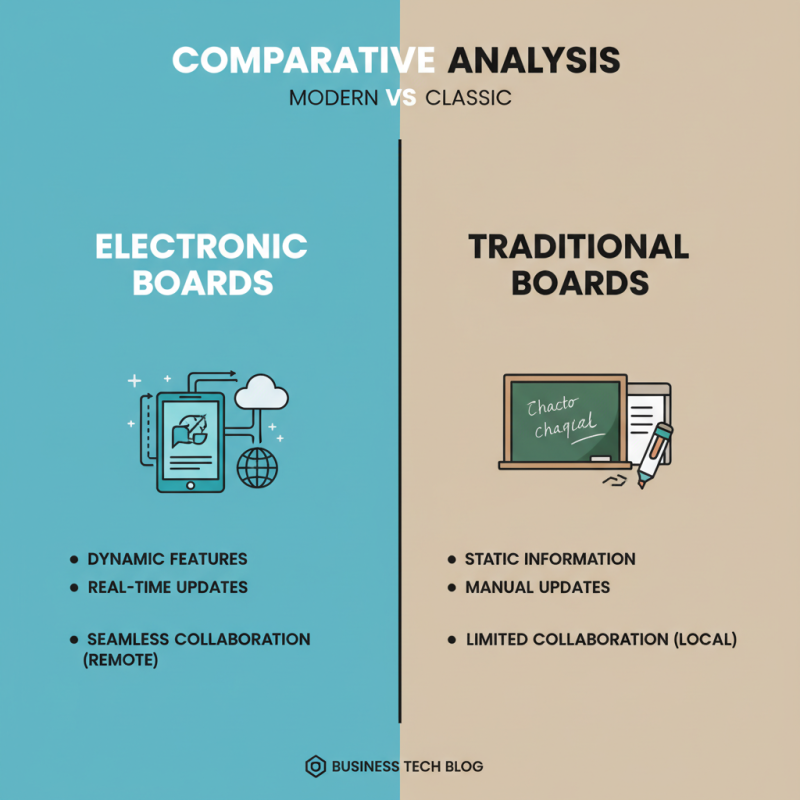
Electronic boards have become increasingly popular in modern businesses. They offer dynamic features that traditional boards lack. Unlike chalkboards or whiteboards, electronic boards allow for real-time updates. This helps teams stay synchronized. Collaboration becomes seamless, even when team members are remote.
While traditional boards serve their purpose, they come with limitations. Markers can dry out, and erasers wear out. Cleaning can be a hassle, leaving ghost marks over time. In contrast, electronic boards are generally easier to maintain. They can display presentations, videos, and more with minimal effort. Yet, they do require some technical know-how. If a team lacks technical support, this can be a drawback.
Investing in electronic boards may seem expensive upfront. However, the potential for increased productivity is significant. Training may take time, but the long-term gains are often worth this investment. Teams must weigh the pros and cons carefully. A balance must be struck between tradition and innovation in choosing the right tools for success.
Key Features to Look for in Electronic Boards
When selecting an electronic board for business, consider core features that enhance functionality. Display quality is paramount. A high-resolution screen ensures visuals are sharp and clear. This is crucial for presentations or brainstorming sessions. Colors should be vibrant to attract attention and engage your audience effectively.
Interactivity is another essential feature. Touchscreen capabilities allow for real-time collaboration. Employees can annotate, share, and modify content instantly. This fosters teamwork and innovation. Connectivity options also matter. Look for boards that easily integrate with your existing tech setup. Seamless connectivity can save time and streamline workflows.
Durability should not be overlooked. A robust electronic board will withstand frequent use. This can lead to long-term savings. It’s also worth noting that user interface matters greatly. A complicated interface can frustrate users. Opt for boards that are intuitive and easy to navigate. Ensuring a smooth user experience is vital for maximizing productivity.
Key Features of Electronic Boards for Business Needs
Cost-Effectiveness of Implementing Electronic Boards
Businesses today face numerous challenges, especially in managing communication and information flow. Electronic boards can address these challenges effectively and economically. They are user-friendly and versatile, which makes them suitable for various business environments. Many companies experience lower costs by using electronic boards compared to traditional methods.
The cost-effectiveness of implementing these boards is evident in multiple ways. First, they reduce the expenses associated with printing and physical materials. This shift can lead to significant savings over time. Additionally, electronic boards require less maintenance than physical alternatives. Their durability ensures long-term use and minimizes replacement costs. These benefits can be particularly appealing to small and medium-sized businesses with limited budgets.
Despite the clear advantages, some businesses may hesitate to adopt electronic boards. The initial investment can seem daunting, and employees may need training. Moreover, integrating new technology into existing workflows can be a challenge. However, the potential savings and increased efficiency often outweigh these concerns. Thoughtfully considering these factors can help businesses make informed decisions in the long run.
Future Trends in Electronic Board Technology for Businesses
The landscape of electronic board technology is evolving rapidly, and businesses must stay informed. Recent trends indicate a shift towards enhanced interactivity. Modern boards now support touch features and collaborative software. This can significantly boost team engagement during meetings. However, not all teams may be ready for such changes.
Another trend is the integration of artificial intelligence. Smart features can analyze meeting content. This provides helpful insights for future decisions. Yet, reliance on technology can sometimes overshadow human intuition. Additionally, durability remains a concern. Many businesses are investing in boards that withstand heavy usage. The challenge lies in balancing advanced features with practical longevity. Businesses should reflect on their specific needs before making a choice. This ensures that investments align with their goals.
Why Choose an Electronic Board for Your Business Needs? - Future Trends in Electronic Board Technology for Businesses
| Feature |
Description |
Benefits |
Future Trends |
| Interactivity |
Allows users to engage and collaborate in real-time. |
Enhances teamwork and facilitates brainstorming sessions. |
Integration with AR/VR technologies for immersive experiences. |
| Cloud Connectivity |
Access data and applications from any location via the internet. |
Increases flexibility and accessibility for remote teams. |
Improved security measures and faster data transfer speeds. |
| Environmentally Friendly |
Reduced paper usage and waste. |
Promotes sustainability and corporate responsibility. |
Development of fully recyclable and energy-efficient components. |
| Customizable Templates |
User-friendly designs that cater to specific business needs. |
Saves time and enhances the professional appearance of presentations. |
AI-driven customization based on user preferences and analytics. |