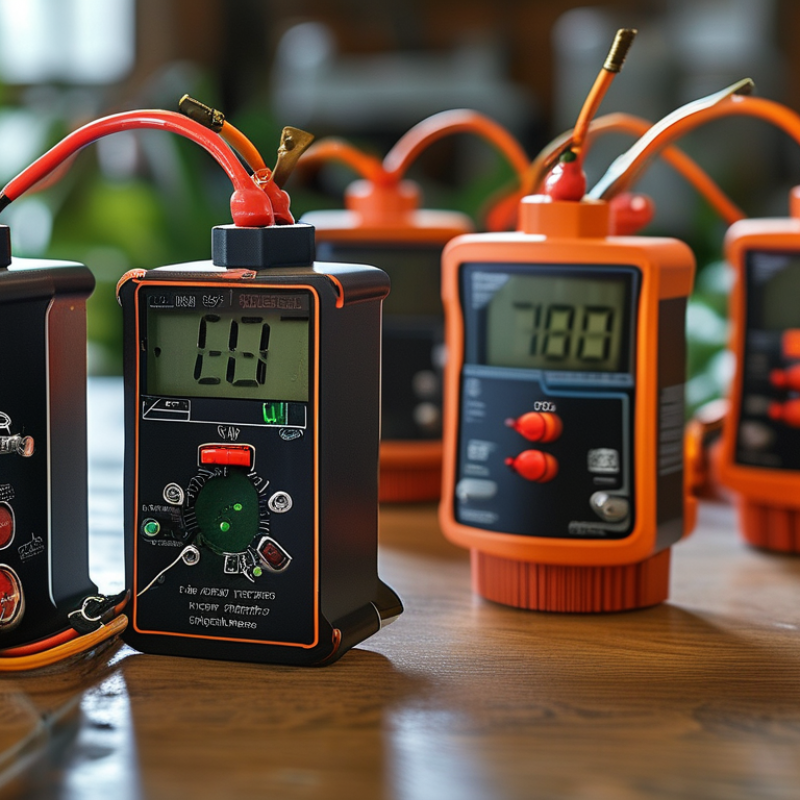
How to Choose the Best Current Sensor for Your Needs?
Choosing the right Current Sensor can be a challenging task. With various options on the market, it’s essential to understand your specific needs. Current Sensors are vital in many applications, from monitoring energy consumption to ensuring equipment safety.
Understanding the types of Current Sensors available is crucial. Some sensors measure AC current, while others measure DC. Each type has unique advantages. The right choice often depends on the application’s requirements, such as accuracy and range.
Practical experience with Current Sensors can provide valuable insights. Some users may need to consider the installation space or compatibility with existing systems. Reflecting on these details can lead to better decision-making. A well-chosen Current Sensor enhances efficiency and reliability in your projects.
Understanding the Basics of Current Sensors and Their Applications
Current sensors are essential devices in various applications, from industrial systems to home automation. Understanding their basic functions can help you choose the right type for your needs. These sensors primarily measure electric current, which is vital for monitoring and controlling power consumption. They are often used in renewable energy systems, motor control, and even smart appliances.
Different types of current sensors exist, such as hall effect sensors, shunt resistors, and current transformers. Each has unique advantages depending on its application. For example, hall effect sensors provide isolation and are suitable for high-voltage systems. On the other hand, shunt resistors are often preferred for accurate, low-cost measurements in smaller devices. However, their application can be limited by heat dissipation issues.
Choosing the right sensor also involves understanding your specific requirements. Consider factors like the current range, sensitivity, and response time. You might find that what seems ideal on paper does not work well in practice. Experimentation can be necessary to find the best fit for your unique situation. Always be open to adjustments and reassessments in your selection process. This journey of understanding can lead to better and more reliable energy management solutions.
How to Choose the Best Current Sensor for Your Needs?
| Sensor Type | Measuring Range (A) | Output Type | Accuracy (%) | Application |
| Hall Effect Sensor | 0-100 | Analog Voltage | ±1% | Motor Control |
| Shunt Resistor | 0-50 | Differential Voltage | ±0.5% | Power Monitoring |
| Clamp Meter | 0-200 | Digital Display | ±2% | Field Testing |
| Current Transformer | 0-1000 | AC Voltage | ±2% | Industrial Applications |
Identifying Your Specific Needs for Current Measurement
When selecting a current sensor, identifying your specific measurement needs is vital. Different applications require unique approaches. For instance, industrial settings might need sensors that can handle high currents, while consumer electronics often deal with lower ranges. According to a 2022 market report by IDTechEx, sensors designed for industrial automation accounted for over 40% of the current sensor market share. This reflects an ongoing push for efficiency and safety in manufacturing processes.
Consider the accuracy required for your project. High precision measurements may necessitate hall-effect sensors, as they excel in providing reliable readings. Meanwhile, simpler applications might only need resistive shunt sensors, which are cost-effective but can introduce measurement errors. A study by Research and Markets estimates that a significant percentage of users overlook the impact of these errors on system performance. It is crucial to evaluate your tolerance for these inaccuracies to ensure your choice aligns with your requirements.
Power consumption is another critical factor. For battery-operated devices, ensuring low energy usage is essential. Some sensors are designed to offer low power modes, which can extend battery life. Users should carefully analyze their energy needs, which can often go unaddressed. This attention to detail can significantly enhance the functionality of your application. Assessing your operational environment, as well as the durability of the sensor, can mitigate potential failures in demanding conditions.
Current Sensor Performance Comparison
This chart compares the current measurement accuracy of various sensors. When selecting a current sensor, consider factors such as accuracy, suitability for specific applications, and overall performance based on your unique requirements.
Evaluating Different Types of Current Sensors Available
When selecting a current sensor, understanding the different types is crucial. There are several options available, including Hall effect sensors, shunt resistors, and clamp-on sensors. Each type has its unique application and specifications. Hall effect sensors are known for their non-intrusive measurement. They are ideal for high-current applications. However, they can be complex. Shunt resistors, on the other hand, are simpler but require proper placement and calibration.
Tips: Consider the environment where the sensor will be used. Humidity, temperature, and electrical noise all impact performance.
Clamp-on sensors provide flexibility. They can be attached without interrupting the circuit. This makes them a good choice for temporary measurements. However, they may not provide the accuracy needed for all applications.
Tips: Determine the measurement range you need. Be aware that each type of sensor has its limitations. Take time to evaluate your specific requirements before making a choice.
Comparing Accuracy, Range, and Sensitivity in Current Sensors
Choosing the right current sensor involves examining three critical factors: accuracy, range, and sensitivity. Accuracy is paramount. A sensor's precision can determine the performance of an entire circuit. Reports indicate that highly accurate sensors can achieve deviations as low as 0.5%. If accuracy is a priority, consider investing in sensors marketed for high-performance applications.
Range is another key factor to consider. Current sensors have varying ranges, often defined in milliamps or amps. A broader range allows for versatility in measuring different current levels. Some industry studies show that sensors with a high dynamic range (up to 100A) are preferred in industrial settings. This flexibility can help prevent equipment damage and reduce operational costs.
Sensitivity is crucial for detecting small variations in current. A sensitive sensor can identify changes as minor as 1mA. This quality is essential for applications demanding fine measurements, like renewable energy systems. However, too much sensitivity may lead to noise and false readings.
Tips:
- Always match sensor specifications to your project needs.
- Examine operational environments to ensure range and sensitivity suitability.
- Factor in future scalability when selecting current sensors.
Budget Considerations: Cost vs. Performance in Current Sensors
When selecting a current sensor, budget considerations play a crucial role. Many users face the trade-off between cost and performance. Quality sensors often demand a higher price due to advanced technology and reliability. Individuals must assess their specific needs against their budget constraints. The key is to understand if high accuracy justifies the higher expense.
Performance can vary dramatically across different sensors. For instance, some may excel in high-frequency response, while others focus on energy efficiency. Consider how the sensor will be used. If only basic measurements are necessary, lower-cost options may suffice. However, for more demanding applications, investing in a premium sensor might save costs on troubleshooting in the long run.
The temptation to cut costs may lead to regrets later. Sometimes, cheaper sensors provide unreliable readings, necessitating frequent recalibrations or replacement. Users should reflect on their operational goals. Would it be wiser to invest in quality upfront? A well-considered choice ensures functionality and long-term savings.