How to Choose EV Infrastructure for Your Business?
Choosing Ev Infrastructure for a business is not just a matter of buying chargers. It is a decision about how vehicles arrive, how long they stay, and what your electrical supply can support. A hotel may need dependable overnight charging, while a delivery depot may need several vehicles ready before dawn. Those are different operating problems. The right setup begins with the site, not a product brochure.
Ev Infrastructure can include charging stations, cabling, load management, access tools, and ongoing maintenance. Each part affects cost and daily reliability. Before comparing equipment, map typical vehicle use, parking duration, peak demand, and likely growth. Check the building’s electrical capacity with a qualified professional, and ask how installation, upgrades, warranties, and service calls will be handled. Small details matter: cable reach, weather exposure, signage, and whether drivers can find an available connector. Not every site is ready. A phased installation may reduce upfront risk, but it can also leave too little capacity if expansion is poorly planned. Estimates may change after a site inspection; that uncertainty deserves attention. This guide explores the practical questions businesses should ask, the trade-offs between charging options, and how to assess providers without treating the lowest quote as the safest choice. A sound decision should fit real workflows, make costs visible, and adapt as vehicle needs change.
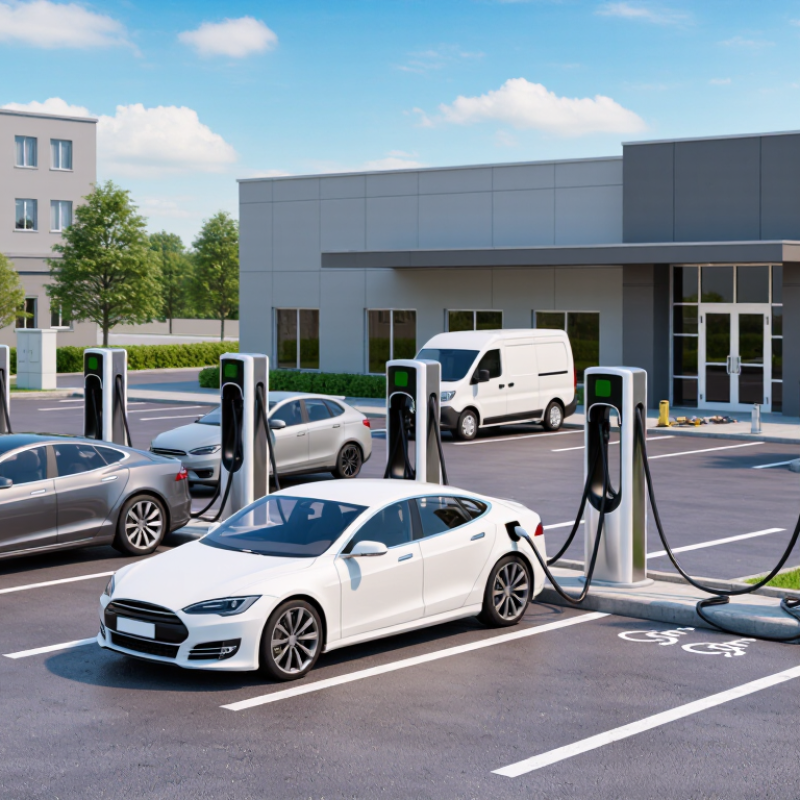
Define Your Business’s EV Charging Needs
Define your business’s EV charging needs by observing how vehicles actually arrive, park, and leave. A delivery fleet returning at 6 p.m. creates a different demand pattern from employee cars parked all day. Record vehicle counts, arrival times, daily mileage, parking duration, and available electrical capacity before selecting equipment. A simple log from the parking lot can reveal more than a broad industry average.
The International Energy Agency’s Global EV Outlook 2024 reports that public charging points worldwide exceeded four million in 2023, growing by about 40 percent in one year. That growth signals a changing market, not a reason to install the most chargers possible. The U.S. National Renewable Energy Laboratory’s 2030 National Charging Network analysis estimates substantial future needs for both public Level 2 and fast-charging ports. Those national projections are useful context, but they cannot predict your site’s peak demand.
Start with dwell time. Cars parked for six hours may need modest charging, while vehicles turning around in 30 minutes require faster service. Check whether several vehicles might plug in at once, and ask an electrician to assess panel capacity and upgrade costs. Then model a busy weekday, not just an average one. Our first estimate may still miss seasonal shifts or new fleet routes. That is worth revisiting. Plan for measured demand, leave room to expand, and review usage after installation.
Compare Charger Types, Power Levels, and Charging Speeds
Choosing EV infrastructure starts with matching charger type to how long vehicles stay parked. AC Level 2 chargers commonly deliver about 7–19 kW, though the vehicle’s onboard charger may accept less. They suit staff cars and customer parking, where vehicles remain for several hours. A short stop? DC fast charging can provide roughly 50 kW or more, but it usually costs more to install and may require substantial electrical capacity.
Power ratings do not equal charging speed at every moment. A car’s battery limits the energy it can accept, and charging often slows as the battery fills. Cold weather can slow it further. Not always obvious. Compare expected charging time using vehicle specifications, typical arrival battery levels, and actual parking duration—not the charger label alone. A 7 kW unit may replenish enough energy during a work shift, while a delivery vehicle making repeated short stops may benefit from faster DC charging.
Estimate how many vehicles will charge at once, then check the site’s electrical service and future load. A spreadsheet can make simultaneous high-power charging look simple; the utility connection may disagree. That part is easy to underestimate. Track charging sessions after installation: busy hours, energy delivered, and queues reveal whether power sharing or additional chargers would help. Real operating data beats a neat assumption.
Assess Site Readiness, Electrical Capacity, and Grid Access
Before selecting chargers, inspect parking layout, trench routes, drainage, and accessible pedestrian paths. A charger beside a wall may still need costly cable work. The International Energy Agency’s Global EV Outlook 2024 reports that public charging points grew by more than 40% in 2023. That growth makes future expansion worth considering, even if today’s demand looks modest. Small details matter.
Electrical capacity can limit a project more than charger choice. The U.S. Department of Energy’s Alternative Fuels Data Center lists Level 2 charging equipment at roughly 2.9–19.2 kW. Ten units rated at 11.5 kW represent 115 kW of potential charging load, before adding building demand. Ask an electrician to review service capacity, panel space, transformer limits, and peak usage. Then ask the utility about feeder capacity, upgrade costs, and timelines. I would not treat an early estimate as truth; trench routes and utility work can surprise even careful planners.
Tips: Share a load profile and expansion plan with the utility early. Compare managed charging with a service upgrade, and confirm the site can support the option you choose. A spreadsheet can miss real-world constraints. Keep room for future conduits where practical.
Evaluate Installation Costs, Incentives, and Operating Models
How to Choose EV Infrastructure for Your Business?
Start with how people will use the chargers. A workplace with cars parked for eight hours needs a different setup from a busy retail lot. Count likely daily sessions, note peak arrival times, and check how long vehicles usually stay. A simple site walk can reveal practical issues, such as a long cable route or limited electrical capacity.
Compare the full installation cost, not just the charger price. Electrical upgrades, trenching, permits, signage, and network setup can change the budget substantially. Ask contractors to separate these items in their estimates. Incentives may reduce costs, but eligibility, funding, and application deadlines vary by location. Verify current terms with the relevant program administrator before building them into a financial plan. Check the details. Keep a contingency for unexpected site work; a neat estimate can still miss what lies beneath the pavement.
The operating model affects both workload and revenue. A business can own and manage the equipment, hire a service provider, or host chargers under an agreement with another operator. Compare maintenance responsibilities, payment processing, customer support, data access, and revenue-sharing terms. Ask who responds when a unit fails on a Saturday. That question matters. One planning mistake is treating charging as a one-time construction project. It is ongoing service, and the best arrangement may be less profitable on paper but easier for staff to run. Revisit the assumptions before signing.
Choose a Scalable System with Suitable Software and Support
A scalable EV charging system should fit today’s parking patterns and tomorrow’s growth, not just the first installation quote. Start with a site walk: note electrical capacity, cable routes, accessible parking, and how long vehicles usually stay plugged in. These details shape charger count and power levels. A delivery depot with predictable overnight parking may need a different setup from a customer lot with brief visits. Plan for change. Leave room for additional circuits and conduit where practical. Retrofitting later can disrupt operations. Still, spare capacity has a cost, so model realistic vehicle adoption instead of assuming every space needs a charger.
Software deserves equal scrutiny. Look for a clear dashboard showing charger status, energy use, faults, and session records. Check for load management, which can balance charging when several vehicles connect at once. Ask how data can be exported and what happens during an internet outage. A polished demonstration may not reveal these details. Support should include a clear escalation route, response expectations, and guidance for routine tasks such as resetting a unit. Test the support process before signing: who answers at 7 a.m. on a Monday, and what information will they need? Even a careful forecast can miss. Review usage after launch, then adjust settings and expansion plans based on actual charging patterns.
How to Choose EV Infrastructure for Your Business?
Choose a scalable system with suitable software and support.
Charging power ranges help frame infrastructure choices: match charger type to vehicle dwell time and site capacity, then check that the software supports access management, usage reporting, and future expansion. Confirm installation requirements and ongoing service options with a qualified provider. Ranges are typical, not guaranteed ratings. Source: U.S. Department of Energy, Alternative Fuels Data Center.