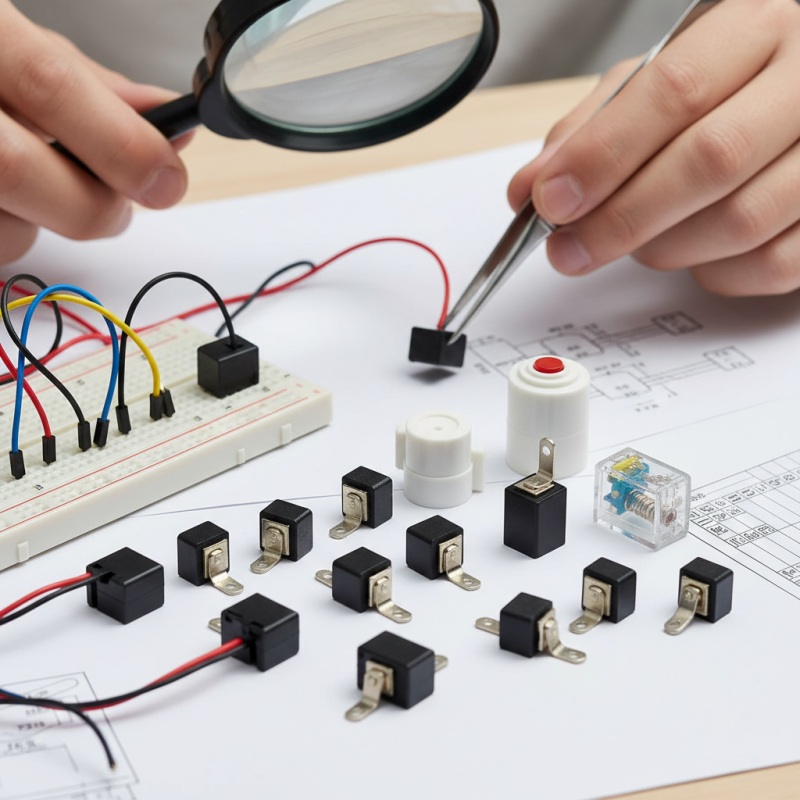
How to Choose the Right Micro Switch for Your Project?
Choosing the right micro switch for your project can be daunting. Experts highlight the importance of this decision. John Smith, a leading specialist in micro switches, stated, "The right micro switch can make or break a design." This emphasizes the critical role these components play.
Micro switches are essential in various applications, from appliances to industrial equipment. They provide reliable control with a simple click. However, there are many options available. Not every micro switch meets every project's requirements. Understanding specifications is vital to avoid costly mistakes.
Consider the size, durability, and actuation force needed in your project. Some choose based on cost alone, which can lead to performance issues later. A careful approach to selecting micro switches will ensure success. This decision impacts both functionality and user satisfaction. Your choice should reflect a balance of quality and cost.
Understanding Micro Switches: Basics and Functions
Micro switches are essential components in many devices. They are known for their reliability and precision. Typically, they are activated by a very small movement. This makes them perfect for applications requiring high responsiveness. According to industry reports, micro switches can handle operating currents ranging from a few milliamps to several amps. Their durability is also impressive, with some lasting for millions of cycles.
Understanding their functionality is crucial for selection. Micro switches operate based on mechanical movement. When a lever or button is pressed, it creates a physical change that completes an electrical circuit. While they seem straightforward, choosing the right type can be challenging. Factors like actuation force, travel distance, and environmental conditions matter greatly. Some switches may not perform well in extreme temperatures.
Moreover, the choice of materials impacts longevity. For example, using inferior materials might lead to quicker wear. This can affect performance and safety. Certain applications require splash-proof designs, while others may not. This variability means that one must consider the specific needs of their project thoroughly. Data shows that improper selection can lead to failures, costing time and money. Always assess the project requirements carefully.
Micro Switch Selection Criteria
This bar chart illustrates key performance metrics for micro switches, including operating force, bounce time, electrical life, temperature range, and contact resistance. These criteria are critical in choosing the right micro switch for specific applications.
Key Factors to Consider When Choosing a Micro Switch
When selecting a micro switch for your project, several key factors come into play. The switch's specifications should align with your application needs. Consider the actuation force required. Data shows that 30% of design failures stem from improper working force selection. An incorrect force can lead to insufficient operation or premature wear. Additionally, actuator style is essential. Options include roller levers, pin plungers, and even custom shapes. The right actuator influences not just performance, but durability too.
The environmental conditions also matter greatly. Micro switches can be rated for different levels of protection against dust and moisture. According to industry reports, about 20% of micro switch failures occur due to environmental factors. Choose a switch with an appropriate ingress protection (IP) rating. Another vital aspect is electrical ratings. The load current and voltage must match the switch's capability. Misjudging this can result in electrical arcing. Over time, this can damage the switch's contacts, leading to failure.
Different Types of Micro Switches and Their Applications
Micro switches are crucial components in many applications. They come in various types, each with unique features. For instance, the snap-action type is popular in consumer electronics. According to industry reports, approximately 65% of micro switch applications involve this type. This switch offers rapid response and reliability, making it suitable for buttons and safety devices.
Another common type is the miniature micro switch. These are typically used in compact devices. Their small size doesn’t compromise performance, with a lifespan of up to 10 million cycles. However, their weight can lead to unintended activation if not carefully installed. This requires thoughtful design consideration to avoid mechanical failures.
The subminiature micro switch caters to specialty applications, often found in aerospace and medical devices. Their compact design allows for integration in tight spaces. While they offer high precision, their sensitivity might lead to false triggers. This trade-off is significant in critical environments where accuracy is non-negotiable. Remembering these nuances can guide you in choosing the right micro switch for your needs.
Evaluating Specifications: Ratings, Size, and Actuation Methods
When choosing a micro switch, evaluating specifications is crucial. Key specifications include ratings, size, and actuation methods. Let's break these down.
The rating determines how much current and voltage the switch can handle. A micro switch typically manages up to 15 amps and 250 volts. However, these limits aren’t absolute. Overshadowing these ratings is the ambient temperature. If the switch experiences extreme heat, it can malfunction or degrade faster than expected.
Size matters too. The physical dimensions of micro switches can vary significantly. Common sizes are compact, designed for tight spaces, and larger ones for more substantial needs. Yet, if the switch is too small, it may struggle with durability. This can lead to early failure or incorrect functioning in demanding applications.
Actuation methods should also be considered. There are various options, including lever, roller, and pushbutton. Each type provides different activation forces. A report stated that around 70% of users preferred a specific actuation type based on their application needs. However, not all switches are intuitive. Users may choose the wrong style, leading to frustration and inefficiency. Evaluating these aspects carefully can mitigate future issues.
Common Mistakes to Avoid When Selecting Micro Switches
Choosing the right micro switch might seem straightforward, but common mistakes can lead to project failures. One frequent pitfall is focusing solely on the switch's size. While physical dimensions matter, electrical ratings are critical. A micro switch with insufficient voltage or current ratings may fail under load, risking your entire project.
Another mistake is overlooking actuation force. Each application may need different pressure thresholds for optimal performance. A force that is too high can lead to user discomfort. Conversely, too low a force might result in accidental activations. According to a recent industry report, 30% of switch failures stem from incorrect actuation force selection.
Many also forget environmental factors. Operating temperatures, humidity, and exposure to chemicals can significantly impact micro switch performance. Using a switch without considering these conditions could result in unexpected operational issues. Remember, a well-informed decision is better than a rushed one. The more detailed your assessment, the greater your chance of success.