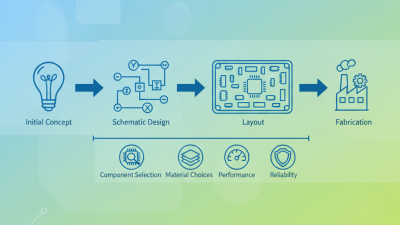
Choosing a top China pcb assembly board supplier is not simply a price comparison. It is a decision about process control, communication, and long-term product reliability. The right partner should understand your design before accepting the purchase order. They should review component availability, assembly tolerances, soldering risks, testing needs, and production volume.
PCB industry veteran Happy Holden described the printed circuit board as “the heart of every electronic product.” That view matters here. A weak supplier can create hidden failures inside a board that looks perfect from the outside. A strong supplier makes quality visible through inspection records, traceability data, controlled processes, and honest technical feedback.
Look beyond attractive quotations. Examine certifications, factory equipment, operator training, and experience with your product category. Ask whether the supplier performs automated optical inspection, X-ray inspection, functional testing, and sample verification. Request evidence, not broad promises. Review how they manage counterfeit components, engineering changes, moisture-sensitive devices, and urgent replacements.
Communication reveals much.
A capable supplier should explain problems clearly. They should not hide behind vague emails or unexplained delays. Their engineers may question your layout, and that is often useful. A supplier who never challenges anything may be agreeable, but not necessarily careful.
Still, no checklist is perfect. Even an experienced buyer can overlook packaging, logistics, or after-sales support. Request a pilot order before committing to large production. Compare defect rates, delivery consistency, response time, and corrective-action quality. The best pcb assembly board supplier is not always the cheapest or the largest. It is the partner that repeatedly delivers dependable boards and accepts responsibility when improvement is needed.

What Defines a Reliable China PCB Assembly Board Supplier?
A reliable China PCB assembly board supplier shows evidence, not polished promises. Fortune Business Insights valued the global PCB market at about USD 89.7 billion in 2023. Such scale increases capacity, but does not guarantee consistent workmanship. Ask for current ISO 9001 certification, documented process controls, and traceable material records. A capable supplier should identify laminate grades, solder paste batches, and component date codes without hesitation.
Look for practical inspection depth. IPC-A-610 acceptance criteria should guide visual checks, while IPC-6012 requirements should support rigid board qualification. Request sample inspection reports, X-ray images for hidden solder joints, and first-article records. The factory should explain its AOI programming, reflow profile, and corrective-action process in plain language. Vague answers are warning signs.
Supply-chain evidence matters too. The 2024 IPC Electronics Industry Survey continued to identify material availability and delivery uncertainty as major manufacturing concerns. A dependable supplier therefore maintains approved alternatives, dual sourcing, and clear escalation contacts. Ask how it handles a substituted capacitor or a failed impedance test. The answer should include customer approval, not silent replacement.
Small details reveal maturity.
Still, no factory is perfect. Even a strong supplier may miss a solder bridge or delay a component. What matters is transparent reporting, root-cause analysis, and measurable prevention. Review defect-per-million data, on-time delivery records, and pilot-run feedback before placing larger orders. Personally auditing one production line can reveal more than a convincing sales presentation.
| Evaluation Dimension | What a Reliable Supplier Should Demonstrate | How to Verify It | Practical Benchmark or Evidence | Importance |
|---|---|---|---|---|
| Quality Management System | A documented quality system covering incoming inspection, process control, final inspection, nonconformance handling, and corrective actions. | Request a current quality certificate, audit summary, quality manual, and sample inspection records. | ISO 9001 certification is a useful baseline. The certificate should be current and issued for the relevant manufacturing site. | High |
| Manufacturing Standards | Assembly and inspection procedures aligned with recognized electronics manufacturing standards. | Ask which acceptance standard is used in production and review sample workmanship criteria. | IPC-A-610 is commonly used for electronic assembly acceptability; the required class should be stated in the purchase documentation. | High |
| Component Traceability | Ability to trace components and assemblies through part numbers, lot codes, suppliers, production dates, and work orders. | Request a redacted traceability report and confirm how records are linked to each finished assembly. | Records should cover approved part numbers, supplier or lot information, date codes where applicable, and assembly identifiers. | High |
| Supply Chain Control | Controlled purchasing procedures that reduce the risk of counterfeit, substituted, obsolete, or moisture-damaged components. | Review the approved vendor process, incoming inspection procedure, storage controls, and material authentication policy. | The supplier should define authorization requirements for substitutions and provide supporting documentation before any change is made. | High |
| Assembly Capability | Suitable equipment and processes for the product's package types, board size, component density, and production volume. | Compare the supplier's equipment list with the assembly design, including SMT, through-hole, reflow, selective soldering, and hand assembly needs. | Capability should be demonstrated with comparable board examples, not only a general equipment list. | High |
| Inspection and Testing | Inspection and testing planned according to product risk, including solder-paste inspection, automated optical inspection, electrical testing, or functional testing when required. | Request a process flow, inspection coverage plan, test fixture responsibility, and sample test records. | The inspection plan should identify checkpoints, acceptance criteria, sampling rules, and actions for failed units. | High |
| Engineering and DFM Support | Engineers review fabrication and assembly files for manufacturability, component availability, solderability, and test access. | Submit a sample design package and evaluate the clarity and technical depth of the feedback received. | A useful DFM review identifies concrete risks, recommended changes, affected parts, and approval requirements. | High |
| Prototype-to-Production Control | A controlled transition process that prevents unapproved changes between prototype, pilot, and mass production. | Ask how revisions, approved manufacturing files, process parameters, and engineering changes are controlled. | Each production release should have a clear revision level, approval record, and change history. | High |
| Delivery Reliability | Realistic lead-time planning, capacity visibility, production scheduling, and early communication of risks. | Request a sample production schedule and ask how shortages, engineering changes, and delays are escalated. | A reliable supplier provides milestone updates and distinguishes component lead time, assembly time, testing time, and shipping time. | High |
| Cost Transparency | A quotation that separates board fabrication, components, assembly, tooling, testing, packaging, logistics, and other applicable charges. | Compare quotations using the same bill of materials, quantities, delivery terms, payment terms, and testing scope. | The lowest initial price should not be accepted without reviewing component sourcing, exclusions, yield assumptions, and change fees. | Medium |
| Communication and Documentation | Clear technical communication, organized records, prompt issue escalation, and consistent use of approved documents. | Evaluate the response to technical questions, quotation revisions, sample reports, and nonconformance cases. | Important documents should include controlled BOM and Gerber files, inspection reports, test results, and change approvals. | High |
| Compliance and Product Safety | Processes that support applicable environmental, material, export, and product-safety requirements. | Request relevant declarations, material compliance records, and documentation of restricted-substance controls. | Requirements such as RoHS or REACH should be confirmed according to the destination market and product application. | High |
| Data Security and Confidentiality | Protection of design files, bills of materials, firmware, customer information, and production records. | Review the confidentiality agreement, file-access controls, retention policy, and procedures for handling customer data. | Access should be limited to authorized personnel, with clear rules for file transfer, storage, retention, and deletion. | High |
| After-Sales Support | A defined process for handling warranty claims, root-cause analysis, corrective actions, and replacement or rework decisions. | Ask for the nonconformance and corrective-action workflow, including response times and responsibility assignments. | A professional response should identify containment, root cause, corrective action, verification, and preventive action when appropriate. | High |
| Business Continuity | Plans for managing disruptions involving facilities, utilities, labor, critical materials, logistics, or major equipment. | Ask about backup arrangements, critical-process recovery, alternative sourcing, and communication during disruptions. | The supplier should be able to explain practical recovery measures rather than provide only a general continuity statement. | Medium |
Note: Evaluation criteria should be weighted according to the product's risk, complexity, regulatory requirements, annual volume, and required delivery schedule. Certificates and claims should be independently verified before supplier approval.