How to Choose the Best Fiber Laser Machines for Your Business?
Choosing the right Fiber Laser Machines is crucial for any business aiming to enhance productivity. According to industry expert Dr. Emily Chen, "Investing in the right laser technology can transform your manufacturing process." Her words remind us of the importance of expert insight in this field.
Fiber Laser Machines are versatile tools that can streamline operations across various industries. However, selecting the best one can be overwhelming. Factors such as power output, cutting speed, and maintenance need careful consideration. Each business has unique requirements, making it a challenge to find the optimal solution.
Reflecting on your specific needs and the potential impact of technology is essential. Not all Fiber Laser Machines are created equal. Some models may promise high speeds, but they could lack reliability. It's vital to balance performance with durability. Remember, understanding both the strengths and weaknesses of available machines will guide your decision-making process.
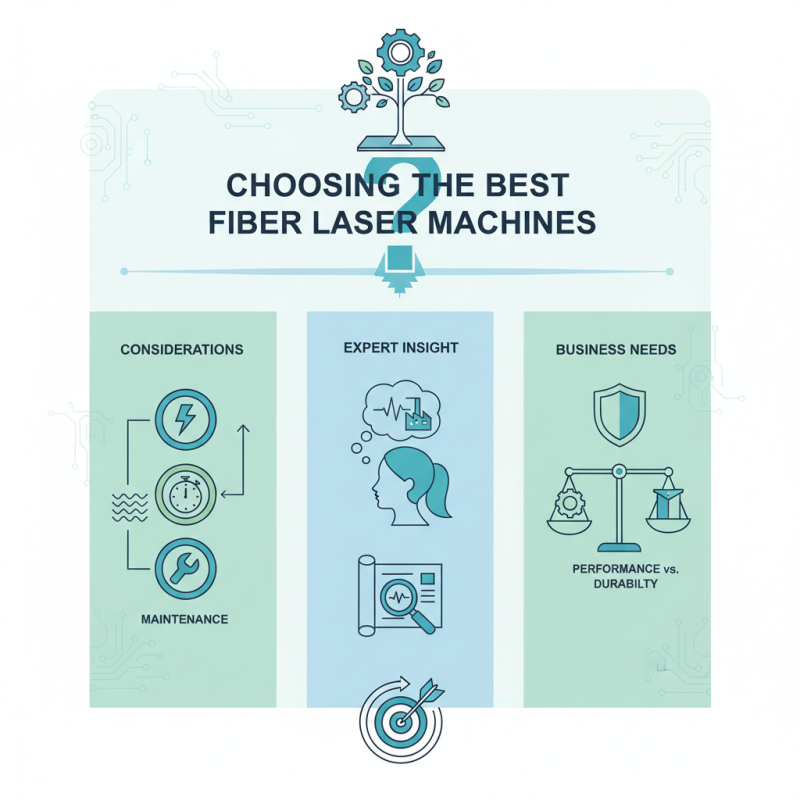
Factors to Consider When Selecting Fiber Laser Machines for Your Business
Choosing the right fiber laser machine for your business involves several key factors. Start by assessing your production requirements. Consider the materials you will work with and the thickness of these materials. Different lasers operate better on various substrates. Ensure the machine you choose meets these specific needs effectively.
Next, think about the power and speed of the fiber laser. More powerful lasers typically cut through thicker materials. However, they may come at a higher cost. Balance the machine’s capabilities with your overall budget constraints. Analyze the potential return on investment. Will the efficiency gained justify the expense?
Also, look into service and support options. Reliable after-sales support is crucial for minimizing downtime. Investigate the warranty and availability of replacement parts. Some machines may require frequent maintenance. Factor these potential challenges into your decision-making process. The right choice should serve the business well, but it requires careful thought and reflection on your unique circumstances.
Comparison of Different Types of Fiber Lasers and Their Applications
Selecting the right fiber laser machine can significantly impact business efficiency. Different fiber laser types cater to specific applications, and understanding their distinctions is crucial. For example, continuous wave lasers are ideal for cutting applications in industries like automotive and aerospace. They offer high-speed processing and precision. Research indicates that these machines can achieve cutting speeds of up to 30 meters per minute, leading to higher productivity.
In contrast, pulsed fiber lasers excel in engraving and marking. They produce high peak powers for short durations. This capability allows for detailed designs on metals and plastics without damaging the substrate. Data from laser industry reports show that pulsed lasers can enhance engraving quality by up to 40%. However, businesses must consider their specific needs. Factors like material thickness and production volume play a vital role in determining the best fiber laser type. Depending solely on manufacturer specifications could be misleading. It's essential to seek expert advice and potentially test the machines before committing to a purchase.
How to Choose the Best Fiber Laser Machines for Your Business?
| Type of Fiber Laser | Wavelength (nm) | Max Power (W) | Material Cutting Capability | Typical Applications |
| Continuous Wave (CW) | 1064 | 1000 - 6000 | Stainless Steel, Aluminum, Copper | Industrial Cutting, Engraving |
| Pulsed Fiber Lasers | 1064 | 20 - 1000 | Ceramics, Thin Metals, Plastics | Marking, Micro Machining |
| MOPA Fiber Lasers | 1064 | 20 - 200 | Aluminum, Stainless Steel, Plastic | Color Marking, Deep Engraving |
| High-Power Fiber Lasers | 1064 | 3000 - 15000 | Thick Steel, Brass, Titanium | Heavy Industrial Cutting, Welding |
Understanding the Key Specifications and Features of Fiber Laser Equipment
Fiber laser machines have gained traction for their efficiency and precision in various industries. When selecting the right one, understanding key specifications is critical. Power output is one of the most vital metrics. Reports indicate that machines with a power range between 1000W and 4000W can significantly improve cutting speed and quality. This spectrum caters to different materials and thicknesses, making it versatile for businesses.
Another essential feature is the wavelength of the laser. Fiber lasers typically operate at around 1064 nm. This range allows for better absorption by metals, enhancing cutting or engraving capabilities. Higher absorption translates to faster processing and reduced operational costs, a factor highlighted by recent studies showing a 30% increase in efficiency with optimal wavelength selection.
Cooling systems and operation speed should not be overlooked either. A robust cooling system ensures the machine performs optimally, even in extended operations. Some reports show that inadequate cooling can lead to a 20% drop in performance. Lastly, consider user-friendly interfaces and software compatibility, which influence not just productivity but also training time for staff. These features may seem minor but compound into significant efficiency gains over time.
Evaluating the Cost-Effectiveness of Fiber Laser Machines in Production
When evaluating the cost-effectiveness of fiber laser machines, several factors come into play. The upfront cost is just one aspect. Businesses must consider how much these machines can save over time. Fiber lasers are known for their efficiency and low operating costs. They use less energy compared to traditional lasers, translating to lower utility bills.
Maintenance expenses also impact the overall cost-effectiveness. Fiber lasers generally require less maintenance, which means reduced downtime. However, it's crucial to select a reliable machine. Poor-quality models could lead to unexpected repairs and extra costs. Investing in a high-quality fiber laser may seem expensive initially, but can often yield better long-term returns.
Moreover, the versatility of fiber lasers can enhance profitability. They can cut and engrave a variety of materials with precision. This capability may enable businesses to explore new markets. However, it’s important to assess the specific needs of your production environment. Not all production lines will benefit equally from a fiber laser, and misjudging this can lead to regret down the line.
Analyzing Market Trends and Future Developments in Fiber Laser Technology
When analyzing market trends in fiber laser technology, businesses must look ahead. The fiber laser market is growing rapidly, driven by efficiency and precision. Many industries are adopting these machines due to their versatility. In metal fabrication, for example, fiber lasers have revolutionized cutting processes. Businesses report improved productivity and reduced waste.
Tips: Invest in training. Proper training boosts employee confidence and skill. Also, consider future applications. Technology evolves quickly, and selecting machines that adapt is crucial.
Future developments suggest more compact designs and enhanced performance. Companies are focusing on reducing energy consumption while increasing output quality. Customers demand sustainability. Meeting this need could be key for competitive advantage.
Tips: Stay informed on emerging technologies. Regularly assess what’s available in the market. Don't hesitate to reconsider your current setup. Assess if it still meets your needs.