Choosing a House Vacuum Cleaner in 2026 is no longer about suction power alone. Homes now include rugs, hard floors, narrow stairs, pet hair, and delicate furniture. The right model should match your rooms, cleaning habits, and storage space.
A useful decision begins with real household experience. Notice how often you clean, where dust gathers, and whether a 30-minute battery lasts for your entire home. A cordless stick vacuum may suit a small apartment, while a canister or upright model can handle larger carpets more steadily. Check filtration details, especially if allergies or pets affect your household. HEPA-style filtration can help, but filter maintenance still matters.
Look beyond impressive advertising. Compare tested pickup results, noise ratings, battery replacement options, warranty terms, and repair support. Manufacturer specifications provide a starting point, while independent reviews reveal practical weaknesses, such as weak edge cleaning or a brush that tangles with long hair. Small details matter. A heavy vacuum can feel tiring on stairs. A tiny dust bin may require repeated emptying.
No model is perfect.
Your budget should include filters, bags, batteries, and possible repairs. This is where many buying guides fall short. A cheaper vacuum may cost more over several years, but an expensive flagship model may offer features you never use. Consider your actual floors, not an imagined home. By comparing performance, comfort, reliability, and long-term ownership costs, you can choose a House Vacuum Cleaner with greater confidence in 2026.
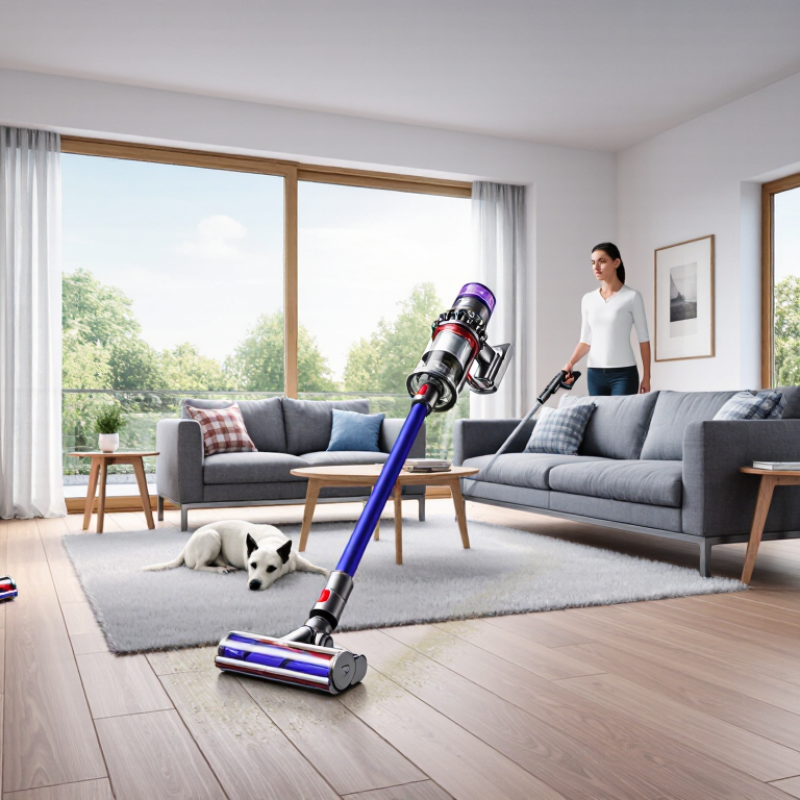
How to Choose a House Vacuum Cleaner in 2026?
EPA guidance makes particle control a practical starting point. Indoor pollutant levels are often two to five times higher than outdoor levels, and sometimes much higher, according to the U.S. EPA’s Guide to Air Cleaners in the Home. Dust, pollen, mold fragments, and pet dander can settle into carpets, bedding, and sofa seams. A home with allergy symptoms needs more than visible dirt removal.
Look for a sealed airflow design, washable or replaceable filters, and a high-efficiency particle filter. EPA guidance states that true HEPA filtration can theoretically capture at least 99.97% of 0.3-micron particles under laboratory conditions. That is a benchmark, not a household guarantee. Air leaks around the filter can reduce performance. I once focused too much on suction power and overlooked exhaust filtration. That was a poor choice.
Match the cleaner to your rooms. Thick carpets need strong agitation, while hard floors need gentle control that prevents dust clouds. If allergies are a concern, choose a model that keeps collected debris enclosed during emptying. The National Institute of Environmental Health Sciences identifies dust mites, animal dander, and mold as important indoor allergen sources. A sealed bag or low-exposure canister may therefore matter more than a flashy specification. Check filter costs and replacement intervals. Small details matter. EPA also emphasizes source control and ventilation, so vacuuming cannot replace moisture repair or regular fresh-air management. Even excellent equipment has limits.
| Decision Dimension | Relevant Fact or Guidance | Recommended Vacuum Specification | Best Fit for the Home | Practical Check Before Purchase |
|---|---|---|---|---|
| Fine-particle filtration | Particles around 10 micrometers (PM10) and smaller can remain suspended or settle into household dust. Smaller particles are more difficult to capture and may be inhaled more deeply. | Sealed filtration system Use a documented high-efficiency filter and a tightly sealed dust path. | Homes with visible dust, frequent cleaning needs, or occupants sensitive to airborne particles. | Look for information about the complete machine, not only the filter material. A filter is less useful if air bypasses it through leaks. |
| HEPA performance | A true HEPA filter is commonly rated to capture at least 99.97% of particles measuring 0.3 micrometers under specified test conditions. This rating does not mean every particle is removed from a room during normal use. | True HEPA or equivalent Prefer a model that states the filter standard and provides a sealed airflow design. | Bedrooms, living areas, and homes where reducing resuspended fine dust is a priority. | Confirm whether the 99.97% claim applies to the filter, the vacuum, or the entire filtration system. |
| Allergen control | Common indoor allergens include dust-mite debris, pet dander, cockroach particles, pollen, and mold spores. Vacuuming can remove settled material but may also disturb it if exhaust filtration is poor. | Low-leakage exhaust Use a sealed system with a replaceable fine-particle filter and a covered dust container. | Households with allergies, asthma, pets, or seasonal pollen exposure. | Check whether dust is contained during emptying and whether replacement filters are readily available. |
| Carpet and rugs | Carpet fibers can retain dust, skin flakes, pollen, and pet hair. Agitation helps release embedded debris, while excessive brush contact can damage delicate rugs. | Powered brush roll Select adjustable height, suction control, or a soft-carpet setting. | Wall-to-wall carpet, area rugs, and homes with shedding pets. | Verify that the brush roll can be switched off for delicate rugs and that hair can be removed easily. |
| Hard floors | Fine dust and grit are commonly found on hard flooring. Strong airflow and edge cleaning are useful, but a rotating brush can scatter debris or scratch sensitive surfaces. | Bare-floor mode Use suction-only cleaning or a soft, non-abrasive floor head. | Wood, tile, laminate, stone, and other smooth flooring. | Check the floor-head material, wheel design, suction adjustment, and ability to clean along edges. |
| Pet hair and dander | Pet hair is often large enough to see, while dander and dried saliva proteins are much smaller and can become attached to dust. | Tangle-resistant tools Use a motorized upholstery tool, sealed filtration, and an easy-to-clean brush roll. | Homes with cats, dogs, or other shedding animals. | Inspect the brush-roll access, upholstery attachment, dust-bin capacity, and filter replacement schedule. |
| Dust-container hygiene | Emptying a vacuum can release collected dust back into the breathing zone. Bagged systems may reduce direct contact during disposal; bagless systems require careful emptying. | Low-exposure emptying Choose a sealed bag system or a covered container with a controlled-release mechanism. | People with asthma, allergies, respiratory sensitivity, or strong dust reactions. | Determine whether the container can be emptied outdoors and whether bags or seals are easy to obtain. |
| Wet contamination | Moisture inside a dry vacuum can support microbial growth, damage filters, and reduce airflow. Household vacuums designed only for dry debris should not collect liquids. | Dry-use or wet/dry design Use the machine only for the materials specified in its instructions. | All homes; especially kitchens, entryways, and areas where spills are possible. | Check whether the vacuum is explicitly rated for wet pickup before collecting any liquid. |
| Noise and disturbance | Noise does not directly determine particle filtration, but a quieter machine may make frequent cleaning more practical and less disruptive. | Comfortable operating noise Compare independently measured sound levels when available. | Apartments, homes with infants, remote workers, or noise-sensitive occupants. | Check the test conditions for any decibel rating and listen to the vacuum with its floor head attached. |
| Airflow and suction | Cleaning performance depends on airflow, suction, nozzle design, agitation, and how well the system maintains performance as the container or bag fills. | Stable airflow Prefer adjustable suction and a design that limits performance loss as debris accumulates. | Mixed flooring, thick rugs, high-traffic areas, and homes requiring deep cleaning. | Review independent pickup tests on the actual floor types in the home rather than relying only on motor wattage. |
| Filter maintenance | Clogged or incorrectly installed filters can reduce airflow and allow dust leakage. Some filters are washable; others must be replaced and should not be washed. | Clear maintenance plan Use the correct cleaning interval and replace filters according to the instructions. | Every household, particularly homes with pets or high dust loads. | Confirm filter cost, availability, drying time for washable parts, and whether the machine prevents operation without a filter. |
| Room-size and portability | A vacuum that is difficult to carry, store, or maneuver may be used less often, reducing the practical benefit of its filtration features. | Correct size and reach Match capacity, cord length or battery runtime, weight, and attachments to the floor area. | Small apartments, multi-story houses, large homes, and homes with stairs. | Measure storage space and consider stair access, hose reach, charging location, and the weight of the complete unit. |
| Cleaning frequency | Regular removal of settled dust is generally more practical than relying on occasional deep cleaning. Vacuuming should complement source control and ventilation. | Easy everyday use Select quick setup, simple controls, and tools suited to high-dust zones. | Homes with pets, children, allergies, or high outdoor-particle infiltration. | Prioritize convenience and maintenance simplicity if the vacuum will be used several times per week. |
| EPA-aligned expectations | EPA guidance emphasizes source control, ventilation, and filtration as complementary approaches to improving indoor air quality. A vacuum cleaner removes settled debris; it is not a substitute for ventilation, moisture control, or professional remediation. | Use as part of a plan Combine suitable vacuuming with humidity control, prompt moisture cleanup, and adequate ventilation. | All households, particularly those managing allergens, smoke residue, or persistent dust. | Use the vacuum for floors, upholstery, and accessible surfaces, while addressing the source of recurring contamination. |
| Best overall selection rule | The most suitable model is determined by flooring, debris type, allergy concerns, maintenance tolerance, and home layout—not by a single headline specification. | Balanced match Prioritize sealed filtration, suitable floor tools, controlled dust disposal, and maintainability. | Most homes seeking a practical 2026 buying decision. | Test maneuverability where possible and compare independent cleaning results for the surfaces and debris found in the home. |