What Is a Manual Ceramic Coffee Grinder?
A Manual Ceramic Coffee Grinder is a hand-operated tool that turns whole coffee beans into grounds using rotating ceramic burrs. A crank moves one burr against another, breaking beans into particles rather than simply chopping them with a blade. Many models let users adjust the burr gap, helping produce grounds for methods such as pour-over, French press, or espresso. The result still depends on the grinder’s design and adjustment range.
Its appeal is straightforward: no power outlet, a compact shape, and a quiet hand-cranked process. Picture beans dropping into a small chamber while the handle turns above it. The task takes effort. Hard, dark-roasted beans may feel tougher to grind, and a small capacity can mean several batches for a group. Ceramic burrs resist corrosion, but that alone does not prove a grinder will last longer or produce more even grounds. Burr alignment, build quality, and regular cleaning matter too.
This guide explains how the mechanism works, what ceramic burrs can and cannot offer, and which details to check before buying. It also considers grind consistency, adjustment, portability, and maintenance. No grinder suits every routine. A careful choice begins with your brewing method, daily quantity, and willingness to turn the crank. Some differences are easy to miss until the first cup.
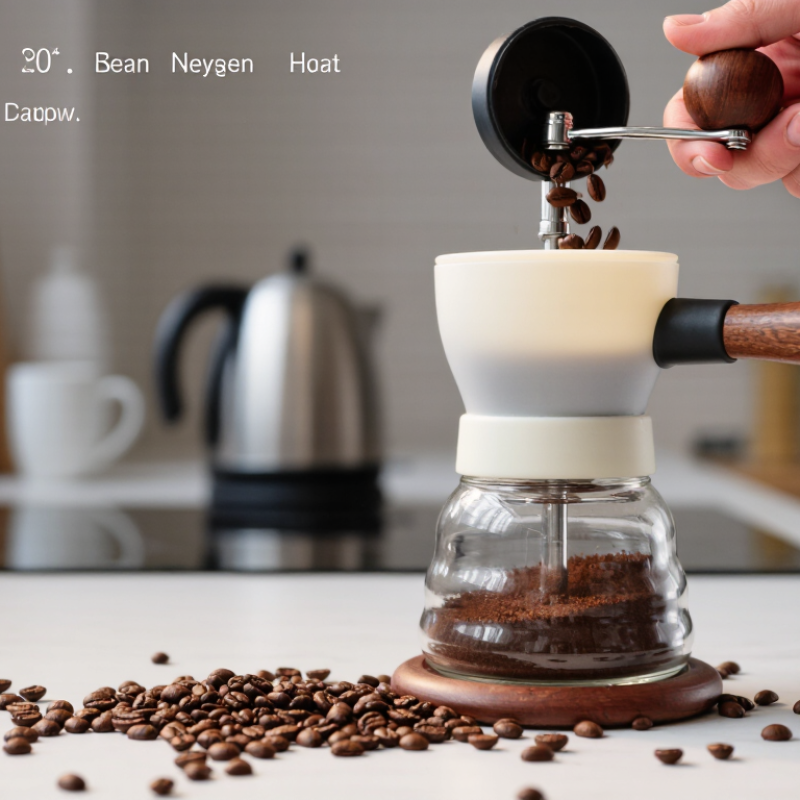
Definition and Purpose of a Manual Ceramic Coffee Grinder
A manual ceramic coffee grinder is a hand-powered tool that crushes whole coffee beans between two ceramic burrs. Turning its crank moves one burr against the other, breaking beans into smaller, more consistent particles than many blade-style grinders can produce. No electricity is needed. The user supplies the motion.
Its purpose is to prepare coffee shortly before brewing and let the user choose a grind size suited to the method. A finer setting can work for espresso-style brewing, while a coarser grind is often preferred for a French press. Settings vary between grinders, so the markings are only a starting point. A few test brews may be needed.
Fresh grinding can preserve more of the beans’ aroma until brewing, while a hand crank gives direct control over the process. The ceramic burrs do not rust, but they are not unbreakable; a hard drop or trapped stone could damage them. A slow, steady turn helps keep grinding predictable. There is a small learning curve. I have found that even careful adjustments do not guarantee a perfect cup, since bean age, dose, and water temperature matter too. The grinder is portable and works without a socket, though grinding takes time and effort.
What Is a Manual Ceramic Coffee Grinder?
A manual ceramic coffee grinder uses a hand-turned handle to move beans between ceramic burrs, breaking them into grounds without an electric motor. Adjusting the burr gap changes the grind size for different brewing methods.
Approximate grind particle-size ranges by brewing method. Actual results vary with the grinder, beans, and brewing recipe.
How the Hand-Crank Grinding Mechanism Works
A manual ceramic coffee grinder turns hand effort into a controlled sequence of small cuts. The crank rotates an inner burr against a stationary outer burr, drawing beans downward and breaking them into particles. Ceramic burrs do not cut like blades. Their spacing helps determine whether the grounds suit espresso, pour-over, or a coarser brew. Turn the handle steadily. A rushed crank can make the motion less consistent, especially with hard, light-roasted beans.
The grind setting changes the gap between the burrs. A narrow gap produces finer grounds; a wider one allows larger particles through. This matters because particle size affects how quickly water extracts coffee. The Specialty Coffee Association’s Brewing Control Chart places typical brewed coffee at 18–22% extraction yield, with a strength range of 1.15–1.35% total dissolved solids. Those figures describe brewing targets, not a guarantee of grinder performance. The trade-off is real: hand grinding needs time and effort, and ceramic burrs can feel slow when the setting is very fine. Still, the direct feedback is useful. You can hear beans crack, feel resistance shift, and adjust your pace. Not perfectly, every time.
Steps for Grinding Coffee by Hand
A manual ceramic coffee grinder uses two ceramic burrs to crush beans as you turn a hand crank. Grinding by hand gives you control over the texture, but it takes a little practice. Take your time.
Set the grinder on a dry, steady counter and check that its parts are assembled securely. Measure out only the beans you need, then pour them into the hopper. Choose a coarse setting for a French press or a finer one for pour-over. If your grinder uses numbered settings, follow its instructions; adjustment systems vary. Turn the crank smoothly while holding the grinder firmly. Avoid forcing it if the handle catches.
When the beans are ground, tip them into your brewer and look at the texture. For French press, grounds should resemble coarse sea salt; pour-over usually needs a finer, sand-like texture. These are useful starting points, not exact rules. Brew a cup, then adjust the setting slightly if the coffee tastes too weak or too bitter. I still find it easy to change more than one thing at once, which makes results harder to judge. Keep the grinder dry, and brush out leftover grounds after use.