WORLD electronics offers a complete line of electronic circuit board manufacturing and assembly services, as well as advanced manufacturing services. Our commitment to quality and service is second to no supplier.
Learn MoreOur team of engineers assists you in the development of new designs to optimize quality manufacturability (DFM) and testability, resulting in cost minimization and reduced product development time.
Learn MoreOur flexible manufacturing floor layout and highly trained staff allow for Quick Set-up and Tear Down of small volume prototype runs. This combination grants our customers the benefit of turning new designs quickly and accurately.
Learn MoreWORLD electronics is dedicated to quality. This quality is what underpins our commitment to thorough testing. Our engineers can develop a set of tests that ensure reliability and high performance in all products.
Learn MoreSupply chain management has crossed over from being a narrow management function to being a key operational function.
Learn MoreChoosing a supplier for grooming tools, hair dryers, shavers, or replacement parts is rarely just a price decision. Small parts matter. A comb attachment that fits poorly or a cable that fails after repeated bending can create returns, delays, and lost trust. Buyers evaluating a personal care appliance accessories factory in the field should look beyond product photos and ask how specifications are tested, documented, and kept consistent between batches.
Grand View Research valued the global personal care appliances market at about USD 23.5 billion in 2022 and projected a 5.3% compound annual growth rate from 2023 to 2030. This report covers appliances broadly, not accessories alone, but it signals a sizeable market where dependable components and practical product updates can support differentiation. Buyers can use that context when assessing a factory’s production capacity, material choices, customization process, and ability to meet forecast demand. Ask for samples, inspection records, and clear tolerance requirements. A polished catalogue is not proof of stable production.
Durability also deserves attention. The UN’s Global E-waste Monitor 2024 reported 62 million tonnes of e-waste generated worldwide in 2022; only 22.3% was documented as formally collected and recycled. That figure does not isolate personal care accessories, yet it reinforces the value of longer-lasting products and thoughtful material decisions. Not just price. A reliable supplier should explain how it checks fit, finish, electrical compatibility where relevant, and packaging protection. Buyers should still verify claims against their own testing needs. No factory is perfect; transparent answers about limits can be more useful than broad promises.
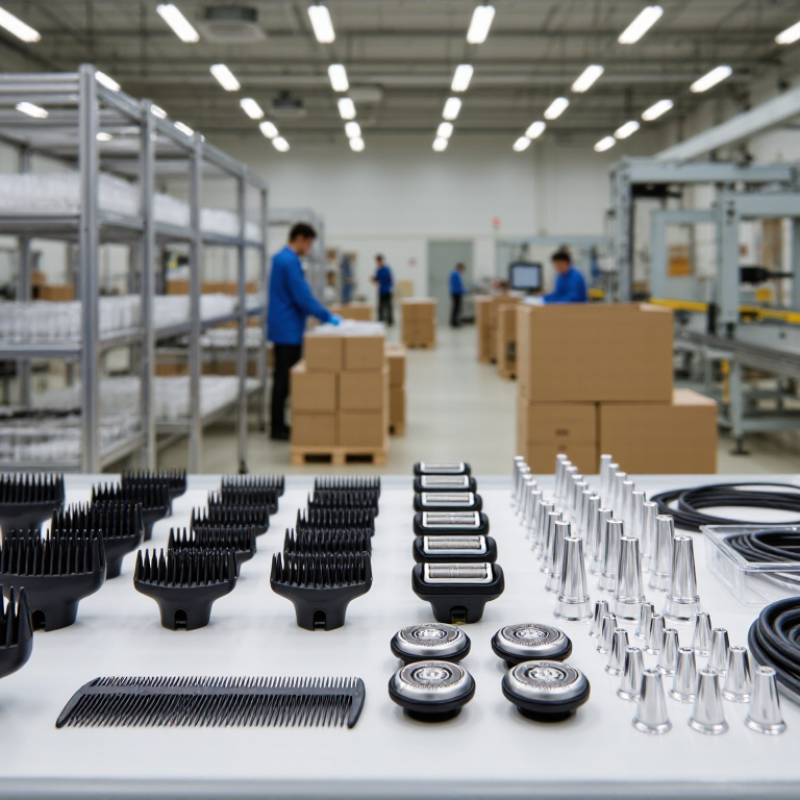
Personal care appliance accessory factories produce the parts people handle every day: dryer concentrator nozzles, diffusers, comb attachments, shaver guards, replacement brush heads, filters, charging stands, and travel cases. Many parts begin as molded plastic or silicone; metal screens and cutting components may be stamped, sharpened, or assembled separately. Small parts matter. A nozzle that sits loosely can rattle, leak airflow, or fall off during use.
Production usually combines tooling, material selection, assembly, and fit testing. Workers check dimensions, edge smoothness, attachment force, and resistance to heat or repeated cleaning. Factories may also make spare-part kits and packaging for different appliance models. Fit is unforgiving. A slight change in a handle or locking tab can make an otherwise sound accessory unusable, so model-specific tooling is common. I would not assume one mold fits every version; that is an easy mistake to make.
Durability matters beyond convenience. The UNITAR and ITU Global E-waste Monitor 2024 reported that the world generated 62 million tonnes of electronic waste in 2022, while only 22.3% was documented as formally collected and recycled. The figure covers e-waste broadly, not personal care accessories alone, but it supports designing replaceable parts that last. That part is easy to overlook. A sturdy clip, washable filter, or replaceable head may extend an appliance’s useful life, though performance still depends on careful material and fit checks.
Buyers define quality through repeatable results, not a single polished sample. Check how accessories fit, move, and withstand routine handling. A loose hinge or rough edge may seem minor, but it can trigger returns. Ask the factory how it controls dimensions, materials, and assembly from batch to batch. Small details matter.
Compliance starts with clear product specifications and records that match the actual item. Request material declarations, test reports, and traceability documents relevant to the product and destination market. For electrical accessories, verify applicable safety testing and inspection records. Keep version numbers and dates on file. Not every document proves current production matches the tested sample.
Factory reviews should include the production floor, not just a document check. Compare approved samples with finished goods, and ask how defects are logged and corrected. Buyers sometimes overvalue tidy paperwork. A checklist helps, but it can create false confidence. Ask staff to explain one recent quality issue and show the corrective action. Their answer may reveal gaps that a certificate cannot. Even careful audits miss things; follow-up inspections and random batch checks still have a place.
| Evaluation Area | What Buyers Should Specify | Practical Acceptance Criteria | Evidence or Verification |
|---|---|---|---|
| Product definition and fit | Accessory type, compatible appliance models, interface dimensions, materials, color, and intended use. | Approved drawings and samples define the fit; mating parts assemble without forced fitting, looseness, or interference. | Controlled drawings, dimensional inspection records, and fit checks using approved reference appliances or gauges. |
| Material and substance control | Material grades for plastics, elastomers, metals, coatings, adhesives, and any skin-contact surfaces. | Materials match the approved specification and applicable destination-market substance restrictions. Requirements depend on product composition and market. | Material declarations, supplier documentation, and risk-based laboratory testing. EU RoHS and REACH requirements should be assessed where applicable. |
| Electrical and appliance safety | Whether the accessory is electrical, heated, powered, or used with a particular appliance. | Safety is evaluated for the relevant finished appliance and accessory combination; applicable requirements depend on product design and sales market. | Risk assessment and relevant test reports. IEC 60335-1 and applicable Part 2 standards may be relevant to household appliances; applicability must be confirmed for the product. |
| Temperature and heat resistance | Maximum operating temperature, exposure duration, cleaning conditions, and foreseeable misuse. | No unacceptable deformation, cracking, loss of fit, or hazardous surface condition under the buyer-approved test profile. | Documented heat-aging or operating-condition tests using agreed temperatures, durations, and acceptance limits. |
| Mechanical durability | Expected attachment cycles, bending or twisting loads, drop exposure, and any moving or locking features. | Parts remain functional and securely attached after the agreed cycle and load tests; no sharp breakage or unacceptable damage. | Test plan with defined sample quantity, conditioning, loads, cycle count, and pass/fail criteria; retain test records. |
| Skin-contact comfort and finish | Surface texture, edge radii, burr limits, seams, and contact materials for accessories used on skin or hair. | No visible burrs, sharp edges, loose particles, or finish defects that conflict with the approved sample and specification. | Visual inspection under defined lighting, tactile checks, and documented reference samples. Any applicable chemical or biocompatibility assessment should be risk-based. |
| Cleaning and moisture exposure | Cleaning method, permitted detergents, rinse conditions, and whether the accessory is intended to be washable. | After the specified cleaning procedure, the accessory retains its function and finish within agreed limits. Do not assume a water-resistance rating unless tested and claimed. | Cleaning-cycle test records. If an ingress-protection claim is made, define and verify the relevant IP rating using IEC 60529 test methods where applicable. |
| Dimensions and production consistency | Critical dimensions, tolerances, cosmetic limits, and inspection frequency for each production run. | Critical-to-fit dimensions meet the approved drawing tolerances; defect classifications and sampling rules are agreed before production. | Inspection reports and calibrated measuring equipment. ISO 2859-1 can be used for attribute-sampling plans, but the buyer must define the sampling plan and acceptance limits. |
| Quality management and traceability | Lot identification, change control, nonconformance handling, corrective action, and record-retention expectations. | Finished goods can be linked to production lots and relevant material or inspection records; unapproved changes are controlled. | Audit records, lot codes, inspection logs, and documented corrective-action procedures. ISO 9001 certification may support supplier assessment but does not by itself prove product compliance. |
| Packaging and transport protection | Individual protection, carton configuration, labeling, storage conditions, and expected transport route. | Packaging prevents agreed foreseeable damage and keeps accessories clean and identifiable through handling and shipment. | Packaging specification and transit-test results. Select a suitable test method, such as an applicable ISTA procedure, based on package type and distribution conditions. |
| Regulatory documentation and claims | Destination countries, product classification, labeling language, and any safety, material, or performance claims. | Claims are supported by appropriate evidence, and required documents and labels are prepared for the specific product and market. | Market-specific compliance review, declarations or test reports where required, and label artwork approval. Requirements vary by product design and jurisdiction. |
| Sampling and release approval | Prototype, pre-production, golden-sample, and shipment-release approval stages. | Mass production matches the signed-off sample and specification; deviations require written buyer approval before shipment. | Approved sample record, pre-shipment inspection report, defect criteria, and written disposition of any nonconforming goods. |
Note: Acceptance limits should be agreed in the purchase specification before production. Standards and regulatory obligations depend on accessory design, intended use, and destination market; the table is a buyer-planning checklist, not a substitute for product-specific compliance assessment.
When assessing a personal care appliance accessories factory, look beyond its stated monthly output. Ask for recent production records and compare them with the number of active lines, shifts, and workers. A large capacity figure means little if several lines are already committed. A spreadsheet can still flatter reality. During a visit, watch one full production cycle, from material preparation to final inspection. Note how operators handle small parts, such as charging contacts or molded attachments. Ask how defects are recorded and what happens when a batch fails inspection. Small details matter.
Customization depends on more than a willingness to change colors. Request examples of adjustable features, including dimensions, materials, surface finishes, and packaging. Then confirm which changes require new tooling, extra setup time, or a higher minimum order quantity. Ask the factory to review a drawing and identify unclear tolerances before quoting. A sample is not proof of stable production. Check whether the approved sample matches the work instructions used on the line. One practical test is a pilot order with several production lots, not just one carefully prepared piece. It may add time and cost, but it can reveal inconsistent fit or finish. Even a clear specification can miss a detail; record decisions in writing before production begins.
When comparing personal care appliance accessory factories, request the same quotation format from each supplier. Separate tooling, samples, packaging, inspection, and freight costs. A low unit price can hide mold fees or expensive replacement parts. Ask for a written lead-time breakdown, from material confirmation to shipment, and check whether quoted dates depend on one component supplier. UNCTAD’s Review of Maritime Transport 2024 reported that maritime trade grew 2.4% in 2023, while forecasting 2.0% growth for 2024. Shipping conditions can shift, so distinguish factory production time from transit time.
Customer support is measurable, too. Ask how quickly the factory acknowledges defects, who handles technical questions, and whether it provides corrective-action reports with photos or test records. McKinsey’s 2020 supply-chain survey found that 93% of respondents planned to make their supply chains more resilient. That supports checking backup materials and escalation contacts, not just price. One comparison can still miss real-world delays; factory answers are not guarantees.
Tips: Request a sample, a dated production schedule, and a named contact. Compare response quality, not just speed. Ask for a recent example of a delayed order and how the factory handled it. That answer may reveal more than a polished presentation.
A reliable personal care appliance accessories factory should be verified through records and samples, not a polished sales presentation. Ask to see its production flow, inspection checkpoints, and material traceability documents. Small details matter. Check whether incoming materials are labeled and whether finished parts are measured against written specifications. For molded or fitted accessories, compare sample dimensions with the appliance interface and test repeated attachment and removal. Ask for evidence of relevant quality systems, then confirm the documents’ scope and validity with the issuing organization.
Discuss capacity in practical terms: monthly output, tooling ownership, lead time, and how the factory handles a rejected batch. Request a small pilot order before committing to larger volumes. Inspect surface finish, color consistency, packaging protection, and the clarity of inspection reports. Ask who records defects and what corrective action follows. Ask for proof. A factory may answer every question smoothly, yet still struggle when specifications change. I would leave room for that possibility and verify responses in writing. Even a detailed checklist can miss problems that appear only after repeated use, so define acceptance criteria before production begins.