7 Tips for Choosing an External Consumer Unit?

Blog

7 Tips for Choosing an External Consumer Unit?

Choosing an External Consumer Unit is not just a matter of finding a box that fits the wall. It must suit the circuits it will serve, the location, and the conditions it may face. Rain, dust, direct sunlight, and limited mounting space can all affect the choice. Small details matter. A suitable enclosure and compatible protective devices help support safe, dependable operation, but the product label alone cannot confirm that an installation is right for your property.

This guide explains seven practical points to consider, from enclosure rating and circuit capacity to material quality, cable access, and room for future changes. Check the manufacturer’s specifications rather than relying on appearance or price. A unit beside a sheltered doorway may face very different exposure from one on an open garden wall. That matters. The best option depends on the site and the intended circuits, so there is no universal “right” model. Even a thorough checklist has limits: installation and testing should be assessed by a suitably qualified electrician, who can confirm compatibility with the existing system and applicable requirements. It is tempting to choose the cheapest unit and move on; in hindsight, that can overlook important details. Use these tips to ask better questions before buying, and to compare products with clear, practical criteria.
7 Tips for Choosing an External Consumer Unit?

Understanding What an External Consumer Unit Does

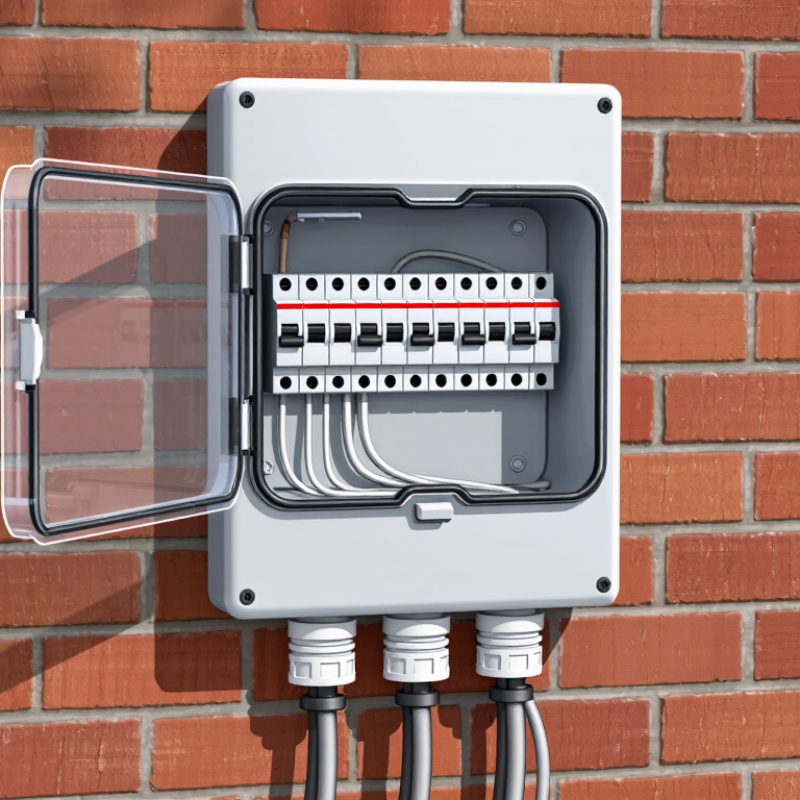
An external consumer unit is a weather-resistant enclosure that distributes electricity to circuits in an outdoor area or building. It does not generate power. Instead, it provides a central point for switching circuits off and housing protective devices. These devices can disconnect a circuit when they detect an overload or certain electrical faults. Some units also include residual-current protection, which can reduce the risk of serious electric shock. The exact arrangement depends on the installation and the equipment being supplied.

That can be misleading. A tough-looking box is not automatically suitable for every outdoor location. Sunlight, rain, dust, corrosion, and condensation can all affect its condition. Cable entry points and the enclosure’s rated protection matter too. Small details matter. For example, a unit beside a garden tap may face different moisture risks from one beneath a deep roof overhang. Its position should allow safe access without exposing it to avoidable damage. An electrician can assess the load, protective devices, earthing, and local requirements before selecting or installing a unit. It is tempting to judge only by size, but that leaves out the important part: whether the unit suits the circuits and conditions it must serve.

Assessing Your Electrical Load and Circuit Requirements

Before choosing an external consumer unit, map the circuits it must serve. Note each appliance’s rated power, existing breaker rating, and whether it runs for long periods. Include ovens, showers, heating, pumps, and planned electric vehicle charging. Small details matter. The U.S. Energy Information Administration’s 2020 Residential Energy Consumption Survey reported average household electricity use of 10,566 kWh per year. That figure describes annual consumption, not peak demand, so it cannot size a unit by itself.

Tip: Make a circuit list beside the existing board. Record labels, cable routes, and any circuits that trip repeatedly. Then estimate which major loads may operate at the same time. A kettle, shower, and heating system can create a very different peak from lights and phone chargers. Do not simply add every breaker rating; a qualified electrician should assess demand, diversity, cable capacity, and protective-device requirements.

Check future needs, too. A spare way can be useful, but it does not guarantee enough electrical capacity. Ask whether planned equipment needs a dedicated circuit, and whether the incoming supply can support the expected load. One easy assumption to miss: a larger consumer unit does not increase the property’s available supply. Have the final assessment checked against the installation and local requirements. My first load estimate would be only a starting point.

Choosing Weatherproofing and Durable Enclosure Materials

Choosing Weatherproofing and Durable Enclosure Materials

An outdoor consumer unit faces rain, sunlight, dust, temperature swings, and sometimes salty air. The World Meteorological Organization’s State of the Global Climate 2023 report estimated global temperatures were 1.45°C above the 1850–1900 average. That figure does not predict local conditions, but it is a useful reminder: specify materials for the actual site, not an ideal one. UV-stabilized polycarbonate resists rust and can suit exposed walls; coated metal offers strength, but scratches may expose corrosion-prone areas.

Tip: Match the ingress rating to the exposure. Under IEC 60529, IP65 means dust-tight protection and resistance to water jets; IP66 is tested against more powerful water jets. Neither rating means a unit can be submerged. Check the manufacturer’s installation instructions, including cable-entry orientation and gasket compression. A downward-facing entry helps shed water. Small detail. Often overlooked.

For coastal or industrial locations, consider corrosion-resistant hardware and inspect coatings, seals, and hinges regularly. Condensation can still form inside a weatherproof enclosure when temperatures change, so assess ventilation and drainage provisions without compromising the rated protection. I would not choose a material on its label alone: sunlight, mounting position, and maintenance matter too. Even a durable enclosure needs occasional attention.

Water Ingress Protection Levels for Outdoor Consumer Units

IEC 60529 water-protection ratings range from 0 to 8. Use the chart to compare the protection indicated by the second digit of an IP rating.

Higher ratings indicate resistance to more demanding water exposure tests, from no stated protection (IPX0) to immersion under specified conditions (IPX8). The exact test conditions matter, and an IP rating does not measure UV resistance, corrosion resistance, or overall enclosure durability. Check the product specification and installation requirements when choosing an outdoor unit.

Checking Safety Features, Standards, and Compatibility

Tip 1: Check safety features before comparing prices. An outdoor consumer unit should have suitable protection against electric shock and overcurrent, such as correctly selected RCDs or RCBOs. Ask a qualified electrician to confirm the protection suits the circuits and installation. Test buttons are useful, but they do not replace proper inspection.

Tip 2: Verify standards and enclosure protection. Look for clear product documentation and conformity with standards applicable where the unit will be installed. Check the stated IP rating against likely exposure to rain, dust, and splashing. An IP rating is not a promise that water can never enter. Placement and installation matter too.

Tip 3: Confirm compatibility with your supply, wiring, and planned circuits. Check available ways, current rating, cable-entry options, and the enclosure’s dimensions. Leave room for sensible expansion, but avoid choosing a larger unit without checking the supply and design. A tight fit can make maintenance awkward. So can a poorly planned cable route. Ask the electrician to assess earthing, environmental conditions, and existing equipment before purchase; small details are easy to overlook.

7 Tips for Choosing an External Consumer Unit: Safety, Standards, and Compatibility
Tip What to Check Why It Matters Practical Guidance
1. Assess the location and exposure Whether the unit will face rain, wind-driven water, dust, direct sunlight, or possible impact. Outdoor conditions can affect the enclosure and electrical equipment over time. Choose an enclosure with an ingress-protection rating appropriate to its actual position and exposure. Check the installation instructions; an IP rating describes tested protection against specified ingress conditions, not every outdoor hazard.
2. Check the IP rating carefully The complete IP code stated for the assembled enclosure and its permitted configuration. The two digits refer to different protections: the first relates to solids and dust, and the second to water. For example, IP65 indicates dust-tight protection and protection against water jets under specified test conditions. Confirm that covers, cable entries, and accessories maintain the required rating when installed.
3. Verify applicable standards Evidence that the distribution board assembly is designed for its intended use and that the installation will meet applicable wiring rules. Standards address matters such as construction, verification, and safe installation; a weather-resistant enclosure alone does not establish compliance. For UK installations, ask the installer to confirm the relevant requirements of BS EN 61439-3 for distribution boards intended for operation by ordinary persons, and BS 7671 for the electrical installation.
4. Confirm circuit protection and RCD provision The protective devices required for each circuit, including suitable overcurrent protection and residual-current protection where required. Protection needs depend on the circuits, loads, earthing arrangement, and installation conditions. Have a qualified electrician assess the design. Where an RCD is used, its type and rating must be suitable for the connected equipment and the applicable installation requirements.
5. Check compatibility with the existing installation Supply characteristics, earthing arrangement, protective-device format, conductor sizes, and the available space for circuits. Components must work together as part of the designed assembly; physical fit alone does not prove electrical compatibility. Provide the installer with details of the existing supply and circuits. Use only devices and accessories specified as compatible with the particular distribution board assembly.
6. Plan cable entries and mounting Entry locations, glands or fittings, cable routes, fixing surface, clearance, and access for inspection and operation. Poorly sealed entries or unsuitable mounting can undermine weather protection and make safe maintenance difficult. Follow the enclosure instructions for drilling, glands, seals, and orientation. Position the unit where it can be accessed safely and protected from avoidable mechanical damage.
7. Arrange inspection, testing, and documentation Inspection and test results, circuit identification, and handover information after installation or alteration. Testing helps verify that the completed installation is safe and that protective measures operate as intended. Use a competent, appropriately qualified electrician. Request the relevant electrical installation documentation and keep it available for future inspection or maintenance.

Planning Installation, Access, and Future Expansion

Choosing an external consumer unit starts with the place it will live. Check that the wall is solid, the enclosure suits local weather exposure, and doors or gates can open without blocking access. Keep it clear of downpipes, garden tools, and spots where water regularly splashes. Leave room to work. An electrician should assess cable routes, earthing, protective devices, and the unit’s position before installation. A neat sketch can still miss a drainpipe or a gate swing; measure the space with both open.

Think beyond today’s circuits. A few spare ways may help if you later add outdoor lighting, a workshop, or another suitable load. But spare capacity is not a substitute for checking the supply, cable sizes, and expected demand. Ask the electrician to explain what can reasonably be added and what might require a wider upgrade. Small details matter. Take a clear photo of the proposed location and note nearby sockets, lights, and obstacles. It may feel overly cautious, but these details can prevent awkward changes once cables are installed. Keep the unit reachable for inspection and operation, not hidden behind stored boxes or dense planting.