WORLD electronics offers a complete line of electronic circuit board manufacturing and assembly services, as well as advanced manufacturing services. Our commitment to quality and service is second to no supplier.
Learn MoreOur team of engineers assists you in the development of new designs to optimize quality manufacturability (DFM) and testability, resulting in cost minimization and reduced product development time.
Learn MoreOur flexible manufacturing floor layout and highly trained staff allow for Quick Set-up and Tear Down of small volume prototype runs. This combination grants our customers the benefit of turning new designs quickly and accurately.
Learn MoreWORLD electronics is dedicated to quality. This quality is what underpins our commitment to thorough testing. Our engineers can develop a set of tests that ensure reliability and high performance in all products.
Learn MoreSupply chain management has crossed over from being a narrow management function to being a key operational function.
Learn MoreThe global demand for efficient water movement is reshaping industrial purchasing. Pump Inverter systems can adjust motor speed, reduce throttling losses, and stabilize pressure across changing workloads. The International Energy Agency identifies efficient motor systems as a major global energy-saving opportunity. The U.S. Department of Energy also emphasizes system design, controls, and maintenance in reducing pumping costs.
The numbers are significant. Pumping systems can represent a large share of electricity use in water, manufacturing, agriculture, and commercial buildings. Even a modest speed reduction may produce visible savings, because centrifugal pump power often changes with the cube of speed. A smaller motor load. Lower heat. Quieter operation.
Energy-efficiency expert Amory Lovins famously said, “The cheapest energy is the energy you don’t use.” That principle explains why buyers now examine more than purchase price. They compare control accuracy, motor compatibility, enclosure protection, service networks, cybersecurity, and lifecycle cost. Recent market studies from MarketsandMarkets and Grand View Research show continued growth in variable-frequency-drive and smart-motor applications, although forecasts differ by scope and methodology.
This ranking of the Top 10 Pump Inverter Suppliers Worldwide for Global Buyers offers a practical starting point. It considers product breadth, regional support, technical documentation, efficiency features, and application experience. Rankings are never perfect. A strong supplier for a municipal station may not suit a chemical plant or a remote farm. Buyers should verify certifications, warranty terms, harmonic performance, and local after-sales support before choosing. A brochure cannot replace a site survey.
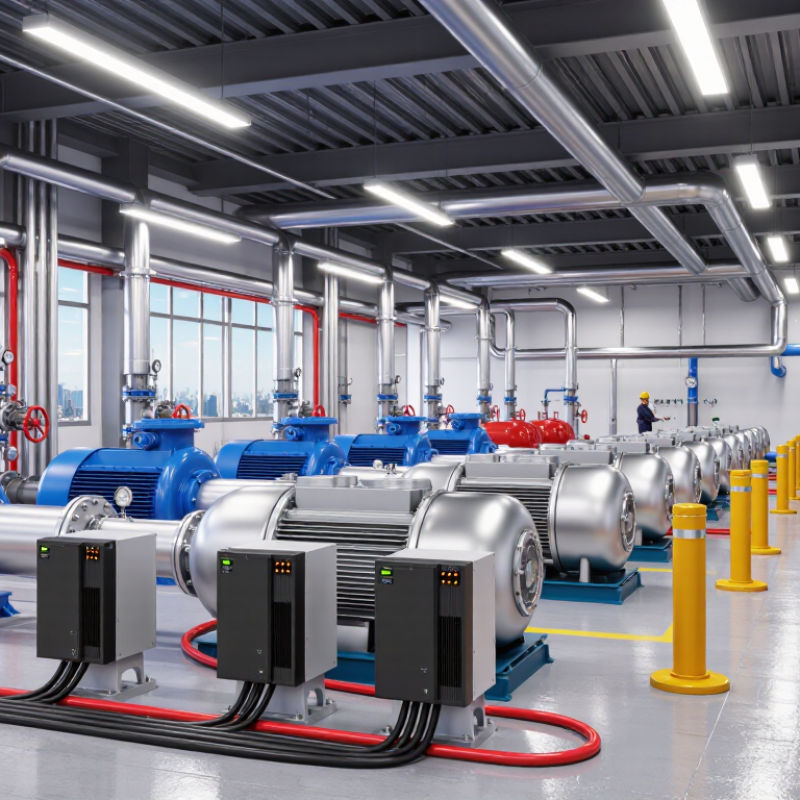
A pump inverter is a control device that adjusts a motor’s speed to match changing water demand. It commonly uses variable frequency technology to regulate flow and pressure. Instead of running at full speed continuously, the pump slows when fewer outlets are open. This can reduce energy use and mechanical stress. In practical water systems, the result may be steadier showers, quieter pipes, and fewer pressure shocks.
Modern inverters also support automatic control. Pressure sensors send live readings to the controller, which changes motor speed within seconds. This helps in apartment buildings, irrigation networks, factories, and rainwater systems. Soft starting protects couplings and reduces sudden current spikes. However, installation quality still matters. Poor sensor placement can cause unstable pressure, even with advanced equipment. I have seen systems perform well on paper but struggle because pipes were undersized or settings were copied blindly.
Tips: Match the inverter with the motor’s rated voltage, current, and power. Check the pump curve before choosing a control range. Install the pressure sensor near the main delivery point, away from turbulence. Protect the unit from moisture, heat, and dust. Keep a manual fallback mode for maintenance or sensor failure. Test actual flow during peak demand, not only during a quiet commissioning visit. Small errors become expensive when a pump serves hundreds of users.
A global supplier should prove more than a high-efficiency figure. The U.S. Department of Energy reports that optimized pumping systems can reduce energy consumption by 20–50% in suitable applications. Therefore, buyers should compare inverter efficiency, control accuracy, overload capacity, and standby losses under real operating conditions. Ask for test methods, not only brochure values. Small details matter, including IP protection, cooling design, harmonic performance, and motor compatibility.
Pump duty must guide the evaluation. A supplier should provide stable pressure control, low-flow protection, dry-run detection, and smooth starting. The European Commission’s Ecodesign work identifies pumps and motor systems as important energy-saving opportunities across industry. Request verified data at several load points, such as 30%, 60%, and 100% speed. A perfect laboratory curve may disappoint in a dusty pump room. That happens.
Reliability also depends on service structure. Check local commissioning support, spare-parts availability, firmware management, warranty terms, and technician response times. IEC 61800 standards can help buyers assess adjustable-speed drive safety and performance requirements. Review cybersecurity controls for connected units, even when the inverter appears simple. Supplier references should include similar water quality, voltage conditions, and climate exposure. Cost comparisons should include installation, maintenance, downtime, and energy use over ten years. The cheapest quotation is rarely the cheapest system. Sometimes, the evidence remains incomplete; buyers should record assumptions and request corrective testing before approval.
The top 10 pump inverter suppliers worldwide differ in engineering focus, production scale, and service depth. Profile one represents a specialist in variable-speed control for water systems. Its strengths include stable torque control, clear wiring diagrams, and practical fault codes. Profile two focuses on industrial pumping, where dust protection and thermal management matter. Profile three serves agricultural users with simple settings and accessible spare parts. Small details matter here.
Profile four is known for project-based integration. Its engineers may match inverter ratings with motor load, pipe friction, and starting conditions. Profile five emphasizes compact units for commercial buildings. Profile six targets harsh environments, including outdoor pump rooms and coastal facilities. Profile seven offers broad voltage options for international projects. Profile eight develops energy-monitoring functions, helping operators compare daily consumption. These features sound useful, but buyers should verify test conditions.
Profile nine supports original equipment manufacturers with flexible mounting and communication interfaces. Profile ten concentrates on after-sales training, commissioning support, and repair documentation. A credible supplier should provide efficiency data, overload limits, warranty terms, and regional technical contacts. Experience is visible in the questions they ask before quoting. They should request pump curves, motor plates, duty cycles, ambient temperatures, and installation details. Some product pages remain vague. That is a weakness worth challenging. Global buyers should compare certifications, software usability, response time, and real service capacity. A low purchase price cannot compensate for repeated trips, unstable pressure, or delayed replacement parts.
Regional three-phase voltage compatibility is a key comparison point for global pump inverter buyers. The reference values shown are commonly used nominal supply voltages based on IEC 60038 and regional electrical systems. Buyers should also verify frequency, motor-rating range, protection class, harmonic performance, and certification requirements with each supplier.
A useful top-ten comparison should examine technology, applications, and service coverage, not factory size alone. The International Energy Agency reports that electric motor systems consume about 53% of global electricity. The U.S. Department of Energy also identifies pumping systems as major industrial energy users, sometimes consuming 25% to 50% of site electricity.
Leading suppliers typically offer variable-frequency drives, sensorless vector control, closed-loop PID regulation, and automatic sleep functions. These features support stable pressure in water networks, irrigation, HVAC circulation, and process manufacturing. For harsh sites, buyers should check IP ratings, overload capacity, harmonic mitigation, and ambient-temperature limits. A technically strong inverter may still fail without suitable enclosure protection.
Market coverage separates the leading ten suppliers more clearly. Some provide local commissioning, spare parts, and multilingual support across Asia, Europe, and the Americas. Others depend heavily on distributors. The World Bank’s water-sector assessments repeatedly emphasize lifecycle cost, maintenance access, and energy reliability, rather than purchase price alone.
That matters in remote pumping stations. A low-cost unit can become expensive after one control-board failure. The ranking is not absolute; project voltage, motor age, water quality, and installer skill can change the result. My own comparison would score documentation more heavily. It is often overlooked.
Choosing a pump inverter supplier requires more than comparing catalog prices. Global buyers should examine application experience, engineering depth, and after-sales reliability. Ask whether the supplier understands centrifugal, booster, or submersible pump systems. A suitable inverter should match motor power, voltage, starting current, control method, and operating environment. Request clear efficiency data, protection ratings, test reports, and installation instructions.
Supplier stability matters. Review production capacity, quality-control procedures, warranty terms, spare-parts availability, and technical response times. A supplier may offer an attractive price, but delayed support can stop a water system for days. Check sample units before placing a large order. Test them under changing pressure, dry-run protection, frequent starts, and dusty conditions. Also confirm communication quality. Unclear manuals are a warning sign.
Tips: Compare total ownership cost, not only the invoice. Ask for references from similar projects and verify the reported results. Confirm software updates, remote monitoring options, and troubleshooting support across time zones. Keep written records of specifications and acceptance tests. Do not assume every inverter works well with every motor. That mistake is common. A careful supplier will explain limitations honestly, even when the answer may reduce the immediate sale. Availability is useful, but dependable engineering support is often more valuable.
| Rank | Supplier Profile | Primary Market Coverage | Typical Input and Output | Common Pump Applications | Typical Protection Features | Compliance Expectations | Typical Warranty | Typical Lead Time |
|---|---|---|---|---|---|---|---|---|
| 01 | Supplier Profile 01 | Europe Middle East Africa | 1-phase 220–240 V input or 3-phase 380–480 V input; 0.75–315 kW output | Municipal water booster systems, HVAC circulation, irrigation and wastewater pumping | Overcurrent, overvoltage, undervoltage, dry-run input, overload and motor overheat protection | CE; EMC compatibility; low-voltage safety documentation | 18–24 months | 4–10 weeks |
| 02 | Supplier Profile 02 | North America Latin America | Single-phase 208–240 V or three-phase 230–480 V; 1–250 hp motor capacity | Pressure boosting, agricultural irrigation, building services and industrial process water | Short-circuit, phase-loss, stall, thermal and low-pressure protection | UL/CSA-oriented documentation where required; EMC testing available | 12–24 months | 3–8 weeks |
| 03 | Supplier Profile 03 | East Asia Southeast Asia Oceania | 200–240 V single-phase or 380–460 V three-phase; 0.4–160 kW output | Domestic water supply, compact booster sets, aquaculture and light industrial pumping | IP20/IP21 standard enclosure options; IP54 or higher available in selected configurations | CE, RoHS and regional electromagnetic-compatibility requirements | 12–18 months | 2–6 weeks |
| 04 | Supplier Profile 04 | China South Asia Africa | 220 V single-phase or 380 V three-phase; 0.75–500 kW output | OEM pump packages, deep-well pumping, irrigation and containerized water treatment | Adjustable sleep and wake functions, dry-run detection, automatic restart and PID control | CE marking; factory testing; export technical files commonly available | 12–18 months | 2–8 weeks |
| 05 | Supplier Profile 05 | Western Europe North Africa Gulf Region | 3-phase 380–690 V input; 2.2–1,000 kW output for large installations | Large waterworks, desalination pretreatment, district cooling and industrial pumping | Harmonic-mitigation options, bypass arrangements, motor thermal monitoring and safe torque off | CE; IEC-based design documentation; project-specific certification support | 18–24 months | 8–16 weeks |
| 06 | Supplier Profile 06 | Japan South Korea Southeast Asia | 200–240 V or 380–480 V; 0.75–400 kW output | Precision pressure control, semiconductor facilities, clean utilities and commercial buildings | High-speed current limiting, automatic tuning, PID control and detailed fault diagnostics | Regional safety certification; EMC and environmental testing commonly supported | 12–24 months | 6–12 weeks |
| 07 | Supplier Profile 07 | India South Asia East Africa | 220–240 V single-phase or 380–415 V three-phase; 0.75–250 kW output | Borewell pumping, rural water systems, agricultural irrigation and solar-assisted pumping | Dry-run, underload, surge, phase-loss and automatic restart functions | IEC-aligned testing; CE documentation available for export models | 12–18 months | 3–8 weeks |
| 08 | Supplier Profile 08 | Middle East Africa Central Asia | 380–415 V three-phase; 1.5–315 kW output | High-temperature installations, water transfer, desalination support and remote pumping stations | High ambient-temperature options, coated boards, surge protection and IP54/IP55 cabinets | CE and project-specific documentation; local authority approval may be required | 12–24 months | 5–12 weeks |
| 09 | Supplier Profile 09 | Australia New Zealand Pacific Islands | 230 V single-phase or 400 V three-phase; 0.75–220 kW output | Rainwater systems, livestock watering, irrigation, mining camps and remote utilities | Enclosed outdoor panels, surge protection, remote monitoring and low-pressure shutdown | Regional electrical safety requirements; EMC compliance for installed equipment | 12–24 months | 4–10 weeks |
| 10 | Supplier Profile 10 | Eastern Europe Central Asia CIS Markets | 3-phase 380–480 V; 1.5–630 kW output | Industrial water circulation, district heating, mining dewatering and municipal pumping | PID pressure control, bypass compatibility, motor protection and programmable relay outputs | CE or regional conformity documentation depending on destination market | 12–18 months | 5–12 weeks |