China Top Gaming Rig Manufacturers for Global Buyers?
China has become a major sourcing center for Gaming Rig manufacturers serving international buyers. Its factories support complete systems, custom builds, and private-label production. Some specialize in esports desktops. Others focus on quiet workstations with gaming capability.
Jon Peddie, president of Jon Peddie Research, has said, “PC gaming is not dead.” His observation remains relevant as buyers compare performance, upgrade paths, and long-term value. A serious supplier must provide more than attractive specifications. It should explain the processor, graphics card, motherboard, power supply, cooling system, and memory configuration clearly. Hidden substitutions can damage trust.
The strongest Chinese manufacturers usually combine engineering teams with organized production lines. Buyers should inspect thermal test reports, burn-in procedures, BIOS settings, and component traceability. Ask for sample units. Check cable management, fan noise, case rigidity, and operating temperatures under sustained load. Small details matter.
Warranty terms matter too.
Reliable suppliers describe replacement procedures, response times, and international shipping responsibilities. They may also support OEM branding, packaging design, and regional plug standards. Certifications should match the destination market, not merely appear in a sales brochure.
Still, no ranking is perfect. Factory scale does not guarantee consistent quality. A polished website can hide weak after-sales service. Prices may change when graphics cards or memory become scarce. This guide evaluates China’s leading Gaming Rig manufacturers through product quality, customization ability, communication, testing discipline, and buyer feedback. The goal is practical judgment, not exaggerated praise.
What Defines a Top Gaming Rig Manufacturer in China
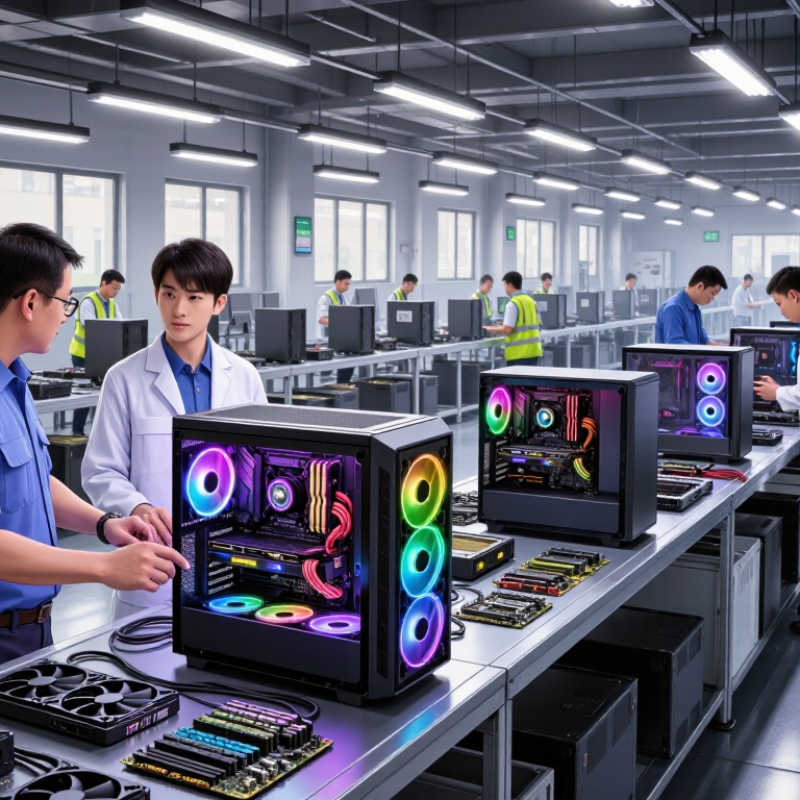
A top gaming rig manufacturer in China is defined by more than attractive specifications. It must turn processor, graphics, cooling, and power requirements into a stable system. Experienced engineers test thermal performance during sustained workloads, not only short demonstrations. Buyers should request temperature logs, noise measurements, and compatibility records. These details show professional discipline.
Production reliability matters equally. A capable factory follows documented assembly procedures, serial tracking, inspection checkpoints, and repeatable burn-in testing. Clean production photos are useful, but traceable quality records provide stronger evidence. Ask how defective components are isolated and replaced. Ask who covers shipping when a fault appears. Clear answers build trust.
Customization should remain practical. A manufacturer may offer regional power standards, language settings, memory upgrades, or tailored chassis designs. However, excessive customization can complicate maintenance and spare-parts planning. That trade-off deserves honest discussion. No factory is flawless. A well-managed supplier may still face delays, component shortages, or a missed inspection. What matters is transparent communication, corrective action, and measurable follow-up. Reliable manufacturers provide warranty terms, technical documents, and responsive support after delivery. They also understand import requirements and electrical safety expectations in the buyer’s market. A serious partner proves capability through consistent evidence, not loud promises.
How Chinese Gaming Rig Makers Serve Global Buyers
China’s gaming rig manufacturers increasingly serve global buyers through flexible production, engineering support, and export experience. Many factories can configure systems for different voltage standards, language needs, and regional compliance requirements. Buyers can request specific processors, graphics cards, cooling layouts, memory capacities, and case designs. This flexibility helps retailers, esports venues, and system integrators control costs without sacrificing performance.
Reliable suppliers usually provide sample testing, component traceability, burn-in checks, and documented quality procedures. Ask for thermal test results under sustained loads, not only attractive benchmark screenshots. Confirm warranty coverage, replacement procedures, packaging strength, and spare-part availability before placing a large order. Clear communication matters too. A technical contact who understands BIOS settings and shipping documents can prevent expensive delays. Still, factory claims need independent verification. One test unit is never enough evidence.
Tips: Request a sample with your intended configuration. Test noise, temperatures, cable routing, and gaming stability for several days. Check whether the packing survives repeated handling. Ask for photos of production stages, serial records, and inspection reports. Discuss customs documents and local certification early. Avoid choosing only by the lowest quotation. I once underestimated support response time; the savings disappeared when a small batch needed replacement fans. That mistake remains useful. Global buyers should compare engineering ability, communication speed, consistency, and after-sales responsibility. A strong supplier relationship is built through measurable checks, not confident promises.
Quality, Certification, and Customization Standards to Compare
For global buyers, gaming rig quality starts beyond attractive specifications. Newzoo’s 2024 Global Games Market Report estimated 3.42 billion players worldwide and nearly $188 billion in annual revenue. That scale increases pressure on manufacturers to deliver repeatable performance. Compare processor and graphics-card sources, motherboard revisions, thermal testing, and power-supply efficiency. A reliable supplier should provide burn-in records, serial-number traceability, and failure-rate data. A glossy certificate is not proof of stable production.
Certification must match the exact exported configuration. Request current CE, FCC, RoHS, EMC, and electrical-safety documents where applicable. Check the testing laboratory, report number, model name, and validity date. Customization also needs measurable limits. Confirm acceptable changes for chassis dimensions, cooling fans, memory capacity, firmware, packaging, and regional plugs. The 80 PLUS program evaluates power-supply efficiency, but its listing does not certify the entire computer. That distinction is often missed. It deserves attention.
Tips: Ask for one production sample before a large order. Run a 24-hour thermal test, inspect cable routing, and record noise levels at fixed distances. Require pre-shipment inspection criteria in writing. Keep a small reserve of spare fans and power supplies. ISO 9001 certification can support process discipline, yet it cannot replace product testing. Independent inspection is wiser. Reports and standards evolve, so buyers should recheck documents before every major shipment.