Top CPO NPO FAU Manufacturers in China
As data-center bandwidth demands rise, CPO and NPO designs are drawing attention from optical-network teams. At the center is the CPO/NPO FAU. It positions fibers for coupling with photonic devices. Small errors matter. An offset can affect insertion loss, yield, and repeatability. Yet a polished datasheet cannot show every production detail.
This guide introduces leading CPO/NPO FAU manufacturers in China. It also outlines practical ways to compare them; a supplier list is not a verdict. Relevant checks include channel count, pitch, alignment method, end-face inspection, packaging, and traceable quality controls. Ask for drawings, sample results, and evidence that stated tolerances hold across batches. Production capacity matters, but so do engineering response times and change control. Early technical discussions should cover connector interfaces, fiber routing, cleanliness, and how assemblies are tested after handling. Even then, test conditions may not mirror deployment. These details can reveal fit better than broad claims. Not every company publishes comparable data. That gap deserves scrutiny. Where claims remain unclear, buyers should request clarification and validate samples against their own optical and thermal requirements. Chinese manufacturers differ in specialization, scale, and export experience. Use this overview as a starting point, then verify current capabilities directly.
Understanding CPO, NPO, and FAU Technologies
CPO, NPO, and FAU describe different parts of the optical interconnect challenge. Co-packaged optics (CPO) places optical engines beside switching silicon, shortening high-speed electrical paths. Near-packaged optics (NPO) keeps those engines close to the chip, but usually on a separate module. The distinction matters: shorter traces can reduce signal loss and ease power demands, yet servicing tightly integrated components may be harder. There is no free lunch.
The Optical Internetworking Forum’s 2022 CPO implementation agreement defines an optical engine architecture supporting an aggregate 3.2 Tb/s. It is a technical reference, not proof that every product reaches that rate in operation. A fiber array unit (FAU) aligns multiple fibers with the optical engine. Even small alignment errors can affect coupling, so assembly tolerances, cleanliness, and thermal stability matter on the factory floor. These details are easy to overlook.
The International Energy Agency estimated that data centers used about 460 TWh of electricity in 2022, with demand potentially reaching 620–1,050 TWh by 2026. That forecast helps explain interest in lower-power optical links, but it does not mean CPO alone will solve energy growth. Engineers still need to measure link power, cooling load, yield, and repair time under real workloads. Some trade-offs remain uncertain.
How FAUs Support CPO and NPO Optical Interconnects
Top CPO NPO FAU Manufacturers in China
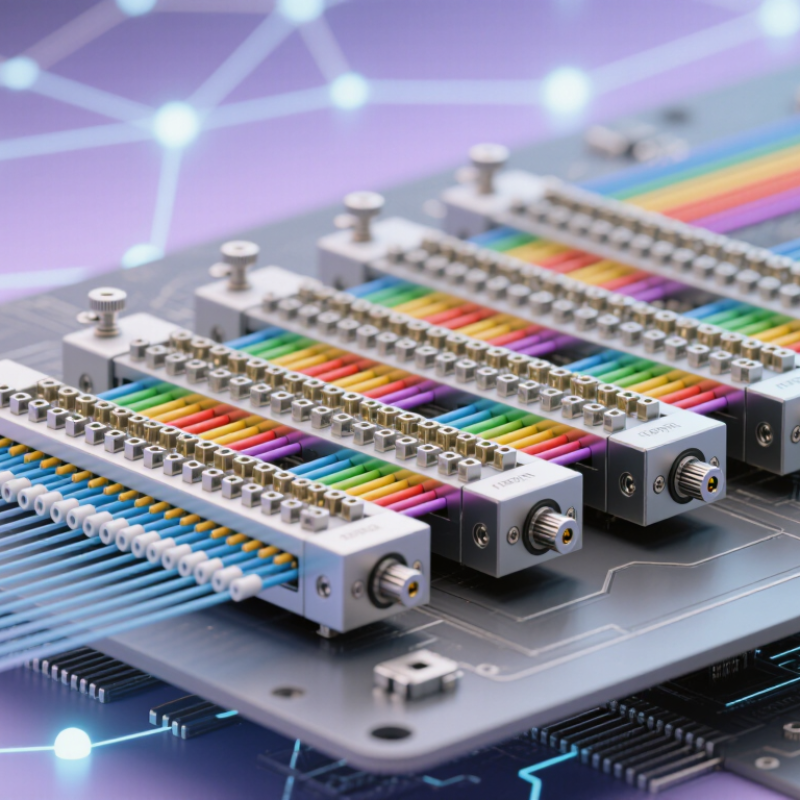
Co-packaged optics (CPO) and near-packaged optics (NPO) place optical engines close to high-speed switch electronics. This shortens electrical paths, helping manage signal loss and power demand as data rates rise. A fiber array unit (FAU) provides the precise optical connection between those engines and external fibers. Small alignment errors matter. A few micrometers can reduce coupling efficiency or create uneven channel performance.
In practical assembly, FAUs hold fibers at a defined pitch and guide their endfaces toward an optical interface. Their geometry, surface quality, and mounting stability affect how consistently light enters each channel. CPO designs may face tight space and thermal constraints beside the ASIC. NPO layouts can allow more room, but still demand repeatable alignment and reliable fiber routing. Neither approach removes the need for careful inspection. Connector cleanliness and assembly variation can still undermine an otherwise sound design.
Tips: Check channel pitch, fiber type, and interface compatibility before evaluating an FAU. Ask for alignment and coupling-loss data under realistic operating conditions. Also review thermal stability and handling requirements. One overlooked detail is service access; dense fiber routing can make replacement awkward. A sample build may reveal issues that drawings miss. That step takes time, but it is useful.
China’s CPO, NPO, and FAU Manufacturing Landscape
China’s CPO, NPO, and FAU manufacturing landscape is shaped by a shift toward denser, faster data-center links. The International Energy Agency’s Electricity 2024 report estimates that data centres, AI, and cryptocurrencies together used about 460 TWh of electricity in 2022. It projects 620–1,050 TWh by 2026. This figure is not specific to optical hardware, but it helps explain why buyers are assessing power use alongside bandwidth.
CPO places optical engines beside switching chips, while NPO locates them nearby rather than inside the package. Both approaches reduce the distance electrical signals travel. For Chinese suppliers, production readiness depends on more than photonic design: thermal control, package yield, test repeatability, and supply consistency all matter. FAUs add a small but demanding step. Fibers must be aligned and fixed accurately, often across a dense array. Tiny errors can raise insertion loss.
LightCounting’s optical transceiver market analysis tracks demand for higher-speed modules, including 800G products, as a key industry trend. That market context does not prove that every CPO or NPO design will scale quickly. It won’t. Publicly available capacity and yield figures remain limited, so supplier comparisons can be difficult. Buyers should request measured coupling loss, reliability results, and production-yield data under clearly stated test conditions. One practical detail: ask how alignment is checked after thermal cycling, not only at initial assembly.
Key Criteria for Comparing Chinese Manufacturers
When comparing Chinese CPO, NPO, and FAU manufacturers, assess measured performance, not catalog claims. Ask for insertion-loss data across the full fiber path, alignment tolerances, assembly yield, and test conditions. A polished sample proves little. Request repeatability results from multiple production lots, plus failure-analysis records. For FAUs, inspect fiber pitch, end-face quality, adhesive control, and connectorization. For CPO or NPO, examine thermal behavior, optical-engine integration, and serviceability. Small process differences matter.
Use system-level benchmarks to keep comparisons relevant. OIF’s 2022 Co-Packaging Framework Document discusses a 51.2 Tb/s switch context, emphasizing the scale and integration demands of CPO systems. IEEE 802.3df-2024 defines 800 Gb/s Ethernet, a useful reference when evaluating high-speed optical interconnect capability. Ask suppliers to map test results to the intended lane rate and operating temperature. Check calibration methods, equipment traceability, and whether reported losses include connectors. Numbers without test conditions are weak evidence. Not every supplier will disclose every yield figure; that limitation should be recorded, not ignored. A side-by-side scorecard helps, though it can still hide differences in test setup.
Applications and Trends in China’s Optical Interconnect Industry
China’s optical-interconnect demand is increasingly shaped by AI training clusters and high-density data centers. CAICT’s 2024 computing-power report estimated China’s computing capacity at 230 EFLOPS in 2023. More accelerators mean more links between servers, switches, and storage. CPO can place optical engines close to switch silicon, while NPO offers a less tightly integrated step. FAUs align multiple fibers with optical modules; tiny alignment errors can still hurt yield. Details matter.
Power is another driver. The IEA’s Electricity 2024 report estimated data centers used about 460 TWh worldwide in 2022, with consumption potentially reaching 620–1,050 TWh by 2026. Optical links can help manage bandwidth and reach, but they do not remove system-level energy costs. China’s deployments therefore need to balance optical efficiency with cooling, serviceability, and manufacturing yield. Practical trials count.
For manufacturers, likely opportunities include FAUs for dense optical engines and packaging suited to CPO or NPO designs. Standards and interoperability remain important as architectures evolve. Field experience is still limited, and repair procedures can be awkward. That deserves more attention. A compact link is not automatically an easy one to maintain.