WORLD electronics offers a complete line of electronic circuit board manufacturing and assembly services, as well as advanced manufacturing services. Our commitment to quality and service is second to no supplier.
Learn MoreOur team of engineers assists you in the development of new designs to optimize quality manufacturability (DFM) and testability, resulting in cost minimization and reduced product development time.
Learn MoreOur flexible manufacturing floor layout and highly trained staff allow for Quick Set-up and Tear Down of small volume prototype runs. This combination grants our customers the benefit of turning new designs quickly and accurately.
Learn MoreWORLD electronics is dedicated to quality. This quality is what underpins our commitment to thorough testing. Our engineers can develop a set of tests that ensure reliability and high performance in all products.
Learn MoreSupply chain management has crossed over from being a narrow management function to being a key operational function.
Learn MoreChoosing a furnace is not just a matter of finding the highest temperature. In a foundry, the right Electric Crucible Melting Furnace must suit the alloy, batch size, melting schedule, and available power. A small resistance-heated unit may fit a workshop producing measured batches, while an induction crucible furnace can offer rapid, controlled melting for suitable operations. Fixed and tilting designs affect how operators transfer molten metal. These are different ways to classify equipment, and the categories can overlap.
Casting authority John Campbell has emphasized, “The quality of a casting is determined by the quality of the liquid metal.” That principle makes furnace selection a process decision, not a shopping-list exercise. Check the crucible material, temperature controls, rated capacity, lining requirements, and pouring method against the metals you actually melt. Ask suppliers how stated capacity is measured; a rating may not describe a typical working batch. Heat is only part.
This 2026 guide compares the main electric crucible furnace types and explains where each may fit. It also considers practical trade-offs, such as heating speed, temperature consistency, operating demands, and maintenance. No type is best for every shop. Real production conditions can expose gaps in a neat specification sheet, so verify performance claims with technical documentation and, where possible, a process trial. Details matter.
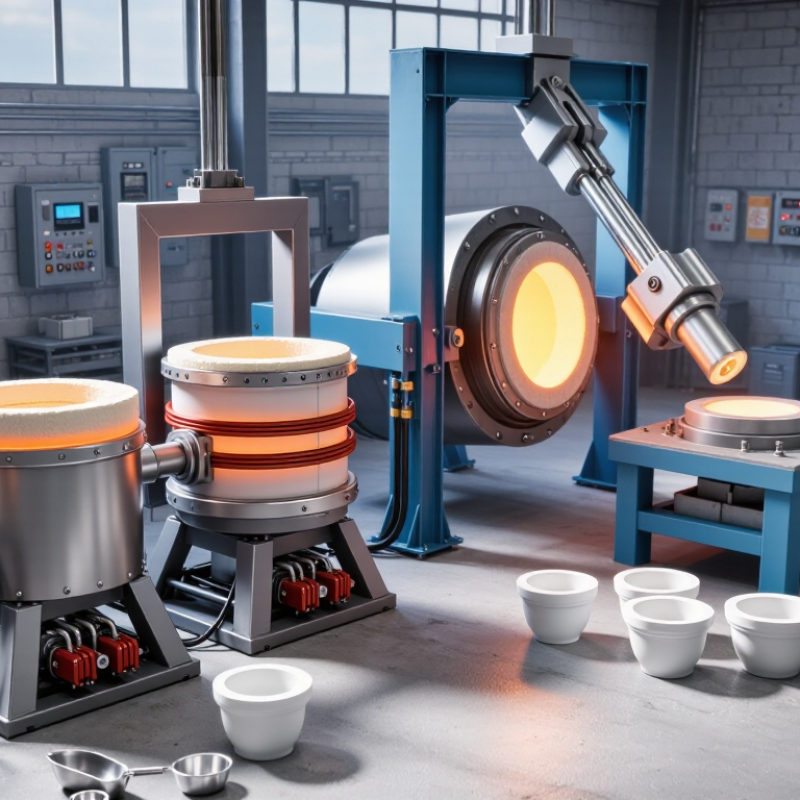
An electric crucible furnace heats metal inside a removable pot, or crucible, using resistance elements around or beneath it. The crucible holds the melt and separates it from the furnace structure. Its material must suit both the metal and operating temperature; a choice that works for aluminum may not suit copper alloys. Heat moves into the charge gradually, so operators monitor temperature and allow time for uniform melting. Small details matter. A cold, damp tool near molten metal can cause dangerous splashing, so safe charging and handling deserve as much attention as furnace output.
The main assembly includes an insulated steel shell, heating elements, a refractory support, a lid, temperature sensors, and a controller. Insulation limits heat loss, while the refractory protects the shell from high temperatures. A thermocouple provides a reading, and the controller adjusts power to maintain the set point. Yet the metal’s actual temperature can differ from the sensor reading. The lid reduces heat loss and shields the melt, but it should open without forcing a worker to lean over the crucible. Element wear, cracked refractory, or inaccurate sensors can quietly affect results. Inspection is simple, but easy to postpone. Recording melt times and readings can reveal drift before a batch looks different.
Resistance-Heated Electric Crucible Furnaces
Resistance-heated electric crucible furnaces use electrical elements to warm a chamber around the crucible. Heat then passes through the crucible wall into the metal. Common element materials include metallic alloys and silicon carbide; selection depends on operating temperature, atmosphere, and duty cycle. The U.S. Department of Energy’s Improving Process Heating System Performance sourcebook estimates that process heating uses about two-thirds of manufacturing energy. That figure covers many industries, not crucible melting alone, but it highlights why insulation and careful temperature control matter.
For operators, the practical details are visible: a properly seated crucible, intact insulation, and a thermocouple positioned to reflect the actual melt temperature. Programmable controls can reduce overshoot during warm-up and holding, while a tight-fitting lid limits heat loss. Small habits matter. Crucible material must suit the alloy and temperature; incompatible materials can contaminate a melt or fail early. Resistance furnaces offer clean operation at the point of use and precise control, though electricity costs and element wear affect operating economics. A real limitation. Energy use varies widely with furnace size, loading, insulation condition, and production schedule, so published averages should not replace measured site data. DOE’s sourcebook is useful context, but each shop should record melt time, power consumption, and temperature stability before comparing equipment.
| Furnace Type | Typical Configuration | How It Is Used | Common Suitable Metals | Main Advantages | Key Considerations |
|---|---|---|---|---|---|
| Stationary Top-Loading Furnace | A fixed, insulated chamber with resistance elements around a removable or installed crucible; loaded from above. | Operators charge solid metal from the top and remove the crucible or draw metal using a suitable pouring tool. | Aluminum, zinc, tin, lead, and selected copper alloys, subject to the furnace rating and crucible material. | Simple layout, relatively easy installation, and convenient access for inspection and crucible replacement. | Manual handling can limit safe batch size; the operator must use appropriate lifting and pouring equipment. |
| Lift-Out Crucible Furnace | A resistance-heated chamber designed for a crucible that can be raised or removed for pouring or servicing. | The heated crucible is lifted with suitable handling equipment and poured at a separate casting station. | Nonferrous metals such as aluminum, brass, bronze, and precious metals, when compatible with the temperature and crucible. | Offers flexible pouring positions and can simplify access to the crucible and furnace chamber. | Requires careful hot-crucible handling, appropriate lifting gear, and a clear, heat-safe pouring area. |
| Tilting Crucible Furnace | A furnace body or crucible assembly mounted on a pivoting frame, with electric resistance heating. | The furnace tilts to pour molten metal into a ladle or mold; drive systems may be manual or powered. | Commonly used for aluminum and copper-based alloys; suitability depends on furnace design and rated operating temperature. | Controlled pouring can reduce the need to lift and tip a hot crucible by hand. | Needs a stable foundation, a clear tilting envelope, and suitable guarding around the pour path. |
| Bottom-Pour Furnace | A heated crucible or holding vessel fitted with a bottom outlet and a stopper or controlled discharge mechanism. | Metal is released through the outlet into a mold or receiving vessel without tipping the furnace. | Selected nonferrous alloys and casting applications, where the outlet, stopper, and refractory are compatible with the melt. | Can support repeatable, directed pouring and reduce disturbance from tilting. | Outlet and stopper require regular inspection; dross, freezing, or blockage can interrupt pouring. |
| Laboratory or Bench-Top Crucible Furnace | A compact resistance-heated unit with a small chamber, temperature controller, and compatible crucible. | Used for small melts, material testing, sample preparation, and process development. | Small quantities of aluminum, copper alloys, precious metals, and other materials within the unit’s rated temperature range. | Compact footprint and precise temperature control are useful for controlled, small-batch work. | Limited batch size; verify element temperature limits, crucible compatibility, ventilation, and electrical requirements. |
| Multi-Zone Resistance Furnace | A furnace with independently controlled heating zones around or along the crucible chamber. | Used where temperature uniformity or a controlled thermal profile is important during melting and holding. | Metals compatible with the furnace’s maximum temperature and crucible system; often selected for controlled nonferrous processing. | Separate zone control can help manage temperature distribution and reduce hot or cold areas. | More control components and setup complexity; calibration and thermocouple placement affect results. |
Selection note: Actual capacity, melt rate, operating temperature, and metal compatibility depend on the furnace design, resistance-element rating, crucible material, insulation, and operating procedure. Confirm these specifications with the equipment supplier before use.
Induction-heated electric crucible furnaces use a water-cooled coil to create an alternating magnetic field around a refractory-lined vessel. The field induces heat directly in conductive metal, while electromagnetic stirring helps distribute temperature. Coreless designs suit flexible, small-to-medium batches; tilting models make pouring controlled and reduce operator exposure to hot metal. Stationary furnaces with a pouring spout can work well where melt recipes stay consistent.
Frequency and capacity should match the charge, not just the production target. A small crucible can melt quickly, but frequent starts, poor insulation, or an oversized power supply may waste energy. Small batches matter. The U.S. Department of Energy’s 2015 Process Heating Sourcebook describes induction as direct heating of the workpiece, rather than heating it through combustion gases. That makes charge preparation and coil-to-crucible setup important operating details.
Energy performance also deserves context. The IEA’s 2020 Iron and Steel Technology Roadmap estimates the steel sector produced about 2.6 gigatonnes of CO2 in 2019, roughly 7% of global energy-system emissions. This is sector-wide data, not a crucible-furnace benchmark. For a real comparison, record kilowatt-hours per kilogram melted, melt time, and metal yield across several batches. Keep the lid close. A clean charge and consistent loading help, though actual results vary with alloy, crucible condition, and operator practice.
Stationary, tilting, and lift-out designs solve different problems in electric crucible melting. A stationary furnace stays in one position, with metal commonly transferred by ladle. Its fixed layout can suit a steady workspace with predictable batch sizes. Operators should check access around the furnace, not just its rated capacity. A narrow aisle can make routine pouring awkward. Small details matter.
A tilting furnace pivots to direct molten metal into a mold or receiving vessel. This can reduce manual ladling, especially when batches are heavier. The frame, drive system, and pouring path all need careful inspection. Metal should flow smoothly without splashing or striking the mold wall. Pour control varies with the furnace design and operator practice. Tilting may improve handling, but it does not remove the need for clear floor space and suitable protective equipment.
In a lift-out design, the crucible is removed from its surrounding heating unit for pouring or servicing, where the model allows. This arrangement can simplify access to the melt, but handling a hot crucible demands compatible lifting tools and a practiced procedure. It may also create extra steps between heating and pouring. Not always. Compare the expected alloy, batch size, maintenance access, and production rhythm before choosing. A useful test is to map one real melt cycle, from loading to transfer, and note where hands, tools, or vessels must move. One assumption may prove wrong.
How to read this chart: A value of 1 means the feature is characteristic of that design; 0 means it is not. Stationary furnaces pour without tilting the furnace body or removing the crucible. Tilting furnaces pour by rotating the furnace body. Lift-out designs pour by removing the crucible while the furnace body remains in place.
Choosing an electric crucible furnace starts with the alloy and the real batch, not the largest advertised charge. Aluminum, brass, and copper alloys differ in melting temperature, oxidation behavior, and crucible compatibility. Resistance furnaces suit steady, smaller batches. Induction furnaces can melt conductive metals quickly, but require suitable power and operating practices. Details matter.
Size the furnace around your heaviest routine charge and the number of melts per shift. A 100-kilogram nameplate capacity may not equal 100 kilograms of usable metal. Allow room for loading, dross handling, and pouring. Use tested melt-rate data for your alloy, then verify it with a trial. Insulation, cold starts, and operator timing all affect performance. This estimate needs checking.
Scale varies widely. The USGS Mineral Commodity Summaries 2025 estimated global primary aluminum output at about 72 million metric tons in 2024. That figure provides industry context, not a furnace-sizing formula. For a workshop, compare daily demand with batch size and available electrical power. Check temperature control, crucible life, maintenance access, and floor space. A modest reserve helps. Oversizing can waste energy during holding; undersizing can create queues and rushed pours. Review actual production logs before deciding.