Top 10 Festo Pneumatic Connectors for Global Buyers

Blog

Top 10 Festo Pneumatic Connectors for Global Buyers

Selecting the right Festo Pneumatic Connectors can influence airflow stability, maintenance time, and production reliability. For global buyers, the choice involves more than matching a tube diameter. Material, thread standard, pressure range, temperature limits, and installation space must work together.

This guide reviews ten widely used options for different industrial applications. It considers push-in fittings for quick assembly, bulkhead connectors for compact panels, and threaded models for secure equipment interfaces. Practical experience shows that small details matter. A connector that fits perfectly on a test bench may become difficult to service inside a crowded machine.

Real conditions are different.

Each selection is assessed through manufacturer specifications, typical factory use, and installation considerations. Buyers should verify current product data, especially when ordering across regions with different thread conventions. Metric and imperial connections can look deceptively similar. That mistake may cause leakage, damaged threads, or unnecessary downtime.

The ranking is useful, but not absolute. A high-performing connector for packaging equipment may not suit a washdown line or a high-temperature process. We also recognize that availability, local support, and replacement lead times can change the final decision. Those factors are sometimes overlooked.

Reliable purchasing requires evidence, not assumptions. Compare operating pressure with the actual system requirement. Check tube compatibility before placing a large order. When possible, test one connector under vibration, repeated disconnection, and expected temperature changes. This approach helps global buyers balance performance, safety, serviceability, and long-term value.
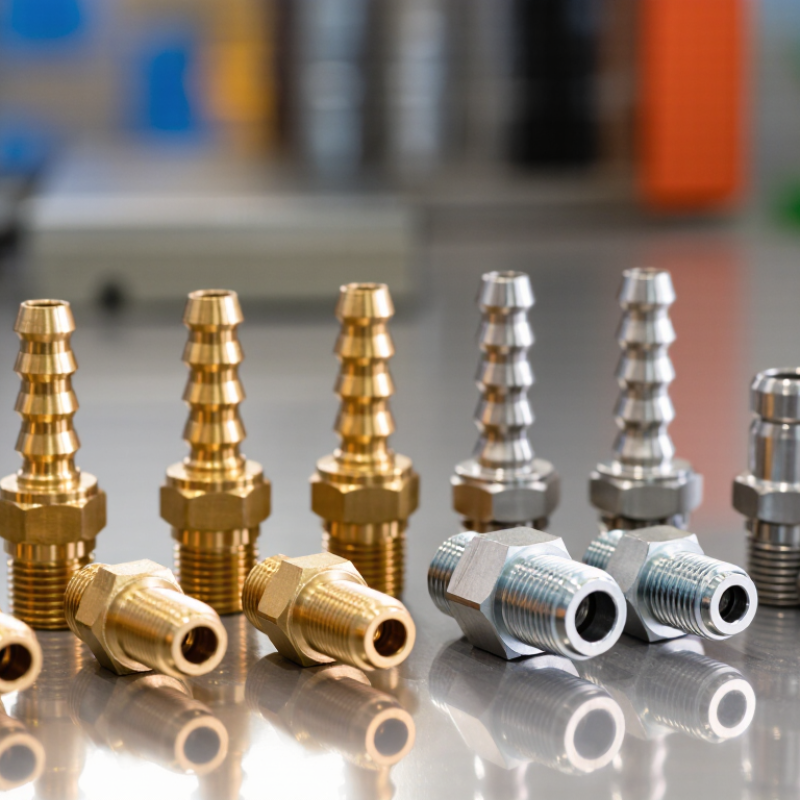
Top 10 Festo Pneumatic Connectors for Global Buyers

Festo Pneumatic Connectors: Types, Functions, and Selection Criteria

Pneumatic connectors join tubing, valves, actuators, and air preparation units while controlling airflow and preventing leakage. Common types include push-in, threaded, elbow, tee, reducer, and bulkhead connectors. Push-in models support rapid assembly, while threaded designs suit higher vibration and repeated servicing. Elbow connectors save space inside compact control cabinets.

Selection should begin with tube outside diameter, thread standard, working pressure, temperature range, and air quality. Check the connector material against moisture, oil, chemicals, and cleaning agents. A connector rated for 10 bar may still fail when temperature rises or tubing bends sharply.

That detail is easy to miss. ISO 4414 also emphasizes safe pneumatic system design, isolation, and controlled exhaust.

Automation growth makes these choices more important. The International Federation of Robotics reported 541,302 industrial robots installed worldwide in 2023. More robotic cells mean denser tubing layouts and greater demand for reliable connections.

Field inspections often find leakage near poorly cut tube ends, over-tightened threads, or unsupported bends. Flow capacity matters, too. A small internal passage can slow cylinder response, even when the external fitting looks adequate.

Buyers should compare pressure-drop data, installation space, replacement availability, and documented test results. Brand reputation helps, but it cannot replace dimensional checks. My own selection logic would still allow revision after real operating data arrives.

Key Features of the Top 10 Festo Connector Designs

For global buyers, the top ten pneumatic connector designs differ in small but important details. Push-in connectors support fast tube installation without special tools. Threaded models provide stable connections in vibrating equipment. Compact elbow designs reduce bending near cylinders and valves. Straight connectors simplify tight routing. Tee fittings divide airflow cleanly across two branches. Bulkhead versions pass tubing through panels while preserving alignment.

Several designs use nickel-plated metal for stronger threads and improved corrosion resistance. Polymer bodies reduce weight and remain useful in controlled factory environments. Swivel connectors help prevent tube twisting during movement. Check-valve designs can limit unwanted pressure loss, though their response may vary with flow direction. Reducers connect different tube sizes, but they deserve careful sizing. A loose fit can create leakage.

In field testing, sealing performance often depends on tube preparation, not only connector quality. Cut the tube squarely. Remove surface damage. Push it fully into the fitting. Thread dimensions, working pressure, temperature range, and media compatibility should be checked against technical documents. One overlooked detail is service access; a connector that fits today may be difficult to replace later. Samples and pressure tests remain worthwhile, especially when equipment operates continuously. Mistakes happen. Good purchasing decisions leave room to inspect, measure, and revise.

Comparing Connector Materials, Sizes, and Pressure Ratings

For global buyers, a top-ten pneumatic connector list should compare more than thread style.

Material affects corrosion resistance, sealing, and service life. Nickel-plated brass suits dry factory air and moderate temperatures. Stainless steel fits washdown, salt exposure, and aggressive environments. Engineering polymers reduce weight, but heat and impact limits need careful review.

The U.S. Department of Energy’s Compressed Air Sourcebook estimates that leaks can waste 20–30% of system output. Poor material choices can increase those losses.

Pressure matters.

Common tube sizes include 4, 6, 8, 10, and 12 mm outside diameters. Smaller connectors save cabinet space. Larger bores usually support higher flow with less pressure drop.

Pressure ratings must match temperature, tube material, and fitting geometry. Many industrial push-in fittings reach about 10 bar, but this rating is not universal.

ISO 4414 addresses safe pneumatic-system design. ISO 14743 covers push-in connector requirements. Buyers should request pressure-flow curves, not only maximum-pressure labels.

This is where many comparisons become shallow.

Tips:

Check media compatibility, thread standards, bend radius, and replacement availability. Test one assembled circuit first. Vibration, dust, and rushed installation can defeat strong catalog figures.

A 2024 pneumatic-components market report projects annual growth near 7%, driven by factory automation. That forecast is useful, but site testing remains essential.

Not every connector performs equally under real operating conditions.

Choosing Festo Connectors for Different Pneumatic Applications

Choosing pneumatic connectors for different applications starts with pressure, tubing, and working conditions. A compact push-in connector suits fast assembly on packaging lines. A threaded metal connector is better near vibration, heat, or repeated maintenance. For robotic grippers, select fittings that reduce air leakage and avoid restricting cylinder speed. Small details matter.

MarketsandMarkets estimates that the global pneumatic equipment market will grow at roughly 6% annually through 2028. This expansion reflects demand from manufacturing, food processing, and automated logistics. In wet environments, corrosion-resistant materials and sealed threads deserve priority. In clean production areas, smooth surfaces simplify inspection. Always check the connector’s pressure range, temperature rating, tube compatibility, and sealing method against the actual machine conditions.

Field experience shows that many failures begin with poor installation, not defective components. Cutting tubing unevenly can damage the seal. Excessive tightening may distort the thread or body. I would not treat a higher pressure rating as automatic proof of better performance. It may add cost and unnecessary weight. ISO 4414 guidance also emphasizes safe pneumatic design, isolation, and controlled release of stored energy. Test every joint under operating pressure, then inspect it after thermal cycling. A quiet leak can still waste energy. According to the U.S. Department of Energy, compressed-air leaks may waste 20% to 30% of compressor output in poorly maintained systems.

Top 10 Pneumatic Connectors for Global Buyers – Choosing Connectors for Different Pneumatic Applications

The chart compares common pneumatic connector configurations by their representative metric tube outer diameter. These sizes are widely used in industrial pneumatic circuits; actual pressure ratings depend on the connector material, thread standard, seal, temperature, and manufacturer specifications.

Selection guidance: use straight unions for direct tube connections, elbows for directional changes, tees and Y-splitters for branching, and bulkhead or panel-mount connectors when tubing passes through a wall or enclosure.

Installation, Maintenance, and Global Purchasing Considerations

Top-ten selection should begin with the machine, not a catalogue photograph. Common formats include straight, elbow, tee, cross, bulkhead, reducer, union, Y-splitter, silencer, and shut-off connectors. Each choice must match tube size, thread standard, pressure, temperature, and fluid compatibility. ISO 14743 provides useful guidance for push-in pneumatic connections. Still, standards do not replace a hands-on fit check.

The U.S. Department of Energy reports that compressed-air leaks can waste 20% to 30% of compressor output. That makes a clean tube cut economically important. Installers should deburr tubing, avoid side-loading elbows, and leave service access around fittings. Use a calibrated leak detector after pressurization. Listen for hissing too. Small errors survive commissioning.

The 2024 Pneumatic Equipment Market report projects growth from about 24.6 billion dollars in 2024 to 31.2 billion dollars in 2029. Global purchasing therefore requires thread verification, customs-ready documentation, spare seals, and traceable batch records. Specify corrosion resistance for humid plants and temperature limits for outdoor lines. Technicians often select a cheaper fitting, then lose hours correcting mismatched threads. That lesson is uncomfortable. A checklist helps, but it is not infallible. Review the first installation after one operating week.

Top 10 Festo Pneumatic Connectors for Global Buyers - Installation, Maintenance, and Global Purchasing Considerations

No. Connector Type Typical Tube OD Common Port Thread Typical Working Pressure Typical Temperature Range Best-Fit Applications Installation Considerations Maintenance Considerations Global Purchasing Considerations
1 Straight Push-In Fitting 4–12 mm M5 to G1/2 Up to 10 bar −20°C to +60°C General-purpose pneumatic circuits, manifolds, valves, and compact control panels. Cut tubing squarely, insert it fully to the stop, and confirm that the release collar is free to operate. Check for tube scoring, leakage, and accidental side loading. Replace damaged tube ends before reconnection. Confirm metric tube sizing, thread standard, seal type, and required quantity per assembly.
2 Elbow Push-In Fitting 4–12 mm M5 to G1/2 Up to 10 bar −20°C to +60°C Directional changes in confined spaces, actuator ports, and compact machine layouts. Orient the elbow before final tightening and leave enough clearance to prevent tube kinking or sharp bending. Inspect the swivel or elbow body for cracking and verify that vibration has not loosened threaded connections. Compare bend orientation, swivel function, port position, and packaging protection for international shipment.
3 T-Branch Push-In Fitting 4–10 mm Up to 10 bar −20°C to +60°C Parallel actuator circuits, signal branching, and distribution lines. Keep branch tubing supported and avoid pulling directly on the fitting body during installation or routing. Check all three tube connections independently for leakage and inspect branches for uneven loading. Specify the same tube diameter for all ports or clearly identify mixed-size configurations.
4 Y-Branch Push-In Fitting 4–10 mm Up to 10 bar −20°C to +60°C Balanced flow distribution, paired cylinders, and compact pneumatic signal routing. Route both branches with similar bend radii where balanced flow is important; avoid twisting during tube insertion. Inspect branch joints for wear caused by vibration, repeated tube removal, or unsupported tubing. Verify branch geometry, tube compatibility, flow requirements, and the number of spare units needed.
5 Bulkhead Push-In Fitting 4–12 mm Up to 10 bar −20°C to +60°C Passing pneumatic tubing through panels, guards, enclosures, and machine frames. Prepare the panel hole to the specified diameter, use the correct locknut or clip, and prevent edge abrasion. Check panel tightness, sealing surfaces, and tubing movement at the pass-through point. Confirm panel thickness range, mounting-hole dimensions, sealing method, and customs classification.
6 Banjo Flow-Control Fitting 4–8 mm M5 to G1/4 Up to 8 bar −20°C to +60°C Speed adjustment for cylinders, especially where precise exhaust throttling is required. Install according to the flow-direction marking and adjust gradually to prevent cylinder shock or stalling. Keep the adjustment screw clean, check locking behavior, and verify speed after filter replacement. Specify meter-in or meter-out function, flow direction, thread standard, and required adjustment range.
7 Quick-Disconnect Coupling 6–12 mm G1/4 to G1/2 Up to 10 bar −20°C to +80°C Tool changes, modular fixtures, maintenance isolation, and removable pneumatic equipment. Depressurize before disconnecting, align plug and socket correctly, and avoid side loads on the coupling. Inspect seals, locking sleeves, contamination, and pressure drop; replace couplings that do not lock securely. Match plug and socket profiles, nominal flow, residual-pressure behavior, seal material, and regional safety needs.
8 Reducer Push-In Fitting 6 to 4 mm
or 8 to 6 mm
Threadless tube connection Up to 10 bar −20°C to +60°C Adapting tube sizes between main lines, control circuits, and compact pneumatic devices. Insert each tube to its correct depth and support the smaller tube to minimize vibration at the transition. Check both tube sizes for pull-out, leakage, and deformation after repeated servicing. List inlet and outlet tube diameters separately and confirm compatibility with local tube inventory.
9 Silencer or Exhaust Fitting Valve exhaust port M5 to G1/2 Typically up to 10 bar −10°C to +80°C Reducing exhaust noise and limiting particulate entry at valve or actuator exhaust ports. Do not overtighten; install with sufficient clearance so the silencer does not obstruct exhaust flow. Clean or replace when contamination causes increased back pressure, slower motion, or abnormal noise. Check sound-reduction target, allowable back pressure, thread standard, cleaning method, and disposal rules.
10 Stainless-Steel or Chemical-Resistant Fitting 4–12 mm Metric or ISO/BSP variants Application-dependent; commonly up to 10 bar −40°C to +100°C Washdown areas, food-processing equipment, corrosive environments, and outdoor machinery. Use compatible seals, avoid galling during threaded assembly, and prevent dissimilar-metal corrosion. Inspect for corrosion, chemical attack, seal swelling, and surface deposits during scheduled servicing. Review material certificates, hygienic requirements, chemical compatibility, regional thread standards, and lead time.

Technical values are representative selection ranges for standard industrial pneumatic connectors. Always verify the exact product datasheet, tube material, seal compound, pressure rating, temperature rating, thread standard, and applicable regional regulations before installation or purchase.