WORLD electronics offers a complete line of electronic circuit board manufacturing and assembly services, as well as advanced manufacturing services. Our commitment to quality and service is second to no supplier.
Learn MoreOur team of engineers assists you in the development of new designs to optimize quality manufacturability (DFM) and testability, resulting in cost minimization and reduced product development time.
Learn MoreOur flexible manufacturing floor layout and highly trained staff allow for Quick Set-up and Tear Down of small volume prototype runs. This combination grants our customers the benefit of turning new designs quickly and accurately.
Learn MoreWORLD electronics is dedicated to quality. This quality is what underpins our commitment to thorough testing. Our engineers can develop a set of tests that ensure reliability and high performance in all products.
Learn MoreSupply chain management has crossed over from being a narrow management function to being a key operational function.
Learn MoreChoosing the right Industrial Panel Pc in 2026 requires more than comparing screen size and processor speed. Global buyers must examine operating temperatures, enclosure protection, mounting space, connectivity, and long-term service support. A food-processing line may need a sealed stainless-steel unit that withstands frequent cleaning. A warehouse may prioritize glove-friendly touch control, bright displays, and shock resistance. These details often determine whether a panel computer remains reliable after months of daily use.
This guide introduces the main Industrial Panel Pc types available for industrial automation, manufacturing, logistics, energy, and transportation applications. It considers fanless designs, rugged stainless-steel models, sunlight-readable systems, wide-temperature computers, and configurable touchscreen platforms. Each type has practical strengths and limitations. No single model fits every plant.
Real deployment experience matters. A device that performs well in a climate-controlled laboratory may struggle beside a vibrating conveyor or a hot production oven. Buyers should verify ingress ratings, display visibility, processor performance, operating-system compatibility, and supplier documentation before placing an order. Independent testing data and warranty terms also deserve close attention.
Small details matter.
The market is evolving quickly, but product labels can be inconsistent. Some vendors emphasize premium specifications while overlooking repair access or replacement availability. This article therefore focuses on practical selection criteria, credible technical considerations, and common purchasing risks. It also leaves room for reflection, because even a carefully selected Industrial Panel Pc may require adjustments after installation.
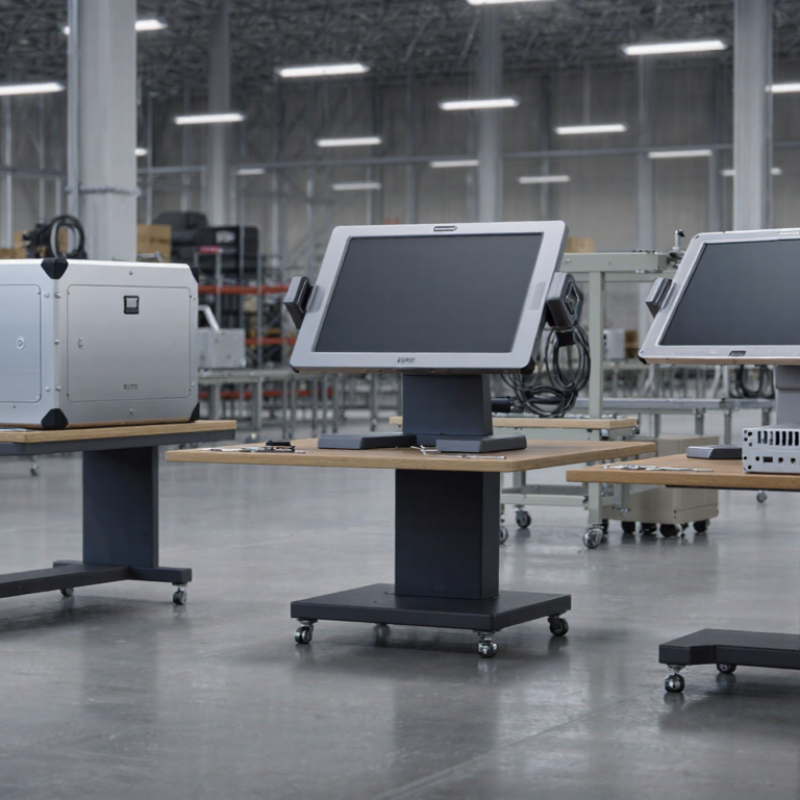
An industrial panel PC is a rugged computer with an integrated display and control interface. It operates near machines, conveyors, pumps, and inspection stations. Unlike office computers, it is designed for vibration, dust, temperature changes, and continuous operation. Its sealed front panel helps protect internal parts from moisture and fine particles. Still, no enclosure is perfect. Installation quality matters.
The main components include a processor, memory, industrial storage, touchscreen, and communication ports. Common connections include Ethernet, USB, serial interfaces, and fieldbus options. These systems collect sensor data and display production values in real time. Operators can adjust settings, acknowledge alarms, and review equipment status from one screen. Some models support fanless cooling, which reduces dust movement and mechanical wear.
Industrial panel PCs also perform edge computing tasks. They can filter measurements, run visual inspection software, and send selected data to supervisory systems. This reduces unnecessary network traffic and supports faster decisions. In practical projects, screen brightness and touch accuracy often receive less attention than processor speed. That is a mistake. A readable display under factory lighting can prevent input errors. Gloved operation may also require careful touchscreen selection. A slightly oversized unit can improve usability, but it may complicate cabinet installation. Teams should verify mounting space, operating temperature, software compatibility, and long-term service access before deployment.
Key Types of Industrial Panel PCs in 2026
Industrial panel PCs now serve different factory conditions, not one universal workload. MarketsandMarkets forecasts continued growth in the industrial PC market through 2029, driven by automation, machine vision, and connected production. This trend makes type selection more important than screen size alone.
Fanless panel PCs suit dusty cabinets because they reduce moving parts and maintenance points. Ruggedized models handle vibration, temperature changes, and continuous operation near machinery. Stainless-steel washdown PCs fit food and pharmaceutical areas, where smooth surfaces and sealed enclosures simplify cleaning. Sunlight-readable displays support outdoor logistics and loading zones. Modular panel PCs offer easier upgrades, although their flexibility can increase integration effort.
The enclosure rating matters.
An IP65 front panel can resist dust and water jets, but the rear may need separate protection. Buyers should check the complete installation, not only the display bezel. IEC 60529 defines these IP ratings, while IEC 60068 test methods help assess vibration and environmental stress. ARC Advisory Group’s research on industrial digitalization also links edge computing with faster local decisions, supporting higher-performance panel PCs near machines. However, selecting a stronger processor is not always better. More heat can shorten service life in sealed cabinets. That detail is often underestimated. A practical evaluation should include glove use, viewing angle, cable routing, operating temperature, and five-year service access. Some specifications still look impressive but fail during cleaning, vibration, or maintenance.
Key Industrial Panel PC Types in 2026 by representative display size
Industrial panel PCs are commonly selected by installation space, operator viewing distance, and application environment. The display sizes shown are representative industry-standard configurations, ranging from compact 7-inch operator terminals to large 23.8-inch control-room panels. Actual availability varies by industrial temperature, ingress protection, touch technology, and mounting requirements.
2026 industrial panel PCs will be selected by three practical factors: display, processor, and operating system. MarketsandMarkets’ 2024 Industrial PC Market report projects the sector to reach about USD 7.6 billion by 2028, with steady demand from manufacturing and logistics. Buyers should treat that forecast carefully. Factory conditions vary widely.
For displays, 10.1-inch panels suit compact machine controls, while 15.6-inch and larger screens improve dashboard visibility. Projected capacitive touch works well with clean gloves and frequent tapping. Resistive touch remains useful with thick gloves or light contamination. Brightness above 500 nits helps near windows, but sunlight readability also depends on optical bonding and anti-glare treatment. A useful field test includes wet fingers, dust, and angled viewing.
Processor choices should match workload, not marketing labels. Fanless low-power processors reduce dust-related maintenance. Higher-performance multi-core processors support vision inspection, local analytics, and several communication services. Operating systems need equal attention. Windows-based systems offer broad industrial software compatibility, while Linux-based systems support customization and long service planning. IEC 62443 guidance also encourages controlled updates, account management, and network segmentation.
Tips: Define the required screen size, glove type, temperature range, and software before requesting quotations. Test the panel for eight continuous hours. We have seen attractive specifications fail because the touch layer became unreliable under heat. Leave thermal and storage capacity unused; future workloads usually grow faster than expected.
2026 Top Industrial Panel PC Types for Global Buyers
Application-Based Selection for Global Industries
Industrial panel PCs should be selected by working conditions, not appearance. A food-processing line may need a stainless-steel, sealed panel PC for frequent washdowns. A warehouse often benefits from a sunlight-readable screen, glove-friendly touch control, and wide viewing angles. For factory automation, a fanless rugged panel PC can reduce dust entry near motors and conveyors. It should also tolerate vibration, heat, and continuous operation.
Mining, energy, and outdoor equipment require different priorities. Choose a high-brightness display for direct sunlight and a wide-temperature design for changing climates. In control rooms, a modular panel PC may simplify upgrades, cable routing, and maintenance. Buyers should verify processor performance, mounting dimensions, communication ports, storage type, and remote management support. Regional power standards and applicable safety requirements also deserve careful review. A specification sheet alone is not enough.
Tips: Test the panel PC with real gloves, cables, and lighting. Check sealing after installation, not only in a laboratory. Ask for temperature, vibration, and ingress-test evidence. Avoid choosing excessive computing power when stable operation matters more. Conversely, underpowered hardware can create delays during future software updates. No model fits every plant. That is the uncomfortable part. A short pilot run may reveal touchscreen glare, port congestion, or weak airflow before a global rollout.
Industrial Panel PCs vary widely, from fanless units for clean production rooms to rugged models for dusty workshops. International buyers should match the computer with temperature, vibration, screen size, and mounting needs. A bright display may help outdoors, but it can increase power use. That trade-off is often missed.
Compliance requires more than collecting certificates. Buyers should verify the exact model, power adapter, radio functions, and destination requirements. Safety, electromagnetic compatibility, environmental ratings, and restricted materials may apply differently across regions. Ask for current test reports and declarations. Check whether documents cover the complete configuration. A certificate for one option may not cover another. Customs codes, local labels, and language requirements also deserve early review.
Technical support can decide whether a purchase succeeds. Confirm warranty terms, spare-part availability, remote diagnosis, and repair locations before placing an order. Request firmware update procedures and a clear replacement timeline. In my experience, response speed matters most during a line stoppage. Yet support promises can remain vague. Put service targets in writing, even if they seem unnecessary.
Tips: Test one sample in real conditions. Record boot time, touch accuracy, cable access, and screen readability. Keep a document folder for each shipment. Recheck compliance before adding storage, wireless modules, or a new power supply.