2026 Top Manual Linear Stage Features and Benefits?
In the world of precision engineering, a Manual Linear Stage is essential. This equipment allows for precise movement along a straight path. Whether used in laboratories, factories, or research facilities, the benefits are clear. Users gain better control over their experiments or manufacturing processes.
The features of the Manual Linear Stage can significantly enhance productivity. Adjustable components provide customization to fit specific needs. Smooth motion is critical for applications requiring exact positioning. However, one must acknowledge the learning curve that comes with mastering the device.
While manual systems may seem outdated, they offer reliability and affordability. Many users find digital alternatives overwhelming or unnecessarily complex. A Manual Linear Stage, though simple, requires a thoughtful approach. Choosing the right model can lead to significant improvements in workflow and accuracy. Balancing ease of use with precision is a challenge worth undertaking.
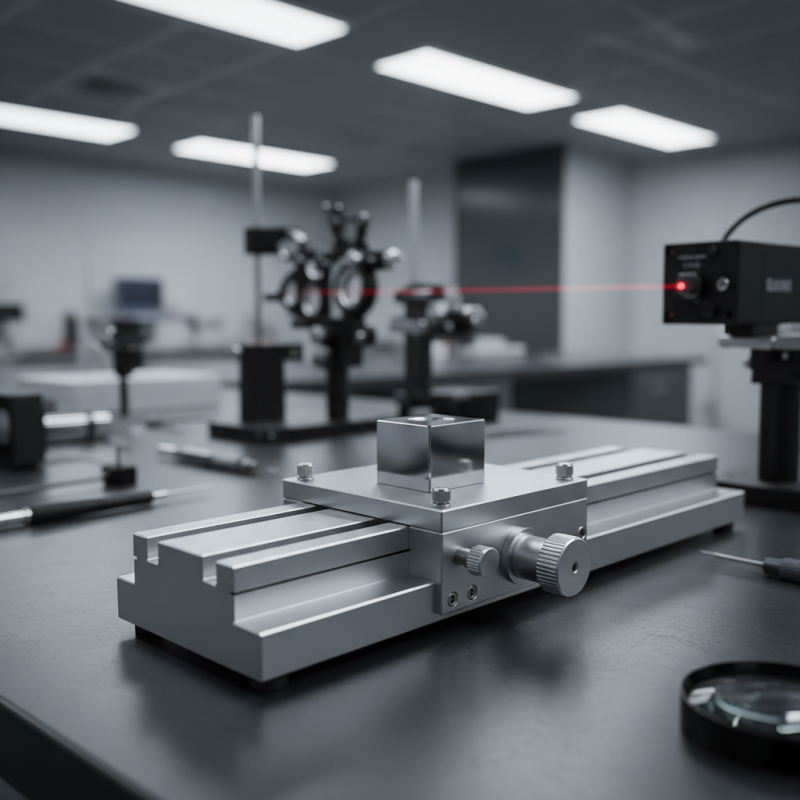
2026 Manual Linear Stages: Key Features and Market Trends
Manual linear stages are crucial in various industries, including automation and robotics. The market is evolving, reflecting the demand for precision and efficiency. A recent industry report highlights a projected growth of 8.5% in the manual linear stage market over the next five years. This increase emphasizes the need for enhancements in design and functionality.
Key features of manual linear stages include adjustable travel lengths, load capacities, and precision mechanisms. Many users seek stages that allow for quick adjustments. For instance, stages with micrometer or fine adjusters enable precise positioning. In the realm of manufacturing, a growing preference exists for compact designs that save space. However, sometimes the balance between size and functionality can lead to compromises in stability. This is an essential factor for users to consider.
Market trends indicate a rising interest in customization options. There’s a growing demand for manual linear stages that can be tailored to specific applications. While customization can enhance performance, it may also complicate the purchasing process. Users must reflect on their needs versus available options. The complexity of selection can often deter potential buyers, highlighting a gap in user education within the market.
Precision and Accuracy: Crucial Specifications for Linear Stages
Precision and accuracy are essential for any linear motion application. In applications ranging from optics to medical devices, precise positioning is crucial. Manual linear stages must deliver consistent results. They provide the ability to achieve fine adjustments. This ensures that even the smallest tasks can be executed with a high level of detail.
When evaluating linear stages, resolution is a key factor. A higher resolution allows for finer movements and adjustments. However, achieving high accuracy is not always straightforward. It requires careful calibration and consistent maintenance. Users need to regularly check alignment and performance. Misalignment can lead to significant errors, affecting overall performance.
Another important aspect is the load capacity. Stages must support the weight of the components without compromising precision. Overloading can lead to wear and tear. It may result in slipping, reducing the system’s effectiveness. Thus, understanding both weight limits and performance characteristics is vital. Finding the right balance can be challenging but is necessary for optimal performance.
Materials and Construction: Impact on Performance in Linear Stages
Materials and construction play a vital role in the performance of manual linear stages. The choice of materials directly affects stiffness and vibration damping. Aluminum is lightweight and offers good strength. Steel, on the other hand, provides higher rigidity but adds weight. Choosing the right balance is essential for your application.
The surface finish of parts is also important. A smooth finish reduces friction, which is critical for precision movement. Consider how harsh environments might impact materials. Corrosion resistance in materials can extend the lifespan of these stages. Regular inspection of wear is crucial. It’s common to overlook small defects that can lead to significant issues.
Tips: Always assess your specific needs before selecting a material. Consider load capacity and environmental factors. For improved performance, regular maintenance is key. This ensures optimal functioning and prolongs the life of your equipment. Don't ignore unexpected anomalies during operation; they can signal larger underlying problems.
2026 Top Manual Linear Stage Materials and Performance Analysis
Applications of Manual Linear Stages in Various Industries
Manual linear stages are essential in various industries for precise positioning and movement. These devices find applications in fields like robotics, optical alignment, and materials testing. According to a recent market report, the demand for manual linear stages is projected to grow by 7.9% annually, reflecting their increasing importance across sectors.
In medical imaging, manual linear stages help achieve accurate scans. They enable fine adjustments, which are critical for high-quality imaging. In manufacturing, they play a role in assembly lines, ensuring parts are correctly positioned. This level of precision can reduce errors and enhance productivity.
Tip: When choosing a manual linear stage, consider the load capacity and the precision required for your application. A mismatch can lead to inefficiencies.
Some industries may overlook the need for maintenance. Manual linear stages require regular checks for wear and tear. Over time, accumulated dust or misalignment can affect their performance. This oversight can lead to costly delays and errors in production.
Tip: Schedule periodic maintenance to prolong the lifespan of your equipment. Regular upkeep can prevent major breakdowns that disrupt workflow.
Comparative Analysis: Manual vs. Automatic Linear Stages in 2026
In 2026, the debate between manual and automatic linear stages continues. Manual linear stages offer simplicity and direct control. They require no power, making them reliable for basic operations. Operators can feel every movement, ensuring precision. However, users often report fatigue during extended use. The manual effort can become a drawback. Adjusting a stage repeatedly can lead to errors due to fatigue.
On the other hand, automatic linear stages shine in speed and efficiency. They can perform complex tasks with minimal user input. Programmable settings allow for consistency and reproducibility. Yet, these advanced systems come with their own set of challenges. Malfunctions can occur, causing delays. Additionally, they often require extensive training. This can be a barrier for some users.
The choice between manual and automatic stages in 2026 hinges on specific needs. Different applications demand different levels of control. Users must carefully assess their requirements. The right decision impacts accuracy and productivity in the long run. Understanding both options can lead to better outcomes.
2026 Top Manual Linear Stage Features and Benefits
| Feature | Manual Linear Stage | Automatic Linear Stage |
| Cost | Lower initial investment | Higher initial investment |
| Ease of Use | Simple manual control | Requires programming knowledge |
| Precision | Good, with human control | High, consistent accuracy |
| Flexibility | Versatile setup | Static setup with less adaptability |
| Maintenance | Low, simple components | Higher, requires technical knowledge |
| Speed of Operation | Limited by human ability | Fast and efficient |
| Applications | Ideal for low-volume applications | Best for high-volume operations |