Top Printed Circuit Assembly Techniques You Should Know?
In the rapidly evolving landscape of electronics, the importance of printed circuit assembly (PCA) cannot be overstated. Experts like Dr. John Smith, a renowned figure in the PCA industry, emphasize, "Precision in printed circuit assembly is crucial for reliability.” His insight highlights the core challenges faced in this field.
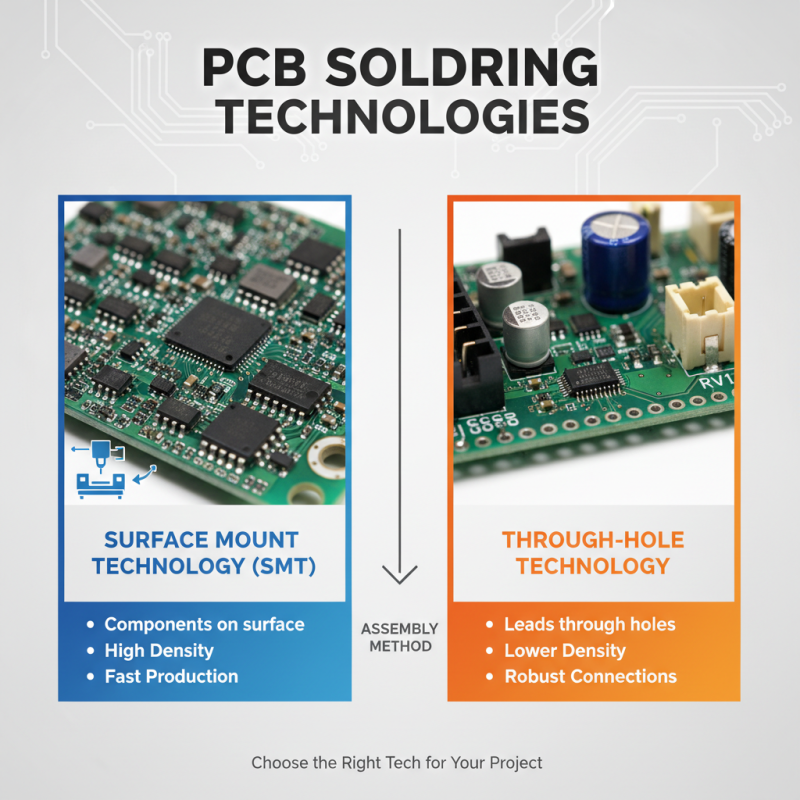
Printed circuit assembly involves numerous techniques that can significantly impact performance. Techniques such as surface mount technology, through-hole technology, and mixed technology all play a vital role. Each method presents its own advantages and risks. For many, the learning curve can be steep. Mistakes in assembly can lead to costly delays or product failures.
The pursuit of excellence in printed circuit assembly is ongoing. As technology advances, methods continue to evolve. However, it is essential to remember that not every technique may be suitable for every application. Continuous learning and adaptation are key. Understanding these techniques is vital for manufacturers aiming for success in a competitive market.
Overview of Printed Circuit Assembly (PCA) Techniques
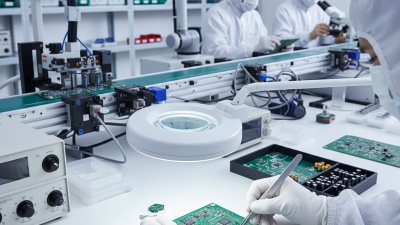
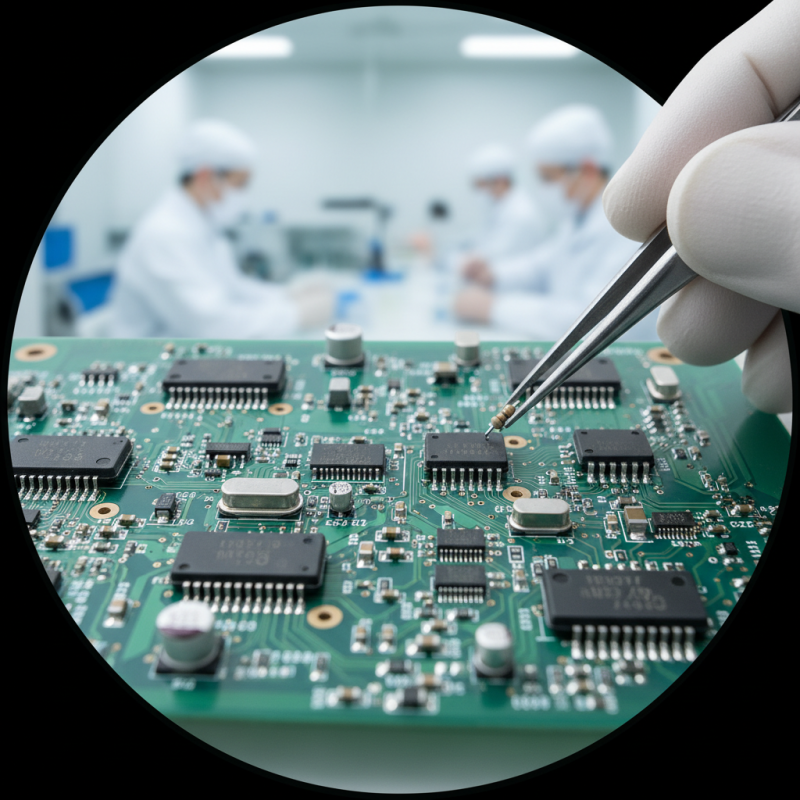
Printed Circuit Assembly (PCA) is crucial in electronics manufacturing. This technique involves mounting electronic components onto a circuit board. The increasing demand for electronics drives the innovation of PCA methods. According to a recent industry report, the global PCA market is expected to reach USD 100 billion by 2025. This growth highlights the importance of understanding PCA techniques.
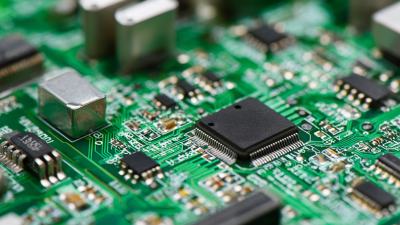
One major technique is surface mount technology (SMT). SMT allows for smaller components on the circuit board. This results in more compact designs. The downside is that it can lead to a higher risk of defects during assembly. A study noted that about 30% of SMT operations experience issues with solder joints. These defects can significantly impact the device's performance.
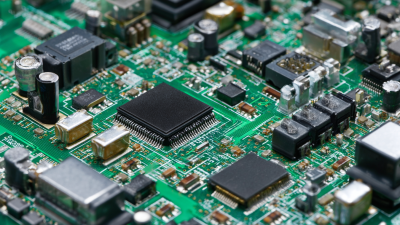
Another popular method is through-hole technology (THT). THT is more traditional and often more robust. It is typically used for larger components. However, this technique can be less efficient and requires more space on the board. In some cases, manufacturers may find it challenging to adapt THT for modern, high-density electronics. Balancing these techniques often requires careful consideration of design requirements and cost.
Top Printed Circuit Assembly Techniques You Should Know
| Technique |
Description |
Advantages |
Typical Applications |
| Surface Mount Technology (SMT) |
A method where components are mounted directly onto the surface of the PCB. |
Allows for smaller components, higher electronic density, and automated assembly. |
Consumer electronics, telecommunications, and computers. |
| Through-Hole Technology |
Involves inserting component leads through holes in the PCB and soldering them in place. |
Provides strong mechanical connections and is preferred for high-stress applications. |
Industrial controls, power supplies, and automotive applications. |
| Mixed Technology |
Combines both SMT and through-hole components on the same PCB. |
Offers flexibility in design and is suitable for various applications. |
Complex devices that require both types of components. |
| Robotic Soldering |
Automated soldering technique using robotic arms for precision. |
Increases production speed and accuracy; reduces human error. |
High-volume production scenarios. |
| Wave Soldering |
A bulk soldering method where PCBs are passed over a wave of molten solder. |
Effective for high-volume production and can solder multiple connections simultaneously. |
Radio frequency applications and automotive electronics. |
Surface Mount Technology: Benefits and Best Practices
Surface Mount Technology (SMT) has revolutionized the printed circuit assembly (PCA) landscape. Its increasing popularity stems from several benefits. First, SMT components are smaller. This allows for denser integration of circuits. A compact design can save space in devices. Additionally, SMT enables the use of automated assembly processes. This leads to higher production speeds and reduced labor costs.
However, SMT also comes with challenges. Proper soldering techniques are crucial to ensure a strong connection. Poor solder joints can lead to failures. Careful inspection is necessary after assembly. Some components can be sensitive to heat. Using correct temperature profiles during soldering is essential. It's easy to overlook these details, which can result in costly errors later on.
Best practices for SMT involve thorough planning. Designers must select appropriate components early in the process. This helps avoid compatibility issues down the road. Regular training for assembly staff is vital. They should be familiar with evolving techniques and tools. Ignoring such training can lead to outdated methods, risking quality assurance. Balancing speed and precision is key—the goal should be a flawless assembly process.
Testing and Quality Control in PCB Assembly
Testing and quality control play crucial roles in PCB assembly. Various techniques ensure the reliability of printed circuit boards. For example, functional testing verifies each PCB performs as intended. According to industry reports, approximately 30% of PCBs fail during testing stages. This statistic highlights the importance of rigorous quality control processes.
In addition to functional tests, visual inspections are vital. Many defects are identified through careful examination. A study revealed that nearly 50% of manufacturers rely on manual inspections. It can be time-consuming and prone to human error. Automated optical inspection (AOI) systems have gained popularity. These systems can significantly reduce error rates and improve efficiency. However, the initial investment is a concern for many firms.
Moreover, continuous improvement is essential. Sometimes, returning to basics can solve complex problems. A staggering 20% of manufacturers reported that they need better training for their staff in quality control. Investing in workforce education may lead to fewer mistakes. Quality control is not merely a final step but should be integrated throughout the assembly process. Each stage offers opportunities to identify and rectify issues early.
Innovations in PCB Assembly: Trends and Future Directions
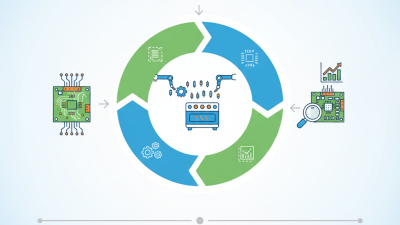
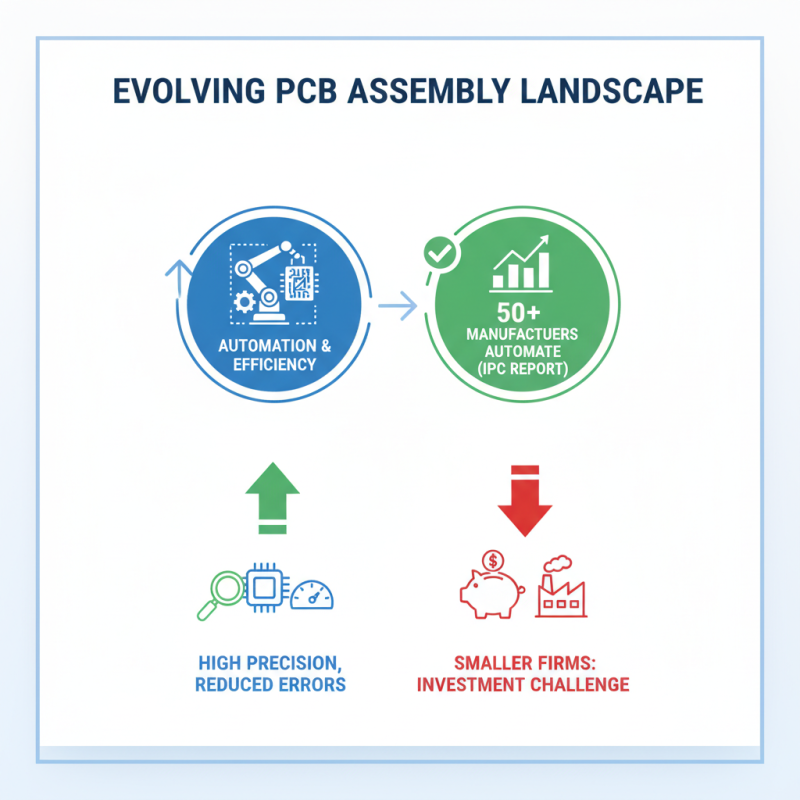
The landscape of PCB assembly is evolving rapidly. Innovations drive the industry forward, particularly in automation and efficiency. A recent report from IPC states that over 50% of manufacturers have integrated automated assembly methods to enhance production speed. This shift allows for high precision and reduced human error. However, not all companies can keep pace with these advancements. Smaller firms often struggle with the initial investment required for automation.
Another trend to note is the move towards sustainable practices in PCB assembly. According to a study by the International Electronics Manufacturing Initiative (iNEMI), approximately 40% of companies are adopting green solutions. This includes using lead-free solders and recyclable materials. Yet, the challenge lies in balancing sustainability with cost-effectiveness. Many companies have reported increased production costs when attempting to implement these eco-friendly options. This can pose a significant barrier for some manufacturers, leading to inconsistencies in their ability to compete.
As complexity in PCB designs increases, so do the challenges in assembly. Data reveals that over 70% of engineers face difficulties in managing multi-layer PCBs. This complexity often results in higher rates of defect. Companies are asked to rethink their strategies. Investing in training and advanced technologies becomes essential for overcoming these hurdles. The future of PCB assembly holds promise, but only if companies address these ongoing challenges effectively.