Top 10 Steel Light Pole Manufacturers in China

Blog

Top 10 Steel Light Pole Manufacturers in China

China’s steel light pole industry serves highways, ports, industrial parks, and city streets. Buyers comparing manufacturers need more than a polished catalog. They need evidence: steel grade, wall thickness, weld quality, galvanizing method, and documented inspection practices. Small details matter. A clean weld bead and an even zinc coating can reveal more than a glossy product photo.

As steel-structure engineer Chen Wei puts it, “A dependable pole begins with sound steel and ends with careful installation.” This is a practical engineering principle, not a substitute for a verified interview or quotation source. That distinction matters when assessing supplier claims. A pole’s performance also depends on its height, arm design, wind exposure, foundation, and maintenance plan. One specification cannot fit every site.

This guide introduces ten Chinese manufacturers and the factors buyers can use to compare them. It considers product range, production capability, customization, quality documentation, and export experience. Look for specifics, not broad promises. Ask how dimensions are checked, how coatings are inspected, and whether drawings match the delivered unit. Some public company information may be incomplete or difficult to compare. Treat rankings as a starting point, then verify each supplier’s current records, samples, and project references.
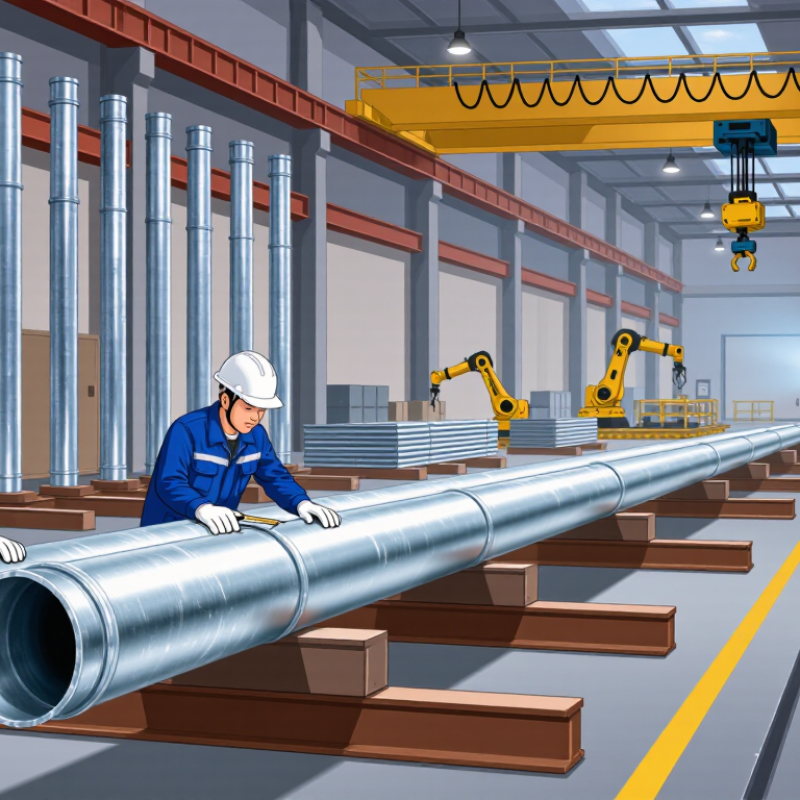
Top 10 Steel Light Pole Manufacturers in China

Steel Light Poles: Types, Applications, and Market Overview

Steel light poles are used to hold road, area, and pedestrian lighting above traffic and public spaces. Common designs include straight, tapered, and stepped shafts, with round or polygonal cross-sections. Single-arm poles suit sidewalks and smaller roads; double-arm designs can light wider streets. High-mast poles serve ports, industrial yards, and large parking areas. Small details matter.

A pole’s height and arm length affect its load and foundation requirements. Engineers consider wind exposure, luminaire weight, soil conditions, and local project specifications. Galvanized steel helps resist corrosion, while suitable coatings can add protection in coastal or industrial environments. Check welds, base plates, anchor bolts, and drainage details during inspection. A drawing alone cannot capture every site condition.

China’s steel light pole market serves municipal, transport, commercial, and infrastructure projects, with products ranging from standard configurations to custom dimensions. Buyers typically compare material grade, fabrication quality, surface treatment, testing records, and delivery capacity—not price alone. Requesting drawings and inspection documents can clarify what a quotation includes. Even careful specifications need review after installation; uneven ground or unexpected exposure may change maintenance needs.

Key Criteria for Evaluating Chinese Manufacturers

When comparing Chinese steel light pole manufacturers, look beyond catalogue photos and quoted prices. Ask for production drawings showing pole height, wall thickness, base-plate dimensions, and bolt patterns. These details must match the project’s foundations and lighting layout. Small mismatches matter. Request material certificates and confirm how steel grades are identified and tracked through production.


Check how each factory controls welding, surface preparation, and corrosion protection. A consistent galvanizing layer or coating system can help poles withstand rain, coastal air, and road salt. Ask for inspection records, coating-thickness readings, and relevant test reports—not just a statement that products meet requirements. Wind-load calculations should reflect pole height, arm length, fixtures, and local exposure. A polished report is useful, but its assumptions deserve a close read.


Production capacity is only part of reliability. Review sample dimensions, packaging methods, lead-time estimates, and procedures for handling damaged or out-of-specification parts. If possible, inspect a sample or arrange a factory audit before placing a large order. Speak with past project references about delivery consistency and communication after shipment. No checklist removes every risk, and I would not judge a supplier by one impressive sample alone. Factories can also make mistakes; clear drawings and documented quality checks make those mistakes easier to catch.

Top 10 Steel Light Pole Manufacturers in China

Top 10 Steel Light Pole Manufacturers in China

China’s steel light-pole industry serves roads, public spaces, factories, and commercial developments. A useful top-ten comparison should examine manufacturing capability, product consistency, and technical support, not just price. Check whether a supplier can provide pole drawings, material specifications, and clear production details.

Pole design varies with height, mounting style, local wind conditions, and lighting equipment. Ask about steel grades, welding inspection, hot-dip galvanizing, and baseplate dimensions. These details affect installation and service life. Request relevant test records and confirm that the proposed design matches your project requirements. A polished catalogue is not proof of consistent quality. Even careful buyers can overlook small differences between quoted specifications.

Tips: Compare like with like. Request drawings and coating details before comparing prices, and clarify packaging, delivery schedules, and replacement-part support. If answers are vague, pause and ask again. No shortlist is perfect; factory visits or independent inspections can reveal gaps that paperwork misses.

Products, Production Capabilities, and Quality Standards

Top 10 Steel Light Pole Manufacturers in China: Products, Production Capabilities, and Quality Standards

Comparing steel light pole manufacturers requires more than reviewing product photos. Check whether a factory makes tapered or straight poles, single or multi-arm designs, and custom baseplates. Its process may include CNC cutting, forming, seam welding, hot-dip galvanizing, and coating. These steps affect fit, corrosion resistance, and delivery consistency. China produced 1,019.1 million tonnes of crude steel in 2023, according to World Steel Association’s World Steel in Figures 2024. That scale supports a broad supply chain, but it does not prove any individual factory’s capacity.

Ask for documented monthly output, production lead times, and records linking steel grades to purchase certificates. A sample pole should show clean welds, aligned bolt holes, and a baseplate that sits flat. Small details matter. A catalog cannot confirm them.

For corrosion protection, compare galvanizing procedures with ISO 1461:2022, which specifies requirements for hot-dip galvanized coatings on fabricated iron and steel articles. Request coating-thickness measurements and inspection records, not just a certificate. Also review dimensional checks, weld inspection results, and any project-specific load-test evidence. One limitation is that test results from a sample may not represent every production batch. Independent checks help close that gap. Quality is rarely visible in a product photo.

Top 10 Steel Light Pole Manufacturers in China - Products, Production Capabilities, and Quality Standards

This is an anonymous industry comparison, not a verified ranking of individual companies. The entries describe common product and process capabilities in the steel-light-pole market; actual specifications, output, and certifications vary by factory and should be confirmed with the supplier.

No. Manufacturer Profile Typical Products Common Production Capabilities Relevant Quality Standards Useful Buyer Checks
1 General street-light pole producer Single-arm and double-arm tapered poles for roads and urban streets; commonly specified at approximately 6–12 m. Steel-plate cutting, pole-body forming, longitudinal welding, base-plate fabrication, and surface finishing. EN 40 for lighting columns; ISO 1461 or GB/T 13912 for hot-dip galvanized coatings, where specified. Request drawings, steel grade and thickness, weld inspection records, and coating-thickness results.
2 High-mast lighting pole producer High-mast poles for ports, transport hubs, industrial sites, and large outdoor areas; heights are project-specific and can exceed 20 m. Segmented pole fabrication, flange or slip-joint assembly, access-door fabrication, and coordination of lifting or lowering systems. Project structural design requirements; EN 40 where applicable; ISO 1461 or GB/T 13912 for specified galvanizing. Check wind-load calculations, segment-joint design, maintenance access, and the supplied lowering-system documentation.
3 Traffic-signal pole producer Signal poles, mast arms, and support structures for traffic lights and road signs. Custom arm forming, connection-plate fabrication, drilled mounting details, and production to project drawings. Applicable road-authority specifications and project structural requirements; galvanizing standards may include ISO 1461 or ASTM A123/A123M. Verify arm reach, mounting-hole locations, connection details, design loads, and dimensional inspection procedures.
4 Decorative urban-pole producer Decorative street, park, and pedestrian-area poles with project-specific profiles, brackets, and finishes. Formed or fabricated steel bodies, ornamental brackets, finish preparation, and optional powder coating or paint systems. ISO 9001 addresses quality-management systems; coating performance should be checked against the project specification. Ask for finish samples, color references, corrosion-protection details, and confirmation that decorative parts are included.
5 Solar-lighting pole producer Poles designed to support solar panels, luminaires, batteries, and related mounting hardware. Pole fabrication with project-specific brackets, battery-box provisions, cable routing, and equipment mounting interfaces. Structural and electrical requirements depend on the project; galvanizing may be specified to ISO 1461 or GB/T 13912. Confirm the design accounts for panel wind area, equipment weight, cable access, and the exact supplied components.
6 Highway and roadway pole producer Roadway lighting poles, sign-support poles, and related structures designed for roadside installation. Batch fabrication from project drawings, base and anchor-bolt interface preparation, and corrosion-protection finishing. Applicable highway or local authority specifications; EN 40 may apply to lighting columns, depending on the project. Review design loads, foundation and anchor-bolt compatibility, material traceability, and inspection documentation.
7 Transmission and distribution pole producer Steel poles for utility distribution or transmission projects, subject to utility-specific engineering requirements. Heavy-section forming and welding, connection detailing, and fabrication to approved structural drawings. Utility specifications and applicable structural-design codes govern; ISO 1461 or ASTM A123/A123M may be specified for galvanizing. Check approved drawings, steel certificates, weld procedures, structural calculations, and utility acceptance requirements.
8 Stadium and area-lighting pole producer Poles and masts for sports grounds, parking areas, and other large outdoor spaces. Fabrication of tall or multi-section structures, luminaire brackets, access features, and project-specific connection systems. Project-specific structural and wind-load criteria; coating standards should be stated in the purchase specification. Confirm luminaire quantity and orientation, maintenance access, wind-load assumptions, and installation sequence.
9 Custom-engineered pole producer Non-standard poles for industrial facilities, campuses, public spaces, and infrastructure projects. Made-to-drawing fabrication, custom openings and brackets, prototype review, and production inspection to agreed requirements. ISO 9001 certification can indicate a quality-management system; it does not by itself certify a specific product. Request a drawing review, inspection-and-test plan, material records, and written confirmation of deviations or exclusions.
10 Export-oriented pole producer Street-lighting and project-specific poles prepared for overseas specifications and shipment. Fabrication to approved drawings, export packing, documentation preparation, and coordination of third-party inspection when agreed. Standards depend on the destination market and contract; examples include EN 40, ISO 1461, ASTM A123/A123M, and GB/T 13912. Confirm destination-country requirements, inspection scope, packing method, shipping dimensions, and certificate validity.

How to Choose a Manufacturer for Your Project

Choosing a steel light pole manufacturer starts with the site, not the catalog. Share pole height, luminaire weight, wind conditions, and any known soil or foundation details. Ask whether the proposed design matches these inputs, and request dimensioned drawings before approving production. Small changes matter.

Check how the manufacturer controls materials and fabrication. Request steel grade records, coating specifications, weld inspection procedures, and traceability documents for the order. For hot-dip galvanized poles, ask how coating thickness is checked and how damage during handling is repaired. Evidence beats promises.

Look for clear communication. Can the team explain lead times, packing methods, and replacement-part availability? Ask for photographs of similar production stages, or arrange an inspection if the order justifies it. A factory visit alone proves little. A polished catalog can still hide gaps in quality control, and the lowest quote may omit testing or protective packing. Compare like-for-like specifications, then note any unanswered questions before signing. I would not treat one successful sample as proof that every pole will match it.