Top Tips for Choosing the Best USB Car Charger?
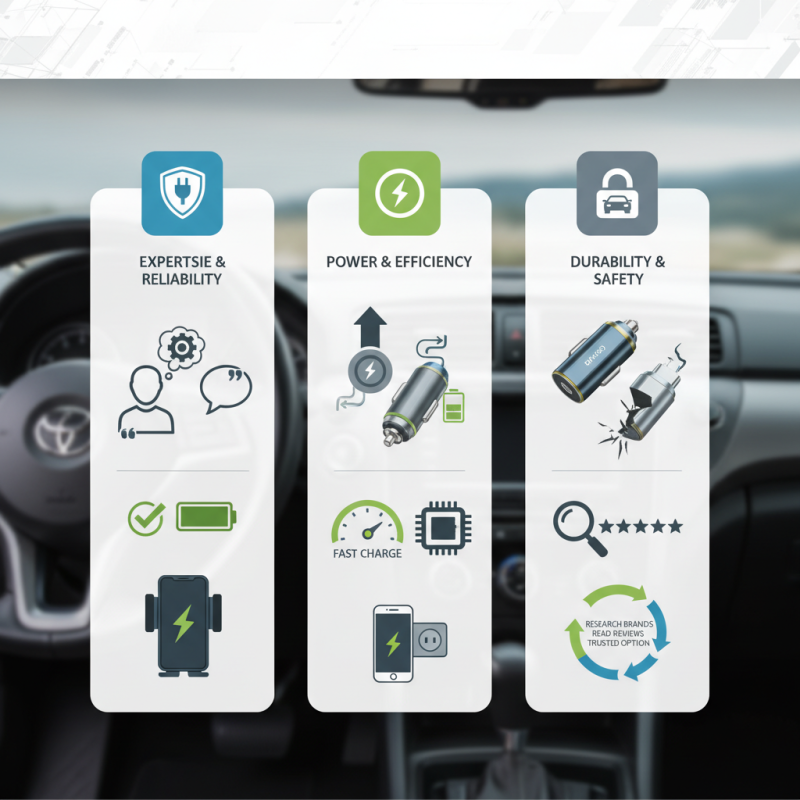
When choosing a USB Car Charger, expertise matters. According to John Smith, a leading expert in automotive accessories, "A good charger can save your devices in critical moments." He emphasizes the importance of selecting a reliable charger for safety and efficiency.
Many drivers overlook the differences in USB Car Chargers. Not all chargers are created equal. Some deliver more power, while others may charge slowly or not at all. It's essential to understand the specifications before purchasing. A device that is underpowered can leave you stranded without a charged phone.
Durability is another critical factor. Many chargers may look the same but differ in build quality. A poorly made charger can wear out quickly. Some might even pose a safety risk. Investing in a high-quality USB Car Charger ensures that your devices are charged without compromise. Always research brands and read user reviews to find a trustworthy option.
Understanding the Importance of a Quality USB Car Charger
A quality USB car charger is essential for modern drivers. It powers devices during commutes and road trips. Many people rely on smartphones for navigation and entertainment. A decent charger keeps these devices functional. With so many options, understanding the differences can be challenging.
Charging speed and safety features matter greatly. An ideal charger provides fast charging without overheating. Many cheap chargers lack essential safety mechanisms. This can lead to battery damage or even fire hazards. Be wary of low-cost options that seem too good to be true. They might save money but can be risky.
Consider the number of ports and compatibility. Multi-port chargers enable multiple devices to charge at once, a practical feature for families or groups. Always check that the charger matches your devices’ power requirements. A mismatch can result in slow charging or, worse, device malfunction. Quality matters because a faulty charger is not worth the inconvenience it brings.
Top Tips for Choosing the Best USB Car Charger
This chart illustrates essential features to consider when choosing a USB car charger. The power output indicates how quickly devices can be charged, while the number of ports shows usability for multiple devices. Compatibility ensures the charger works with different devices, while overcharge protection is vital for safety. The price reflects the typical market range for such chargers.
Key Features to Consider When Selecting a USB Car Charger
When selecting a USB car charger, several key features can greatly enhance your charging experience. Firstly, consider the power output. Most chargers offer outputs between 2.1A to 3.0A. According to industry reports, a charger with higher amperage can significantly reduce charging time. For instance, a 3.0A charger can often recharge devices much faster than a 1.0A option. This can be crucial during long drives.
Another critical aspect is the number of ports available. Many vehicles now have multiple devices that require charging simultaneously. Research shows that chargers with two or more ports are increasingly popular, allowing for shared power without diminishing output. Yet, keep in mind that the total amperage should be divided among all active ports. Therefore, it is essential to check the specifications carefully to avoid slow charging speeds.
Finally, safety features are paramount. A reliable USB car charger should include over-current protection and over-voltage protection. A study indicates that chargers without these features pose a risk of damaging your devices. Not all products guarantee these protections, forcing consumers to research thoroughly. Prioritize chargers that provide transparent information about their safety certifications. This ensures not just efficiency but also the safety of your valuable devices during travel.
Comparing Charging Speeds: Watts and Amps Explained
When selecting a USB car charger, understanding charging speeds is crucial. Watts and amps are key components of this understanding. Amps measure the flow of electrical current, while watts represent the total power delivered. For instance, a charger offering 2.1 amps typically provides faster charging than one supplying 1 amp.
Charging speed affects your device's efficiency. Devices like smartphones and tablets require more power. A charger that delivers higher watts can significantly reduce charging time. Imagine needing to charge your phone rapidly before an important call. Choosing a charger with the right wattage and amps makes all the difference.
However, higher power isn't always better. Some devices have limits on how much power they can accept. Overloading a device can harm its battery. Look for compatibility and optimal output specifications. Pay attention to these details while making your choice. Prioritizing reliability helps ensure your devices stay safe.
Safety Standards and Certifications in USB Car Chargers
When selecting a USB car charger, understanding safety standards is crucial. A significant percentage of car fires and electrical malfunctions stem from poorly designed chargers. According to reports from the National Fire Protection Association, over 20,000 vehicle fires are reported annually due to electrical failures. High-quality chargers often feature certifications such as UL, CE, or FCC, ensuring compliance with strict safety regulations.
The design of a charger also impacts its safety. It’s essential to consider features like over-current protection and short-circuit prevention. Additionally, chargers that provide stable voltage output help prevent overheating. The Society of Automotive Engineers emphasizes that chargers meeting set performance standards play a vital role in avoiding dangerous situations on the road.
Moreover, while some chargers offer multiple ports, not all are equally efficient. Poor designs can lead to power loss and inefficient charging, creating potential fire hazards. A report from the Consumer Product Safety Commission noted that chargers with multiple outputs often overheat when all ports are utilized. Therefore, it’s important to choose chargers thoughtfully, prioritizing those that adhere to recognized safety certifications.
Budgeting: How Much Should You Spend on a USB Car Charger?
When considering a USB car charger, budgeting plays a crucial role. Industry reports suggest that an average consumer spends between $10 to $30 on a reliable charger. This range allows for a balance between quality and affordability. Spending less than $10 often compromises safety features and charging speed. In contrast, spending upwards of $30 can sometimes lead to unnecessary features.
For those on a budget, do a bit of research. Look for chargers that provide at least 2.4A per port. This ensures fast charging capabilities for most devices. Reading customer reviews can also reveal the reliability of a product. Don’t ignore the importance of certified safety features, even in budget options.
While high-capacity chargers may seem attractive, evaluate if you truly need the extra power. Many users find that a simple, dual-port charger meets their daily needs. Reflect on your charging habits. If you rarely share your charger, a single-port option may suffice. Always consider how each dollar spent impacts your overall automotive experience and usage patterns.
Top Tips for Choosing the Best USB Car Charger - Budgeting: How Much Should You Spend on a USB Car Charger?
| Feature | Low Budget ($5-$15) | Mid Range ($15-$30) | High End ($30+) |
| Charging Speed | 5W-10W | 10W-20W | 20W+ |
| Ports Available | 1 | 2 | 3+ |
| Safety Features | Basic | Overcharge Protection | Smart Charge Technology |
| Build Quality | Plastic | Durable Plastic | Metal Housing |
| Warranty | 6 Months | 1 Year | 2-3 Years |