Why Choose a Selectorized Machine for Your Gym?
A well-planned gym should make strength training approachable without making every workout feel identical. A Selectorized Machine can help by guiding movement along a defined path and allowing users to change resistance with a pin. The adjustment is simple. That can reduce setup time, especially during busy hours when members need clear, practical equipment choices. For newer lifters, an illustrated instruction panel and adjustable seat can make the first attempt less intimidating. Experienced users may also value the quick changes between sets.
Convenience is only part of the decision. Machine selection should reflect the people who use the gym, the space available, and the exercises already offered. A chest press, leg extension, or seated row may suit particular training goals, but no single machine works for everyone. Body proportions differ, and a guided path may not feel comfortable for every member. That deserves honest attention. Staff should demonstrate adjustments, check that users can move without discomfort, and keep upholstery, cables, and weight stacks in good condition. Clear maintenance records and manufacturer guidance support reliable day-to-day use.
This guide explores where selectorized equipment can fit, what to assess before buying, and how to compare usability, durability, and floor-space needs. It also considers the trade-offs: guided movement can simplify training, yet free weights and other equipment offer different challenges. The best choice is rarely the most impressive machine on the showroom floor. It is equipment that members can use consistently, with suitable instruction and realistic expectations.
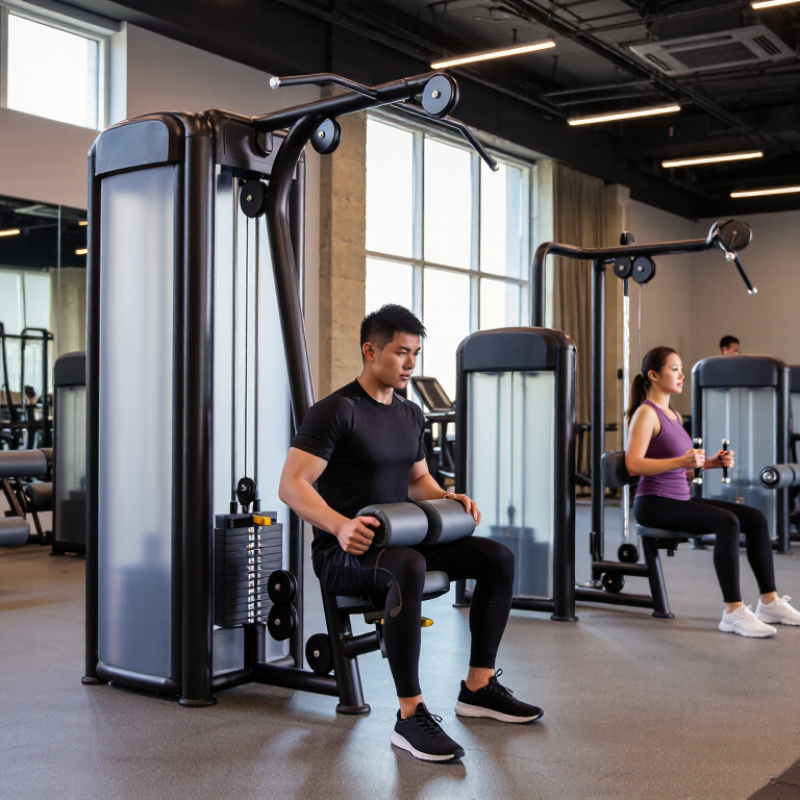
What Is a Selectorized Gym Machine?
A selectorized gym machine is a strength-training station with a fixed movement path and a weight stack. A pin selects the load, while cables and pulleys transfer resistance to the handles or pads. Adjust the seat, secure the pin, and move through the machine’s intended range. Unlike free weights, the load stays within the machine’s guided path, which can make setup and repeated movements easier to manage.
Simple, but not effortless.
The equipment is useful context, not a guarantee of better training. The CDC’s NCHS Data Brief No. 443 reported that 46.9% of U.S. adults met muscle-strengthening activity guidelines in 2020; the survey did not track which equipment they used. ACSM’s 2024 Worldwide Survey ranked strength training with free weights second among fitness trends, but it did not measure selectorized-machine use. That distinction matters.
On a gym floor, check that the seat and pads fit the user, the pin is fully inserted, and the movement feels controlled. A machine can still feel awkward when its adjustments do not match someone’s body.
How Does Its Weight-Selection System Work?
A selectorized machine uses a weight stack connected to a moving arm by cables or pulleys. Slide the pin into a numbered plate, and the chosen load moves with the machine’s lever. The pin does not make every repetition equally difficult: pulley ratios, machine geometry, and the selected exercise affect how resistance feels. Check that the pin is fully seated before starting. A small click matters.
Some stacks use add-on weights for smaller increases between plates. This can help when the next full plate feels too heavy, though the number printed on the stack is not always the force felt at the handle. For steady progression, record the pin setting, repetitions, and how controlled each set feels. The ACSM’s 2009 resistance-training position stand recommends 8–12 repetitions for novice and intermediate adults, a useful range for assessing whether a chosen load is manageable. It also recommends training each major muscle group two or three days weekly. These are guidelines, not a personal prescription.
The system makes load changes quick between sets, which is useful in a busy gym. A practical check: move through the full range slowly, keep the stack from slamming, and stop if the machine’s path causes discomfort. Not magic. The pin only selects resistance; it cannot confirm good technique, fit, or an appropriate starting load. That part still requires attention, and sometimes an adjustment after the first set.
What Training Benefits Does It Offer?
Selectorized machines make resistance easy to adjust between sets. A pin moves the weight stack, so there’s no need to load plates. That saves time. It can also make strength training feel more approachable for beginners or anyone returning after a break.
The guided movement path helps users focus on the target muscles instead of balancing a free weight. For example, a seated row can help train the back while the chest pad supports the torso. Adjustable seats and handles matter: a poor fit may place strain on joints or limit the exercise’s range. Take a moment to set them correctly. Small changes matter.
A clearly marked weight stack also makes gradual progression practical. Adding a small amount of resistance can be easier to track than estimating changes with loose plates. Still, the machine does not automatically ensure good technique. Move with control, avoid bouncing the stack, and stop if you feel sharp pain. Machines can be useful for focused work, but they may not match every person’s proportions or goals. Even experienced lifters may need to adjust their setup more than once.
How Does It Compare With Free Weights?
Selectorized machines and free weights solve different problems. The ACSM Worldwide Survey of Fitness Trends for 2025 ranked traditional strength training fourth among global fitness trends. That ranking reflects broad demand, not proof that one tool builds more muscle. Both can support progressive resistance training when load and technique are appropriate.
A selectorized machine guides the movement and lets users change resistance with a pin. That can help beginners learn a controlled path, or let a tired member train without balancing a barbell. Free weights require more coordination and stabilization. They also allow more movement choices, such as split squats beside a rack. Neither option is automatically safer; poor setup and rushed repetitions still matter.
The ACSM position stand on resistance training describes both machine and free-weight exercises as viable tools for developing strength. In practice, machines can make loading and seat adjustments straightforward, but fixed movement paths may not suit every body. Free weights offer flexibility, yet coaches may need to spend more time teaching technique. A useful gym floor can include both. Small details matter: check that the seat supports a full range of motion, and leave enough space to lift and rerack weights. The IHRSA Global Report 2024 counted 72.9 million U.S. health-club and studio members in 2023, underscoring the varied needs facilities must accommodate.
What Should Gyms Consider When Choosing One?
When choosing a selectorized machine, start with the people who will use it and the space it must fit. Measure the footprint, including room for a bench, pin access, and safe movement around the station. Check that seat and pad adjustments are clear, quick, and usable for members with different body sizes. Fit matters. Ask whether the machine trains a movement your gym actually needs, such as a seated row or leg curl, rather than duplicating equipment already on the floor. Handles should feel secure, and the weight stack should offer useful increments for beginners and experienced lifters alike.
Test the motion through its full range before buying. The path should feel controlled, without forcing an awkward wrist, shoulder, or knee position. Have several people try the adjustments; a setup that seems simple to one person may confuse another. It is easy to overvalue a polished finish and overlook cable access, upholstery seams, or how staff will clean the unit. Those details affect daily upkeep. Compare warranty terms, replacement-part availability, and expected maintenance, not just the purchase price. Leave enough room for members to enter and exit without crossing another station’s working area. A crowded layout can make even good equipment frustrating.