WORLD electronics offers a complete line of electronic circuit board manufacturing and assembly services, as well as advanced manufacturing services. Our commitment to quality and service is second to no supplier.
Learn MoreOur team of engineers assists you in the development of new designs to optimize quality manufacturability (DFM) and testability, resulting in cost minimization and reduced product development time.
Learn MoreOur flexible manufacturing floor layout and highly trained staff allow for Quick Set-up and Tear Down of small volume prototype runs. This combination grants our customers the benefit of turning new designs quickly and accurately.
Learn MoreWORLD electronics is dedicated to quality. This quality is what underpins our commitment to thorough testing. Our engineers can develop a set of tests that ensure reliability and high performance in all products.
Learn MoreSupply chain management has crossed over from being a narrow management function to being a key operational function.
Learn MoreA shop window can do more than display products. It can show a short campaign while keeping the collection visible behind the glass. That balance is the appeal of a Transparent Led Display: digital content adds movement without fully blocking the space. Light matters. So does context. In a boutique, hotel lobby, or showroom, the screen can turn an ordinary window into a changing visual feature.
The benefits depend on the installation. Transparency, brightness, pixel pitch, and viewing distance all affect what customers actually see. Daylight may wash out weak content, while dense graphics can hide the products behind the screen. “A display should support the space, not compete with it,” says Maya Chen, a fictional display-technology consultant; this illustrative quote is not a verified statement from a real expert. That principle is useful when comparing screen specifications with the room’s lighting, window size, and customer path.
This article explores where transparent LED technology can fit, what businesses should assess before buying, and which trade-offs deserve attention. Installation details matter. So does maintenance access. A clear plan for content, power, mounting, and servicing can prevent an impressive display from becoming an expensive distraction. No screen suits every storefront, and that is worth admitting early. The right choice starts with the job the display must perform—not with the brightest product photo or the boldest sales claim.
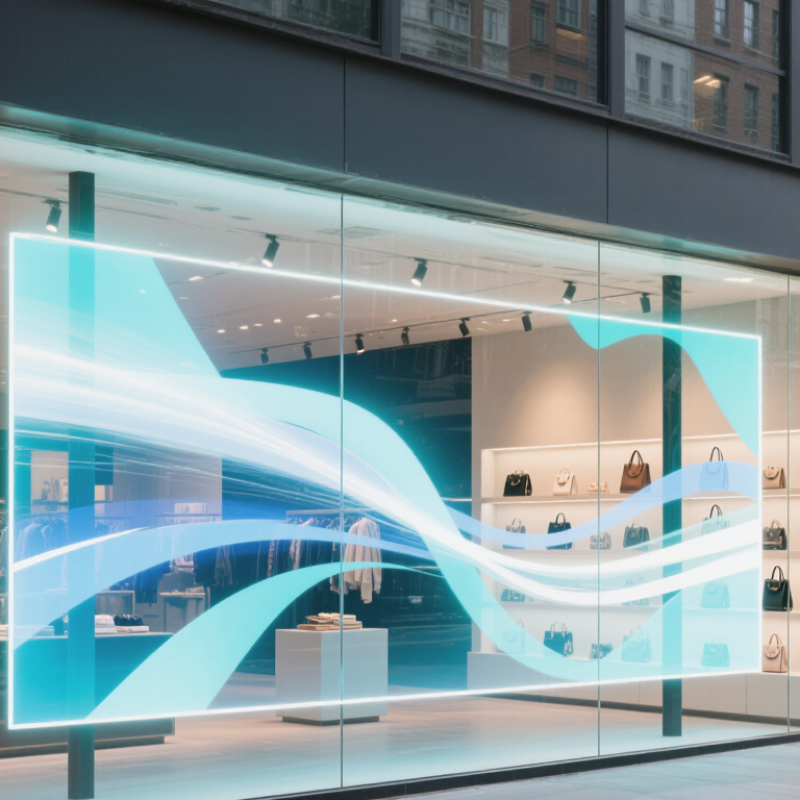
A transparent LED display is a screen built from light-emitting diodes arranged on a grid, leaving open spaces between pixels. Those gaps allow people to see through the panel while video and graphics appear to float on the glass. Unlike a conventional LCD, it does not need a solid backlight layer. Think of a shop window: pedestrians can still see products behind the screen, while bright text draws attention from the street. The effect is striking. But transparency is not the same as invisibility.
Image quality depends on pixel pitch, brightness, viewing distance, and the scene behind the glass. Wider gaps often improve visibility through the panel, but can make fine text look uneven up close. Daylight matters, too; a dim display may fade against a sunlit storefront. Grand View Research’s 2024 analysis estimated the global LED display market at about US$7.8 billion in 2023, with projected growth through 2030. This broad market figure does not measure transparent displays alone, but it shows the wider adoption of LED-based visual systems. For a real installation, test sample content on the actual glass and check it from both sides. A small detail can change the result. Pixels may look sharper in a brochure than they do in a busy window.
Transparent LED displays create images with small light-emitting diodes mounted on clear panels, strips, or mesh. Each pixel combines red, green, and blue light. A controller switches these pixels rapidly to form text, video, or graphics. From indoors, daylight and street scenes remain visible through the gaps.
The open structure is the key. Unlike a conventional solid screen, a transparent LED panel leaves spaces between its emitting elements. More open area generally allows more light through, but can reduce image detail. Pixel pitch, viewing distance, brightness, and the window’s reflections all affect what people actually see. Test a sample on the intended glass. Store lighting can make dark content look washed out.
The U.S. Department of Energy’s 2022 Solid-State Lighting R&D Opportunities report identifies 250 lumens per watt as a future LED-package efficacy target. That figure describes LED packages, not a finished transparent display; drivers, cooling, and panel design affect system performance. Useful context, not a product guarantee. A bright panel may still look poor against direct sun, and dense pixels can make the panel less transparent. That trade-off is easy to underestimate. Builders should check viewing angles, heat, and service access on site, not just rely on a specification sheet.
Transparent LED displays can turn a glass storefront into an active advertising space while preserving views into the shop. Passersby may notice motion or a bright product image without seeing a solid screen covering the window. Less visual blockage. That matters in cafés, retail stores, and reception areas where daylight and visibility help shape the customer experience. Content can also change throughout the day, showing a morning promotion, a product detail, or event information without replacing printed materials.
For business owners, the practical benefits include flexible messaging and better use of existing window space. A display can support seasonal campaigns while staff keep shelves and window layouts intact. It may also attract attention from pedestrians without requiring a separate freestanding screen. Results depend on the glass, viewing distance, ambient light, and display transparency. A bright street at midday can make content harder to read, while dense graphics may obscure the products behind the screen. The trade-off is real. Before installation, test sample content from both inside and outside, and ask a qualified installer to assess mounting, power access, and heat conditions. Even then, the display may not suit every storefront. A restrained layout often communicates more clearly than a window packed with changing messages.
Why Choose a Transparent LED Display for Your Business?
Where Can Businesses Use Transparent LED Displays?
Retail storefronts are a natural fit for transparent LED displays. They can show changing promotions across a glass window while keeping products and interior details visible. A passerby might see a bright sale message layered over a neatly arranged shoe display. Retailers should check viewing distance and daylight conditions before choosing screen brightness. A display that looks vivid indoors may appear faint in direct sun.
Showrooms can use transparent screens to add motion graphics to glass partitions without hiding vehicles, furniture, or other featured products. In office lobbies, they can share visitor information or company updates while preserving an open feel. Hotels and restaurants may place them near entrances to show menus, events, or wayfinding details. They work best when the message stays brief. Too much moving content can compete with the space itself.
Consider existing glass, available power, installation access, and how the screen will be maintained. Dust and fingerprints still show up, especially near busy entrances. That matters. Transparent displays do not suit every window, and reflections can reduce readability at certain angles. A small on-site test can reveal issues that drawings miss. The right placement balances visibility, useful content, and the view people came to see.
Start with the window, not the screen. Measure its clear viewing area, note nearby beams, and observe how sunlight changes throughout the day. A transparent LED display can preserve a view, but its brightness and transparency must suit the actual site. More transparency may mean less visual impact; brighter output may be needed near sunlit glass. There is no perfect setting for every storefront.
Tips: Check viewing distance before choosing pixel pitch. Stand where customers will stand, then compare test content at that distance. Ask to view a sample in lighting similar to your location. Small text can look crisp up close and disappear across a busy lobby.
Also consider installation depth, access for maintenance, power supply, and heat management. Confirm how the display attaches to the existing structure; glass and framing may limit options. Review content plans, too. Bold shapes and short messages often read better than fine details over a changing background. A showroom demo can be convincing, yet still fail to represent afternoon glare or reflections. That gap deserves a second look before you commit. Check service access and operating costs alongside the initial quote, and document who will inspect connections after installation.