WORLD electronics offers a complete line of electronic circuit board manufacturing and assembly services, as well as advanced manufacturing services. Our commitment to quality and service is second to no supplier.
Learn MoreOur team of engineers assists you in the development of new designs to optimize quality manufacturability (DFM) and testability, resulting in cost minimization and reduced product development time.
Learn MoreOur flexible manufacturing floor layout and highly trained staff allow for Quick Set-up and Tear Down of small volume prototype runs. This combination grants our customers the benefit of turning new designs quickly and accurately.
Learn MoreWORLD electronics is dedicated to quality. This quality is what underpins our commitment to thorough testing. Our engineers can develop a set of tests that ensure reliability and high performance in all products.
Learn MoreSupply chain management has crossed over from being a narrow management function to being a key operational function.
Learn MoreGlobal procurement teams need computing hardware that remains dependable across warehouses, control rooms, and distributed service sites. Rackmount Pcs answer this need with standardized dimensions, predictable installation, and practical expansion options. A 19-inch rack can hold systems from different purchasing cycles, reducing redesign work when a project grows.
Hannes Niederhauser, CEO of Kontron and a recognized industrial computing executive, has said, “Embedded intelligence is becoming a key differentiator for industrial applications.” That principle applies directly to Rackmount PCs. Procurement leaders can select systems with industrial processors, redundant power supplies, remote monitoring, and long-life components. These details matter when a replacement unit must travel across borders, fit an existing cabinet, and operate beside vibrating machinery.
The value is not only technical. A common rack format simplifies supplier comparison, spare-parts planning, and maintenance training. It can also reduce the number of unique configurations held in regional inventories. Yet standardization is not a magic answer. Poor airflow, unfamiliar voltage requirements, or weak documentation can turn a dependable chassis into an expensive delay. Global buyers should verify thermal design, certifications, warranty coverage, and service response before signing a contract.
Small details matter.
A disciplined specification process creates better purchasing evidence. It records processor performance, storage endurance, operating temperature, network interfaces, and future upgrade limits. Rackmount PCs may cost more initially than desktop alternatives, but their serviceability can support lower disruption over time. The strongest choice is rarely the cheapest unit. It is the system that procurement, engineering, and local technicians can support confidently.
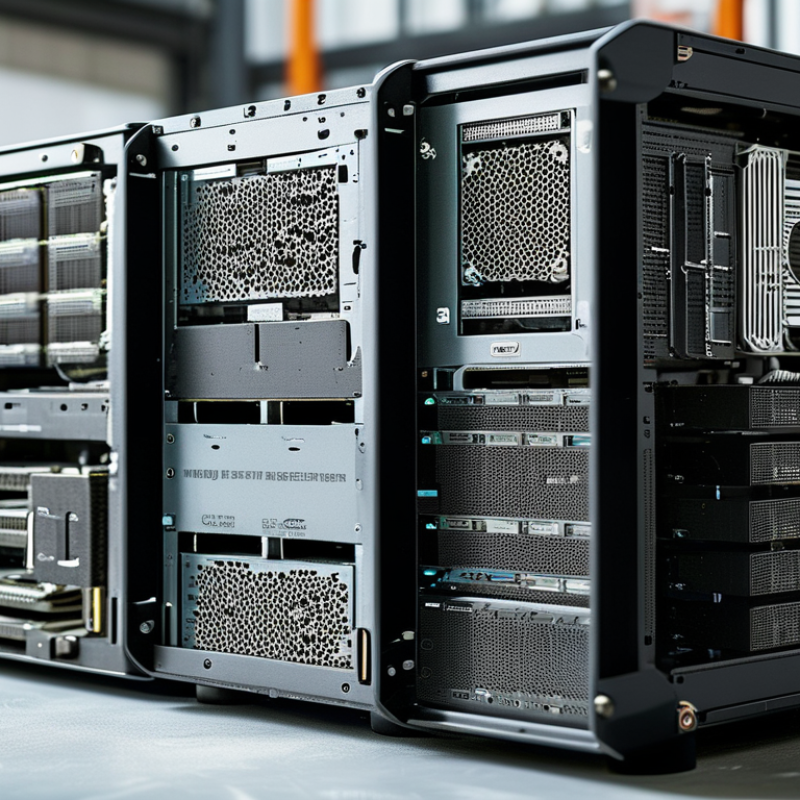
Why Choose Rackmount PCs for Global Procurement?
What Are Rackmount PCs and How Do They Differ from Other Computers?
Rackmount PCs are computers built to fit inside standard server racks. Their height is measured in rack units, or U. A 2U system may provide more internal space than a compact 1U model. Unlike desktop computers, rackmount PCs use front-mounted rails, secure chassis, and organized cable access. They are designed for control rooms, factories, laboratories, and data centers where equipment must remain in fixed positions.
A rackmount PC can support expansion cards, remote monitoring, and stronger cooling than many ordinary desktops. Some models also offer redundant power supplies or error-correcting memory. However, they are not automatically better. Fans can be loud, and installation may require a rack, rails, and careful airflow planning. Laptops are easier to move, while tower computers often offer quieter operation and simpler upgrades. A rushed specification can create compatibility problems across regions, especially with power input, safety certifications, and network requirements.
Tips: Check rack depth before ordering. Confirm voltage and plug standards for each destination. Request thermal data for hot environments. Leave space for cable bends and maintenance access. A small test shipment can reveal issues that documents miss. Use measured results, not assumptions.
Rackmount PCs are computers designed to install in standardized equipment racks. Their height is measured in rack units (U), where 1U equals 1.75 inches or 44.45 mm. Standardized dimensions simplify deployment, inventory planning, maintenance, and facility integration across regions.
Unlike conventional desktop computers, rackmount PCs use a horizontal chassis sized for standard 19-inch equipment racks. A 1U system maximizes equipment density, while 2U and 4U systems provide additional vertical space for cooling, expansion cards, storage, and service access.
Global procurement demands more than a powerful computer. It requires consistent specifications, predictable delivery, and support across different regions. Rackmount PCs meet these needs through standardized sizes, shared mounting methods, and configurable components.
A procurement team can approve one tested configuration for several facilities. This reduces comparison time and limits unexpected compatibility problems. In a data room, a 19-inch rack, labeled cables, and front-accessible drives simplify installation. Short-depth models can also fit cabinets with limited space. They matter in older control rooms.
Reliability needs practical evidence. Procurement managers should review thermal tests, vibration results, power requirements, and operating temperature ranges. They should also confirm regional certifications, packaging quality, customs documents, and replacement-part availability. Remote monitoring can reveal rising temperatures before a shutdown occurs. That saves valuable service hours.
No procurement plan is flawless. A minor voltage mismatch or missing rail kit can delay an entire installation. We have seen schedules change because one overlooked accessory was unavailable locally. Clear bills of materials help, but they need human review. Global teams should record serial numbers, firmware versions, and maintenance dates. This creates a dependable service trail across sites, even when local technicians have different levels of experience.
Key technical and procurement dimensions for evaluating rackmount PCs across international projects, data centers, industrial sites, and distributed installations.
| Procurement Dimension | Typical Rackmount PC Data | How It Supports Global Procurement |
|---|---|---|
| Rack Compatibility | Designed for standard 19-inch equipment racks; common chassis heights include 1U, 2U, and 4U. One rack unit (1U) equals 44.45 mm. | A standardized mechanical format simplifies site planning, cabinet allocation, installation procedures, and replacement across different countries and facilities. |
| Space Utilization | A 1U chassis is approximately 44.45 mm high, while a 2U chassis is approximately 88.9 mm high, excluding installation clearances. | Consistent dimensions make it easier to calculate rack capacity, shipping volume, and expansion space before placing multi-location orders. |
| Power Input Compatibility | Many enterprise power supplies support approximately 100–240 V AC and 50/60 Hz, but the exact input range must be confirmed for each configuration. | Wide-range power support can reduce the number of region-specific configurations and simplify deployment in markets with different electrical standards. |
| Power Redundancy | Configurations may include a single power supply or dual hot-swappable power supplies, depending on the selected chassis and system design. | Redundant power options help support continuity requirements and reduce downtime caused by a single failed power module. |
| Processor and Expansion Flexibility | Available configurations commonly range from compact, low-power processors to higher-performance server-grade platforms, with expansion through PCIe slots or integrated interfaces. | A configurable platform allows one mechanical design to serve different workloads, reducing the number of product types managed in a global purchasing program. |
| Storage Options | Typical systems support combinations of solid-state drives, hard disk drives, removable drive bays, and hardware or software storage redundancy. | Flexible storage configurations allow purchasers to match capacity, performance, data-retention, and serviceability requirements by project. |
| Remote Administration | Management features may include hardware monitoring, remote console access, power cycling, event logging, and firmware management through a dedicated management interface. | Remote administration reduces the need for on-site intervention, which is valuable when equipment is deployed across multiple regions or difficult-to-access locations. |
| Thermal Management | Rackmount systems generally use directed front-to-back airflow with multiple fans; operating temperature and airflow requirements vary by chassis and installed components. | Predictable airflow supports standardized cabinet layouts and helps procurement teams verify compatibility with local data-center cooling conditions. |
| Environmental Tolerance | Commercial systems are often specified for controlled indoor environments; extended-temperature or industrial configurations may support wider operating ranges. | Matching the environmental specification to the installation site helps avoid failures caused by heat, dust, humidity, vibration, or unsuitable storage conditions. |
| Connectivity | Common interfaces include Ethernet, USB, display outputs, serial ports, and optional network or storage adapters. | A broad interface selection helps accommodate different network architectures, control systems, peripherals, and local integration requirements without redesigning the entire platform. |
| Compliance Documentation | Depending on the destination market, documentation may include electrical safety, electromagnetic compatibility, material compliance, and radio-related declarations where applicable. | Requesting region-appropriate declarations, test reports, manuals, and power-cord specifications supports customs clearance, internal approval, and installation compliance. |
| Serviceability | Tool-less access, removable drive trays, replaceable fans, and modular power supplies are available on selected designs. | Serviceable components can shorten maintenance time, reduce replacement labor, and make spare-parts planning more consistent across international sites. |
| Lifecycle and Standardization | A stable chassis platform can support multiple processor, memory, storage, and networking configurations over successive purchasing cycles. | Standardization can simplify qualification, operator training, documentation, spare inventories, and long-term fleet management. |
| Logistics and Packaging | Rackmount equipment is typically shipped with mounting hardware, power accessories, and protective packaging; package dimensions and weight depend on the configuration. | Obtaining confirmed packed dimensions and weights improves freight estimates, warehouse planning, import documentation, and installation scheduling. |
| Total Cost of Ownership | Relevant cost factors include purchase price, energy use, rack space, software, shipping, maintenance, spare parts, and technician access. | Evaluating the full lifecycle cost rather than unit price alone supports better comparisons between standardized rack deployments and decentralized equipment choices. |
Note: The specifications shown are typical planning references rather than universal product specifications. Final procurement decisions should verify the exact chassis dimensions, power requirements, certifications, environmental ratings, accessories, and support terms for the selected configuration and destination country.
Rackmount PCs give procurement teams a predictable platform for distributed facilities. Their standardized chassis fits common server cabinets and simplifies installation across regions.
Buyers should confirm the required rack height, rail depth, and cable clearance. A small mismatch can delay deployment.
Processor selection should follow the workload, not headline clock speed. Industrial monitoring may need strong single-thread performance, while analytics benefits from more cores.
Memory capacity matters, but memory error correction can matter more in unattended systems.
Storage should match risk: solid-state drives improve shock resistance, while mirrored arrays protect against a single drive failure.
I have seen projects over-specify processors and under-size storage. That assumption proved expensive.
Thermal design deserves careful review. Check operating temperature, airflow direction, fan replacement access, and acoustic limits.
Power supplies should support local voltage standards and provide enough headroom for future expansion. Remote management, trusted platform security, and verified firmware controls can reduce service visits.
Network options also require attention. Copper, fiber, and redundant connections serve different sites.
Buyers should request lifecycle commitments, spare-part availability, and clear warranty procedures in each destination country. Documentation must be precise.
Specifications can still hide practical problems. Test the complete configuration with real peripherals, mounting hardware, and expected software.
Do not rely only on laboratory figures. A short pilot often reveals heat buildup, connector conflicts, or unstable drivers before a global order magnifies them.
Global procurement turns a rackmount PC into more than a hardware purchase. Compliance affects every shipment, installation, and service decision. Buyers should verify safety, electromagnetic compatibility, environmental, and data protection requirements in each destination. Certificates alone may not be enough. Ask for test reports, declarations, revision dates, and traceable component records. This evidence supports audits and reduces customs delays.
Supplier selection requires practical scrutiny. Can the supplier maintain identical configurations across regions? How quickly can it replace a failed power supply? A useful evaluation includes production capacity, quality controls, warranty terms, and technical support hours. Request sample units and inspect cable labeling, airflow, mounting depth, and noise levels. Small details matter in crowded server rooms. Remote support helps, but local service access may matter more.
Total cost includes far more than the quoted unit price. Add freight, duties, regional adapters, deployment labor, spare parts, energy use, and disposal requirements. Standardized rack dimensions can simplify installation and reduce training time. Yet standardization can limit flexibility. A spreadsheet can still mislead. Calculate costs over the expected service life, then test assumptions against real operating conditions. In my experience, the cheapest configuration often becomes expensive after repeated replacements, delayed parts, or incompatible accessories. A clear procurement record improves accountability, but it cannot replace hands-on validation.
Global procurement becomes more reliable when rackmount PCs follow a controlled deployment process. Standardized chassis sizes, power requirements, and operating images simplify purchasing across regions. Before shipment, teams should validate cooling, storage health, memory stability, and network compatibility. Test units under realistic loads, not only at idle. Keep it boring. Clear asset labels and consistent configuration records also reduce installation errors at remote sites.
Tips: Use a deployment checklist for every location. Record firmware versions, approved components, cable layouts, and test results. Leave airflow space around each chassis, especially in crowded racks. Confirm local voltage, grounding, and environmental conditions before installation. A short burn-in test can expose unstable memory or overheating fans. These details seem minor, but field engineers often find them decisive.
Long-term reliability requires planned maintenance rather than emergency replacement. Monitor temperatures, fan speeds, storage health, and error logs through approved management tools. Schedule inspections before dust buildup becomes a thermal problem. Keep replacement drives, fans, and power modules available within the expected service region. Document every repair and configuration change. Experienced technicians should review unusual failures and update deployment standards when evidence supports it. No process is perfect. A checklist may miss a loose cable or an unexpected room temperature. That is why periodic review, measured data, and honest post-installation feedback matter. Different sites will still behave differently.