What Is the Best Electronics Board Manufacturer in China?
Choosing the best electronics board manufacturer in China is not a simple ranking exercise. The right partner depends on your board’s design, production volume, quality needs, and delivery schedule. A low quotation may look attractive, yet it can hide setup costs, long lead times, or limits on testing. The board itself tells a more useful story: copper thickness, layer alignment, solder-mask coverage, and clean drill holes all matter.
Dr. Eric Bogatin, a signal-integrity educator and author, teaches that electrical behavior must be understood through the physical design. A fair paraphrase of his published work is: “Evaluate a board by how its electrical paths behave, not by appearance alone.” That perspective matters when comparing manufacturers. Ask how they review stack-ups, control impedance, check design-for-manufacturing issues, and test finished boards. Request sample inspection records and clarify which quality certifications apply to your product. A certificate helps, but it cannot replace clear process evidence.
Communication deserves equal attention. Can the engineering team explain a fabrication concern before production, using specific measurements rather than vague assurances? Can it support prototypes and later volume orders without changing the process unexpectedly? A polished capability list is not enough. Even a careful scorecard can miss a weak handoff between engineering and production; that is a point worth checking, not assuming. The strongest choice is usually the manufacturer whose capabilities match your actual requirements and whose answers remain consistent from quotation to delivery.
Types of Electronics Boards Manufactured in China
Electronics board production in China covers several formats, and the right choice depends on a product’s shape, heat, and signal demands. Rigid printed circuit boards are common in routers, appliances, and control units. They use copper traces on insulating laminates, with designs ranging from simple single-sided boards to dense multilayer structures. Flexible boards bend around tight spaces. They suit cameras, wearables, and compact hinges where cables may add bulk. Rigid-flex boards combine both formats, reducing connectors but making layout, fabrication, and repair more demanding.
Manufacturers also produce high-density interconnect boards, which use fine traces and microvias for compact devices. Metal-core boards, often built around aluminum, help move heat away from high-power LEDs and other warm components. Ceramic substrates serve specialized applications needing electrical insulation and temperature stability, though they can cost more and require careful handling. Material choice matters. Ask about copper weight, finished thickness, impedance control, and inspection records, not only price. Specifications alone do not tell the whole story; a prototype may perform well while production lots vary. That risk deserves a real discussion.
Types of Electronics Boards Manufactured in China
The bars show illustrative layer counts for common rigid and flexible PCB designs. Actual layer counts depend on the board’s requirements; these examples are not market averages or manufacturing limits.
Key Capabilities of Leading Chinese Board Manufacturers
Leading Chinese electronics board manufacturers distinguish themselves through process control, engineering depth, and reliable testing—not just factory size.
Prismark’s 2023 industry review reported that global PCB production value fell about 15%, to roughly US$73 billion. In a pressured market, manufacturers need to control material use, scrap, and delivery schedules. Ask how they manage impedance, copper thickness, and layer registration. Details matter. For high-density boards, request cross-section samples and review drill, plating, and inspection records.
Testing capability is equally important. A capable supplier can document electrical tests, solder-mask inspection, and lot traceability, then explain how failures are investigated. IPC-6012 sets qualification and performance requirements for rigid printed boards; buyers can use it to frame technical discussions. WSTS reported worldwide semiconductor sales of US$627.6 billion in 2024, up 19.1% year over year, signaling strong electronics demand but not proving any board factory’s quality. Still, a glossy capability list can mislead. Ask for process data from a recent production lot, not only a polished sample. A real audit should examine equipment maintenance, operator training, and corrective-action records. Small gaps here can become costly delays.
Standards for Comparing Electronics Board Manufacturers
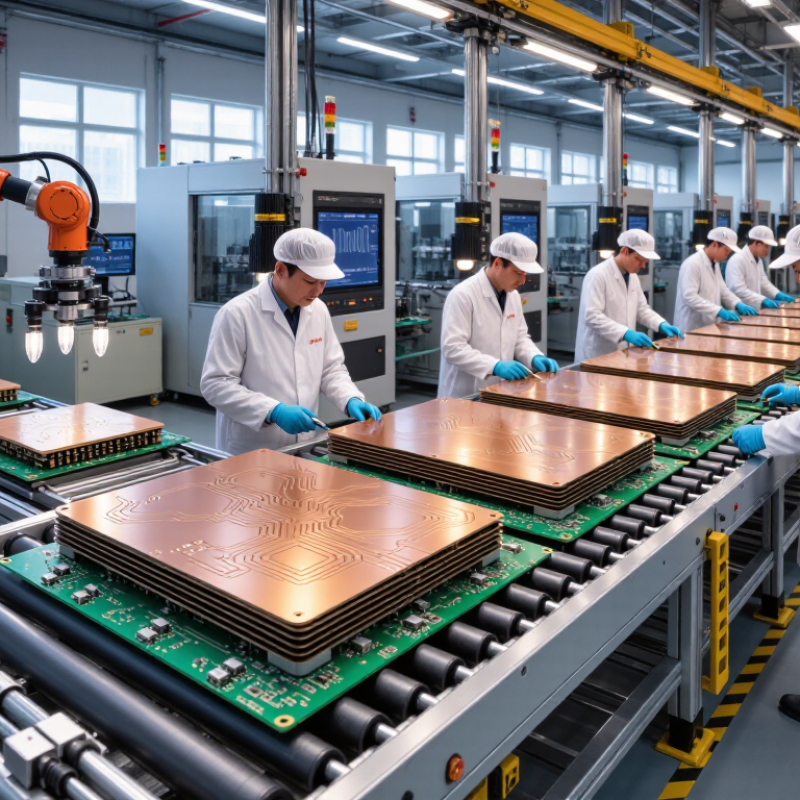
Choosing an electronics board manufacturer in China requires more than comparing quoted prices. A useful review starts with process control. Ask how the factory manages incoming laminate, copper thickness, drilling, plating, and solder-mask registration. Request sample inspection records, not just a capability sheet. Can the team explain how it handles a shifted hole or uneven copper? Specific answers are more reassuring than broad promises.
Check whether quality checks match the board’s intended use. For a dense multilayer design, review impedance control, cross-section results, and electrical test coverage. For a simple prototype, turnaround and clear engineering feedback may matter more. Look for traceability from material batches to finished panels, and confirm how defects are reported and corrected. Ask to see the inspection criteria. Then compare the response with your own drawings and tolerances.
Communication is part of manufacturing quality. A capable supplier should flag unclear stack-ups, minimum spacing, or awkward panel layouts before production. Request a small pilot run and compare the delivered boards with the approved files. No scorecard is perfect. I would weigh documented evidence more heavily than polished presentations, while admitting that one successful sample cannot prove steady performance over time.
How to Evaluate Quality, Cost, and Production Capacity
A strong electronics board manufacturer is not simply the one offering the lowest quotation. IPC’s 2022 World PCB Production Report valued global PCB output at about US$81.6 billion, with mainland China accounting for roughly 54.6%. That scale gives buyers many options, but national capacity does not prove that one factory can meet your requirements. Ask for recent yields on a comparable board, not a broad company-wide average.
Look beyond a certificate. Request material traceability, copper-thickness records, cross-section samples, and electrical-test results for your board type. For controlled-impedance designs, compare measured values with the agreed specification. Ask how defects are logged and corrective actions verified. Small details matter. A clean test report is useful, but it cannot replace consistent process records across production batches.
Cost should include tooling, testing, packaging, freight, and likely scrap—not just the quoted unit price. Capacity needs the same scrutiny. Ask how many matching production lines are available, their current utilization, and the confirmed monthly output for your layer count and finish. Request a pilot lot and inspect delivery consistency before scaling. I would not trust a capacity figure without its assumptions; even capable factories can overpromise during a busy period. One caution: a slower, well-documented line may be the safer choice than a fast line with unclear bottlenecks.
Choosing a Manufacturer for Your Project Needs
Choosing an electronics board manufacturer starts with the project, not a generic ranking. Define the board’s layer count, dimensions, material, expected quantity, and operating environment. A compact sensor board for a warm enclosure has different needs from a dense control board. Share the latest design files and ask whether the manufacturer can review clearances, drill sizes, and copper spacing before quoting. Practical feedback matters.
Look beyond the quoted price. Ask what inspection is included, how production changes are approved, and what information appears on test or inspection reports. For a prototype, confirm the minimum order, setup charges, and expected lead time. Small details matter. A vague answer about quality control deserves follow-up, not an assumption that everything is covered.
Request a sample or a small pilot run when the schedule and budget allow. Check visible details such as solder-mask alignment, clean edges, and consistent hole placement, then verify electrical performance against your requirements. No checklist removes all risk; I would still leave room for surprises. A polished capability sheet can sound convincing, but it cannot show how clearly a supplier handles a design revision or a delayed material. That gap matters. Compare communication, technical support, and documented process alongside cost, and make sure the chosen production plan matches the board you actually need.