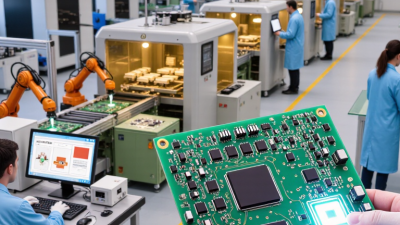
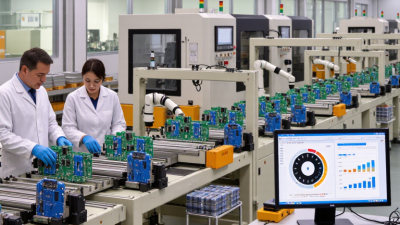
WORLD electronics offers a complete line of electronic circuit board manufacturing and assembly services, as well as advanced manufacturing services. Our commitment to quality and service is second to no supplier.
Learn MoreOur team of engineers assists you in the development of new designs to optimize quality manufacturability (DFM) and testability, resulting in cost minimization and reduced product development time.
Learn MoreOur flexible manufacturing floor layout and highly trained staff allow for Quick Set-up and Tear Down of small volume prototype runs. This combination grants our customers the benefit of turning new designs quickly and accurately.
Learn MoreWORLD electronics is dedicated to quality. This quality is what underpins our commitment to thorough testing. Our engineers can develop a set of tests that ensure reliability and high performance in all products.
Learn MoreSupply chain management has crossed over from being a narrow management function to being a key operational function.
Learn MoreChoosing among China’s PCB electronics manufacturers requires more than comparing factory prices. A reliable partner must combine engineering depth, stable production, traceable materials, and responsive communication.
Dr. Hayao Nakahara, a respected PCB industry analyst, has described China as “the largest PCB manufacturing country in the world.” His observation provides useful context, but scale does not guarantee quality. A large factory may still struggle with engineering changes, delivery pressure, or transparent reporting.
This guide examines manufacturers through practical evidence. We consider production capability, certification systems, prototype support, and experience with complex boards. We also look at copper thickness, layer counts, impedance control, and surface finishes. These details matter when a board moves from a clean prototype room into demanding field use.
The strongest suppliers usually explain their process clearly. They can show inspection records, material documentation, and realistic lead times. They should also identify limitations before accepting an order. That honesty is valuable.
Not every impressive website reflects dependable manufacturing.
Our comparison will focus on companies serving real electronics projects, from compact control boards to high-layer industrial assemblies. Regional strengths matter too. Shenzhen may offer fast communication and supplier access, while other Chinese manufacturing regions may provide different capacity advantages.
Still, this assessment is not absolute. Supplier performance can change with staffing, equipment investment, and order volume. Even experienced buyers can misjudge a factory after one successful batch. The goal is therefore not to name one universal winner. It is to help readers select a suitable PCB electronics manufacturer with stronger evidence, clearer questions, and fewer costly assumptions.
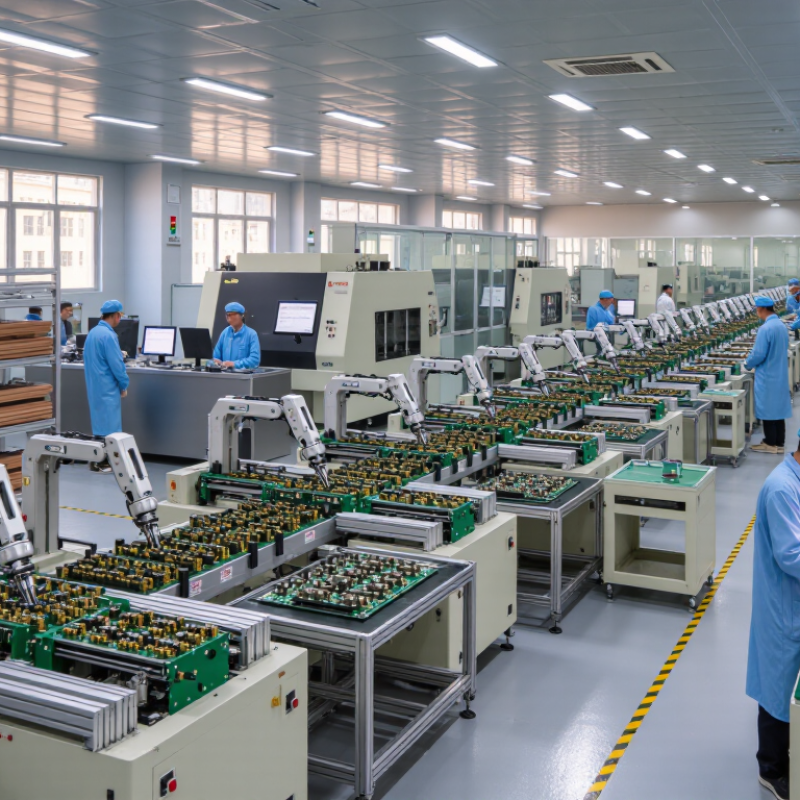
A leading PCB electronics manufacturer in China is defined by controlled execution, not factory size. Prismark’s 2024 industry data places China at roughly half of global PCB production value. Scale matters, but it can also hide weak process discipline.
Reliable manufacturers connect engineering, materials, and testing through traceable systems. Look for ISO 9001 quality management and production aligned with IPC-6012 performance requirements. Their teams should review impedance, copper thickness, solder mask coverage, and thermal stress before mass production.
A useful factory visit shows automated optical inspection, X-ray testing, and clearly labeled material racks. Small details matter.
Ask for first-pass yield, customer complaint rates, corrective-action records, and delivery performance. Numbers should cover recent production, not a carefully selected month. The 2024 IPC Electronics Industry Survey highlights supply-chain resilience and workforce capability as major manufacturing concerns. A capable supplier therefore maintains approved alternatives for laminates and components, while keeping change records visible. Good communication helps.
Still, no manufacturer is perfect. I would question any supplier claiming zero defects. A stronger partner explains its latest failure, containment action, and prevention method. This honesty is more valuable than polished presentations. Engineers should also test pilot boards under real temperature and vibration conditions. Certification opens the door; repeatable evidence decides whether the supplier deserves it.
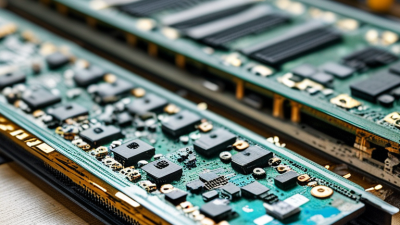
China’s PCB manufacturing industry is organized around specialized production clusters and supplier tiers. Some factories focus on rigid boards, while others produce flexible, high-frequency, or multilayer circuits. Assembly providers may also handle component sourcing, soldering, testing, and packaging. This division helps manufacturers control equipment costs and improve production speed.
A typical project moves through several linked stages. Engineers review Gerber files, stack-up designs, tolerances, and material requirements. Fabricators then laminate copper layers, drill holes, plate connections, and apply surface finishes. Assembly teams mount components using automated lines, followed by electrical and visual inspections. During factory visits, buyers should examine clean-room conditions, calibration records, traceability labels, and sample reports.
Details matter.
The strongest suppliers usually maintain documented quality systems and clear engineering communication. They can explain impedance control, thermal limits, testing coverage, and production capacity without vague promises. However, this structure is not flawless. A capable board factory may still lack assembly expertise, while a fast assembler may depend on outside fabrication. Delivery estimates can also change when materials or engineering files are incomplete. Buyers should compare process control, communication habits, certifications, and verified samples rather than relying only on price. A small pilot order often reveals more than a polished sales presentation.
Top Chinese PCB electronics manufacturers combine board fabrication with dependable assembly and testing. Their strongest capability is process control across the complete production cycle. Engineers review schematics, stack-ups, and component lists before releasing files. This prevents many avoidable layout and sourcing problems.
Advanced facilities support multilayer, HDI, rigid-flex, and high-frequency circuit boards. Automated optical inspection checks solder joints and copper patterns. Flying-probe and functional tests examine electrical performance. X-ray inspection helps verify hidden connections beneath packages. During factory evaluations, I look for clean production floors, controlled humidity, and clear material labels. Small details matter.
Traceability is another important capability. Each panel should connect to a material batch, machine setting, and inspection record. Strong manufacturers also provide design-for-manufacturing feedback, not merely production quotes. They may suggest wider clearances, alternative components, or improved panel utilization. However, no supplier is perfect. Delays can still occur when specifications change late or components become unavailable. A factory that reports these risks early is usually more reliable than one promising impossible speed. Certification supports credibility, but regular audits and sample testing reveal more about daily performance. Clear communication, documented corrective actions, and stable engineering teams often distinguish capable manufacturers from low-cost assemblers.
A practical comparison framework based on commonly reported capabilities of leading Chinese PCB and electronics manufacturing facilities.
| Capability Dimension | Typical Capability of Leading Manufacturers | Common Technologies or Standards | Why It Matters for Buyers |
|---|---|---|---|
| PCB Product Range | Rigid PCB Flex PCB Rigid-flex PCB Metal-core PCB HDI PCB | Single-sided, double-sided, multilayer, flexible and high-density interconnect boards. | Supports different applications, from simple control boards to compact high-speed electronics. |
| Layer Capability | Prototype and mass-production lines commonly cover 1–40+ layers, depending on board construction and application. | Multilayer sequential lamination, buried vias, blind vias and high-layer-count stack-ups. | Higher layer counts can reduce product size and improve routing density, but require tighter process control. |
| Fine-Line Manufacturing | Advanced facilities commonly support approximately 75–100 μm line/space for selected HDI and fine-line designs; standard production is generally coarser. | Laser direct imaging, semi-additive processing and controlled copper plating. | Fine-line capability is important for miniaturized products with dense component placement. |
| Microvia and HDI Processing | Laser-drilled microvias, stacked or staggered microvias, and sequential build-up structures are available for qualified designs. | HDI build-up technology, laser drilling, via-in-pad and copper-filled vias. | Improves routing efficiency and helps reduce the size of mobile, wearable and high-density electronic products. |
| Material Selection | FR-4 materials for general applications, high-Tg laminates for thermal reliability, low-loss materials for high-speed designs, and polyimide for flexible circuits. | IPC-4101 material specifications, halogen-free options and lead-free-compatible laminates. | Material selection affects signal integrity, operating temperature, mechanical reliability and regulatory compliance. |
| Surface Finishes | HASL, lead-free HASL, ENIG, ENEPIG, immersion tin, immersion silver and OSP are commonly available. | IPC-4552 for ENIG, IPC-4556 for ENEPIG and relevant IPC workmanship requirements. | The finish influences solderability, contact reliability, shelf life and suitability for fine-pitch components. |
| SMT Assembly | Automated high-speed placement, fine-pitch placement, double-sided assembly and mixed-technology assembly. | Lead-free reflow, nitrogen reflow when required, through-hole insertion and selective soldering. | Integrated assembly can shorten the supply chain and reduce handling, logistics and supplier-coordination risks. |
| Component Compatibility | Support for common passive components, QFP, QFN, BGA, CSP, connectors, power modules and selected press-fit components. | Fine-pitch placement, component traceability and moisture-sensitive-device handling. | Broad package support is essential for modern products with compact layouts and high component density. |
| Engineering Support | Design-for-manufacturing review, stack-up planning, impedance analysis, Gerber/ODB++ verification and component engineering. | DFM, DFA, DFT, CAM review, controlled impedance calculation and manufacturability feedback. | Early engineering review can prevent fabrication errors, assembly defects and unnecessary redesign cycles. |
| Quality Management | Formal quality systems with documented process controls, incoming inspection, in-process inspection and final inspection. | ISO 9001 is common; automotive-focused facilities may also maintain IATF 16949 certification. | Documented quality systems improve consistency, traceability and corrective-action management. |
| Environmental Compliance | Production programs commonly support RoHS and REACH-related requirements, with material declarations available by request. | Lead-free manufacturing, restricted-substance control and supplier material documentation. | Compliance documentation helps products enter regulated markets and reduces environmental and legal risks. |
| Inspection and Testing | Automated optical inspection, flying-probe testing, electrical testing, X-ray inspection and solder-paste inspection are commonly used. | AOI, SPI, ICT, FCT, X-ray, impedance testing, microsection analysis and thermal-stress testing. | Multiple inspection stages help detect open circuits, solder defects, voids, shorts and dimensional problems. |
| Prototype and NPI Support | Rapid prototyping, small-batch production, engineering samples and new-product-introduction support are widely offered. | Quick-turn fabrication, first-article inspection, pilot runs and production-readiness reviews. | Useful for validating design, assembly yield, testing procedures and production cost before volume release. |
| Production Scale | Facilities may combine dedicated prototype lines with high-volume PCB fabrication and automated assembly lines. | MES or ERP traceability, automated material handling and production scheduling systems. | Scalable capacity helps maintain supply continuity when demand changes from samples to mass production. |
| Reliability Testing | Depending on product requirements, testing may include thermal shock, thermal cycling, humidity, solderability, flex endurance and cross-section analysis. | IPC-TM-650 test methods, product-specific qualification plans and customer-defined reliability criteria. | Reliability testing verifies that boards can withstand expected electrical, thermal, mechanical and environmental stresses. |
| Industry Coverage | Consumer electronics, telecommunications, industrial controls, automotive electronics, medical devices, power electronics and instrumentation. | Application-specific materials, inspection plans and quality documentation. | Relevant industry experience can improve design communication, compliance planning and production risk control. |
Note: Capability ranges are general industry benchmarks rather than a certification of any specific supplier. Actual performance depends on the factory, material system, design rules, order volume, qualification requirements and applicable IPC or customer specifications.
Evaluating PCB manufacturers in China requires more than comparing prices. Review their experience with your board type, layer count, materials, and production volume. Ask for sample records, inspection data, and clear process documents. A reliable factory should explain solder mask control, impedance testing, and automated optical inspection in practical terms.
Visit the production area when possible. Check whether workers label materials, protect boards from moisture, and record each process stage. Request evidence of quality systems and relevant industry standards, but do not treat certificates as complete proof. Speak with the engineering team about design-for-manufacturing feedback, prototype changes, and failure handling. Their answers often reveal more than a polished website. No evaluation is perfect.
Tips: Send the same technical package to several manufacturers. Compare response speed, engineering questions, sample consistency, and corrective-action reports. Ask how they handle damaged panels and traceability. A low quotation may hide tooling charges, weak testing, or unstable delivery. I have seen evaluation plans miss packaging quality, which later caused scratched finishes. Recheck your assumptions. A small pilot order can expose problems before regular production begins.
Chinese PCB manufacturers serve a wide range of demanding applications, not only consumer electronics. Automotive projects use multilayer boards for battery management, charging systems, sensors, and driver assistance. Telecommunications equipment needs high-frequency materials, controlled impedance, and dense HDI structures. Industrial robots and factory controllers often require stable rigid boards, long operating life, and strong vibration resistance. Medical devices demand traceability, clean production, and consistent electrical performance. Aerospace applications usually require tighter documentation and specialized qualification.
Mordor Intelligence estimates that China’s PCB market will grow from about US$46.69 billion in 2025 to US$60.09 billion by 2030. The report links growth to electric vehicles, 5G infrastructure, industrial automation, and connected devices. These figures explain the broad application coverage. However, market size does not guarantee equal manufacturing quality. A factory may produce excellent prototypes but struggle with high-volume consistency. Buyers should review first-pass yield, impedance testing, thermal cycling, and delivery records. Those details reveal more than a polished showroom.
Tips: Match the supplier’s process experience with your application. Ask for cross-section samples, material certificates, inspection data, and change-control procedures. For automotive or medical boards, confirm relevant quality systems before approving production. A low quotation can hide rework costs, limited traceability, or unsuitable materials. I have found that clear drawings and early design-for-manufacturing feedback prevent expensive revisions. That step is often underestimated.